Rooted and Rising: The Art of Community and Creative Placekeeping at The Bottom
Ty Murray and Kalil White
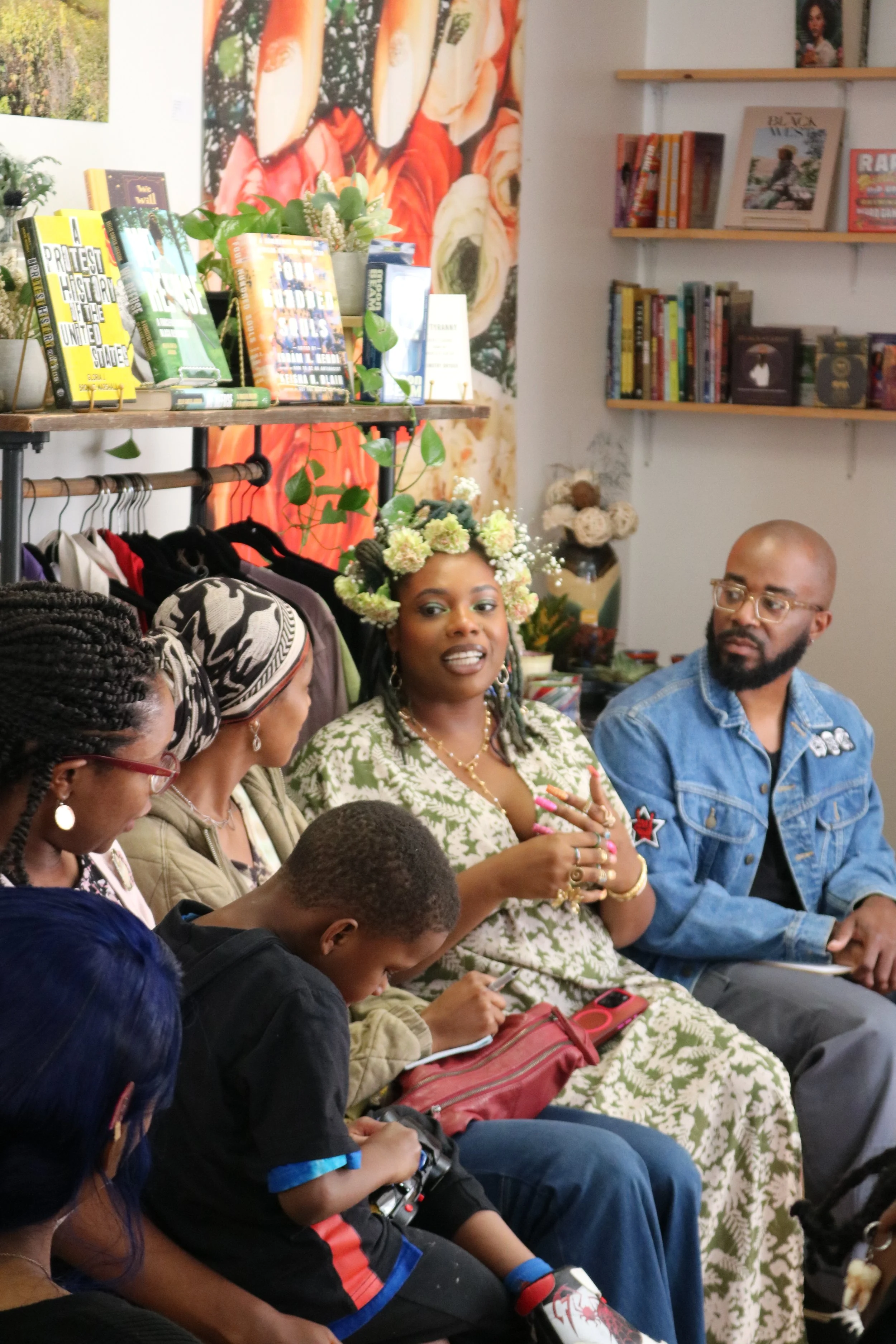
From the outside, The Bottom might look like any other historic house in East Knoxville. Inside, this small community arts space and bookshop is home to something much larger: a growing ecosystem of artists, neighbors, and cultural leaders building alongside one another. Artists are finding their first audiences. Visitors are becoming lasting community members. Histories that have long been overlooked are being preserved and reimagined. In a region often defined by what it lacks, we have witnessed what becomes possible when communities invest in themselves.
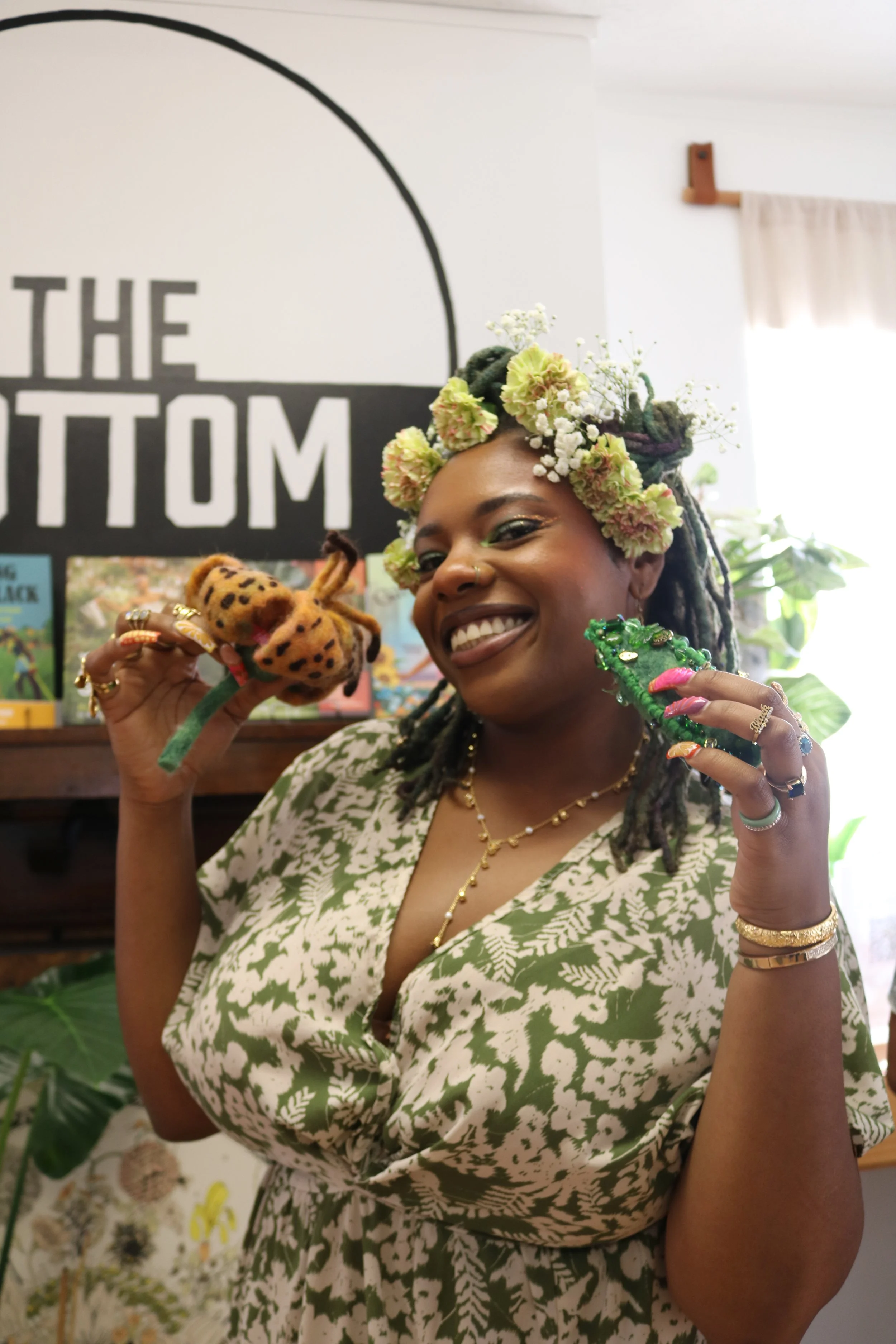
As Black artists and activists working in Appalachia, we often find ourselves navigating narratives that overlook Black presence in the region. For us, the language of creative place-keeping has become essential. We are helping preserve, amplify, and sustain the cultural knowledge, relationships, and traditions that have long been present within our communities. Through our Black-affirming bookshop, community maker spaces, artist development programs, and public programming, we seek to ensure that this neighborhood remains central to shaping Knoxville's future.
Many artists arrive at The Bottom carrying extraordinary talent with limited access. The barriers they face are rarely due to ability. More often, they are structural: limited resources, financial constraints, or exclusion from traditional arts spaces and networks. Some of these artists arrive with years of experience. Others arrive believing they are not artists at all. Together, they share knowledge, build skills, preserve stories, and imagine new futures.
This work takes many forms. Through our Arts In Movement Initiative, artists and community members gather throughout the year for workshops, exhibitions, professional development opportunities, and creative meetups. Whenever possible, programs are intentionally offered free of charge or at low cost. Teaching artists are compensated for sharing their expertise. Participants gain access to materials, equipment, networks, and opportunities that might otherwise remain out of reach.
The impact of this work is often measured not only in attendance numbers but in milestones.
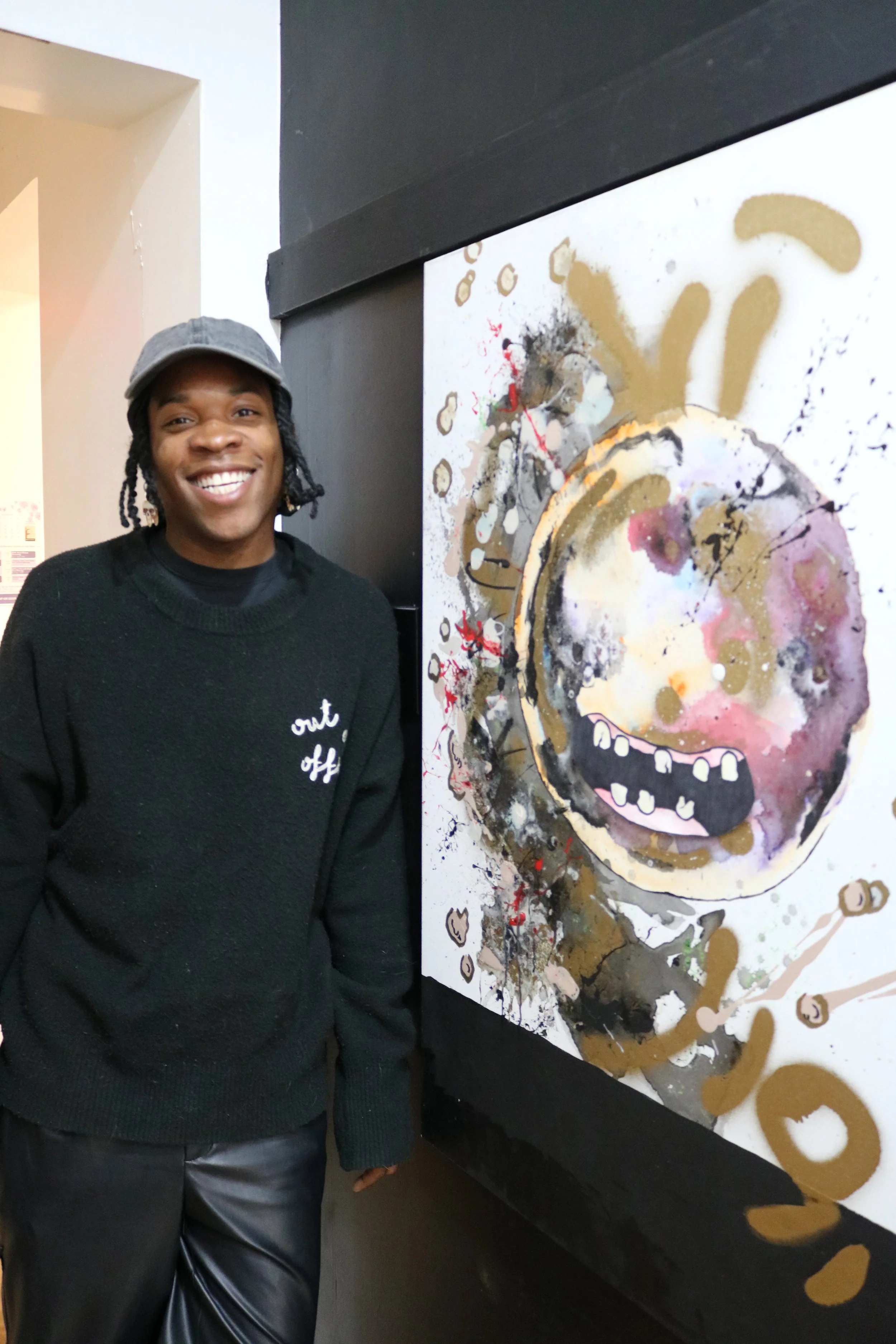
Many artists who have participated in our programs describe experiencing significant “firsts” through The Bottom. They have held their first solo exhibitions, sold their first artworks, taught their first workshops, participated in their first ceramics classes, or publicly shared their creative practice for the first time. These moments are not the result of discovering hidden talent. The talent already existed. What was missing were pathways, resources, and spaces where artists felt welcomed and supported regardless of their background or degrees. Is it possible to include an example of a past artist's exhibition here?
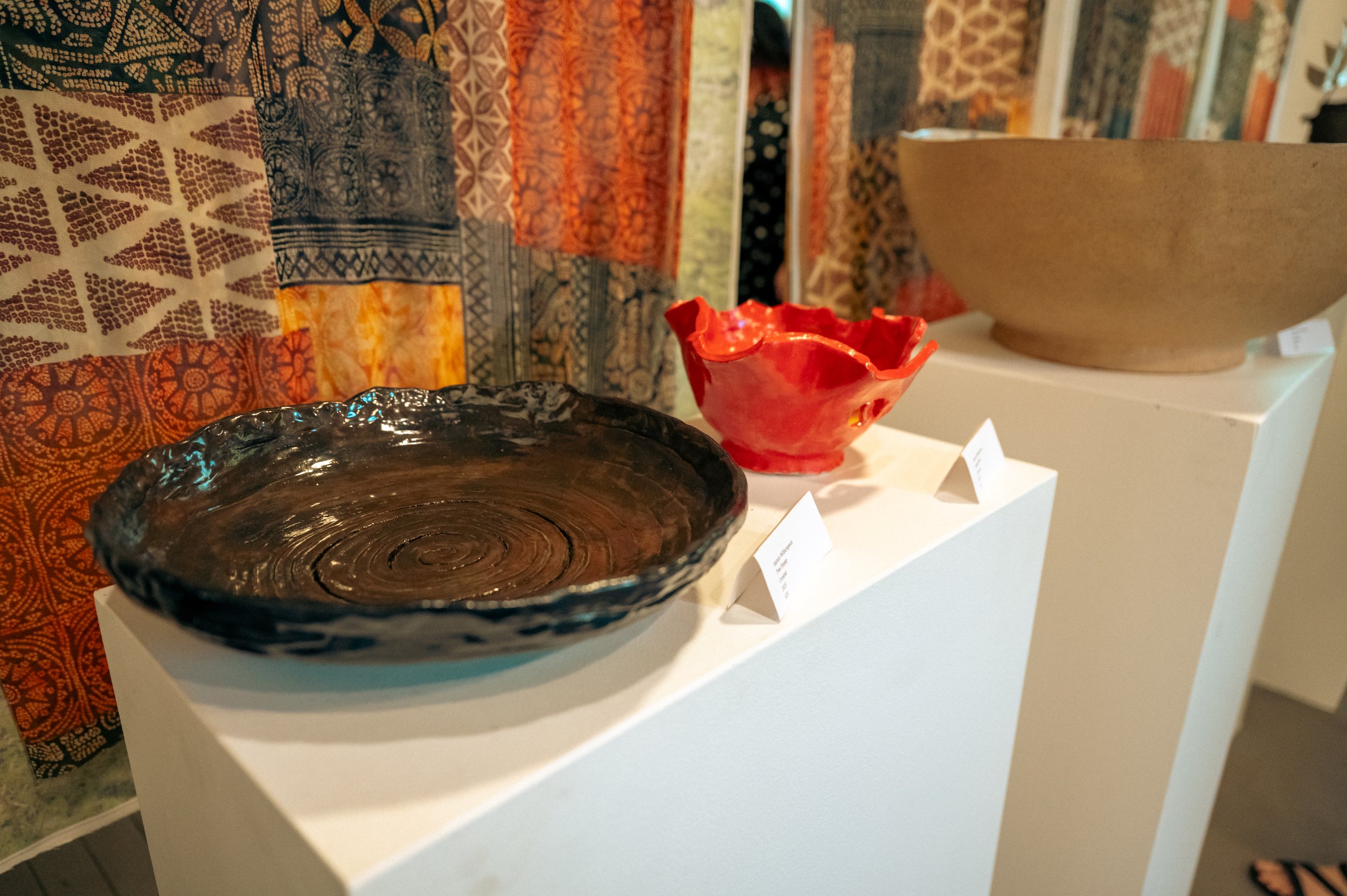
Our Ceramic Soul Collective offers another example. Since 2022, the program has introduced many first time ceramicists to clay by providing free access to studio space, materials, instruction, and firings. Participants who previously lacked access to the medium have developed skills, built confidence, and expanded their artistic practices. Several members have gone on to receive opportunities that may have once felt inaccessible, such as Multicultural Fellowships through the National Council on Education for the Ceramic Arts.
These outcomes reinforce something we have learned repeatedly: when communities have access to consistent resources and trusted spaces, creativity flourishes. This is what cultural infrastructure looks like when it is built from the ground up. It is slow, relational work. It is community work. And it is already transforming our region.
We do not see our artistic practices and community work as separate endeavors. Each informs the other. As directors of The Bottom, we have experienced firsthand how community work transforms artistic practice. The questions we encounter in our neighborhoods become questions we pursue through art. The growth of our organization has been inseparable from our own development as artists. Rather than existing as separate pursuits, our creative practices and our community work continuously inform one another.
Ty Murray, founding member and current Director of Art, speaking to Nurturing Nature: An Afrolachian Prayer:
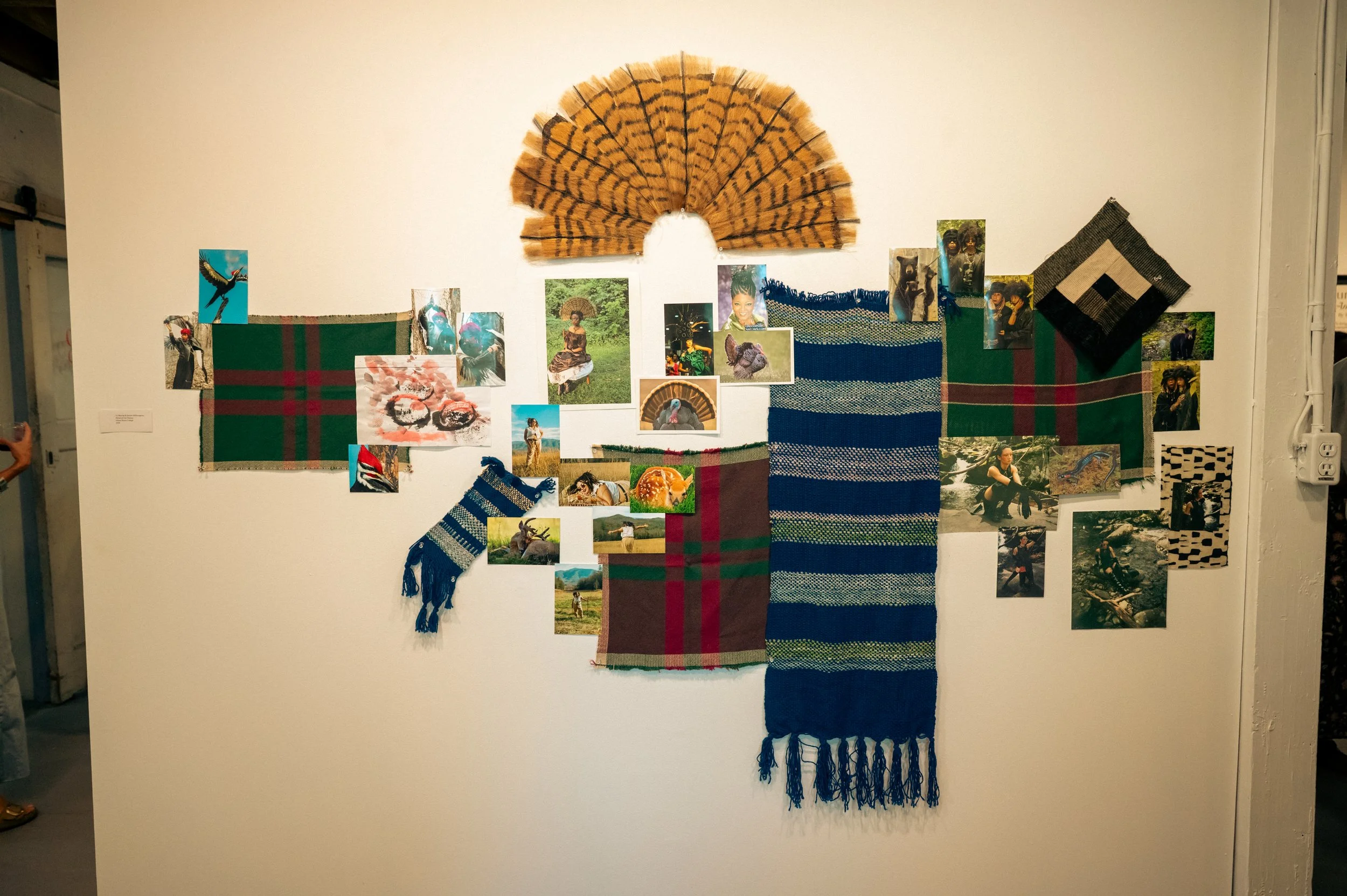
“I created the duo exhibition Nurturing Nature: An Afrolachian Prayer with fellow founding member Jazmin Witherspoon as an extension of the community engagement we built together through The Bottom. After years of cultivating spaces where Black Appalachian identity could be seen, celebrated, and nurtured, we found ourselves exploring those same sentiments in our photography and poetry. Our exhibition positions Black womanhood as inseparable from Appalachian landscapes, carrying themes of place, belonging, and cultural stewardship.”
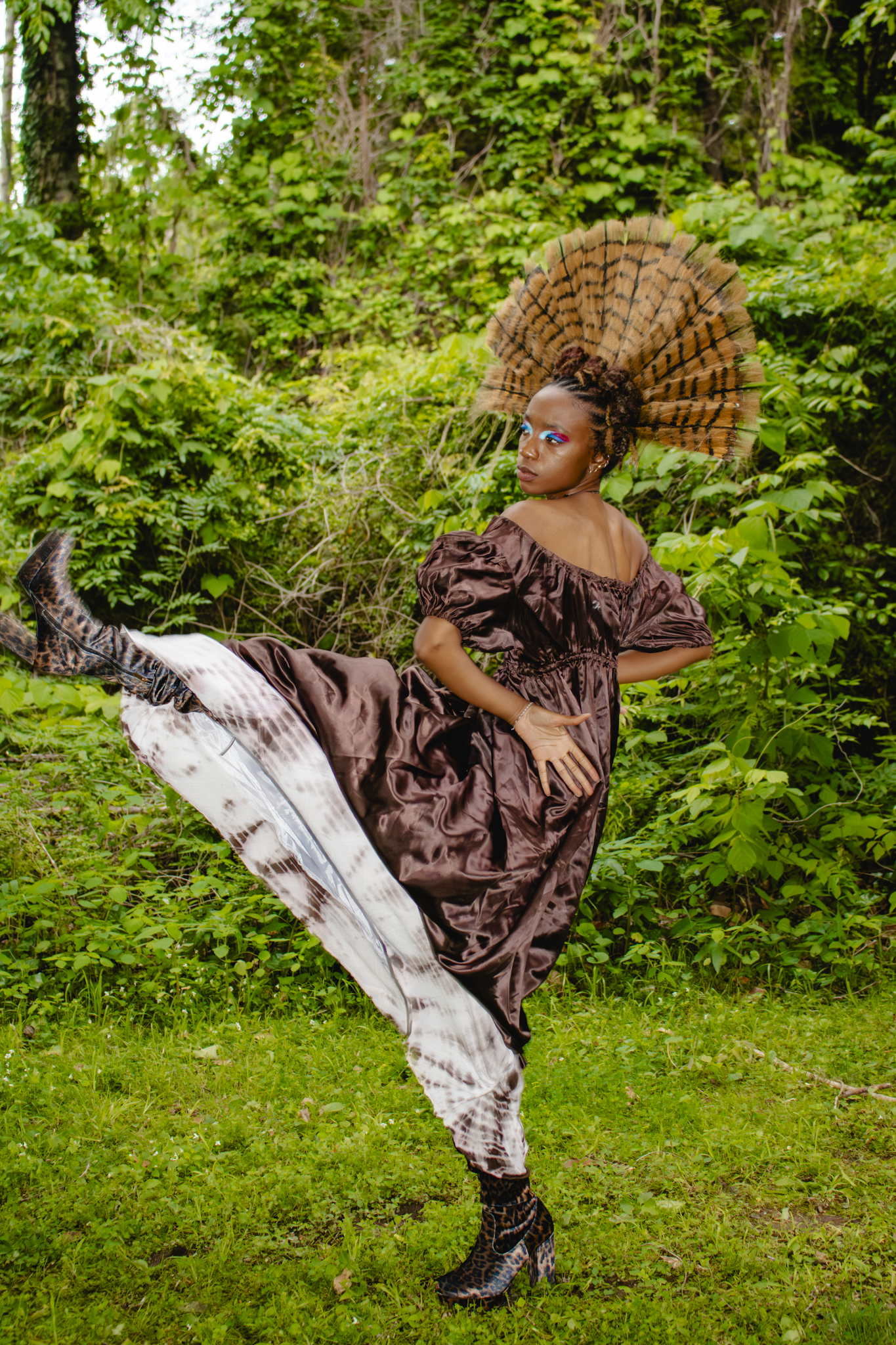
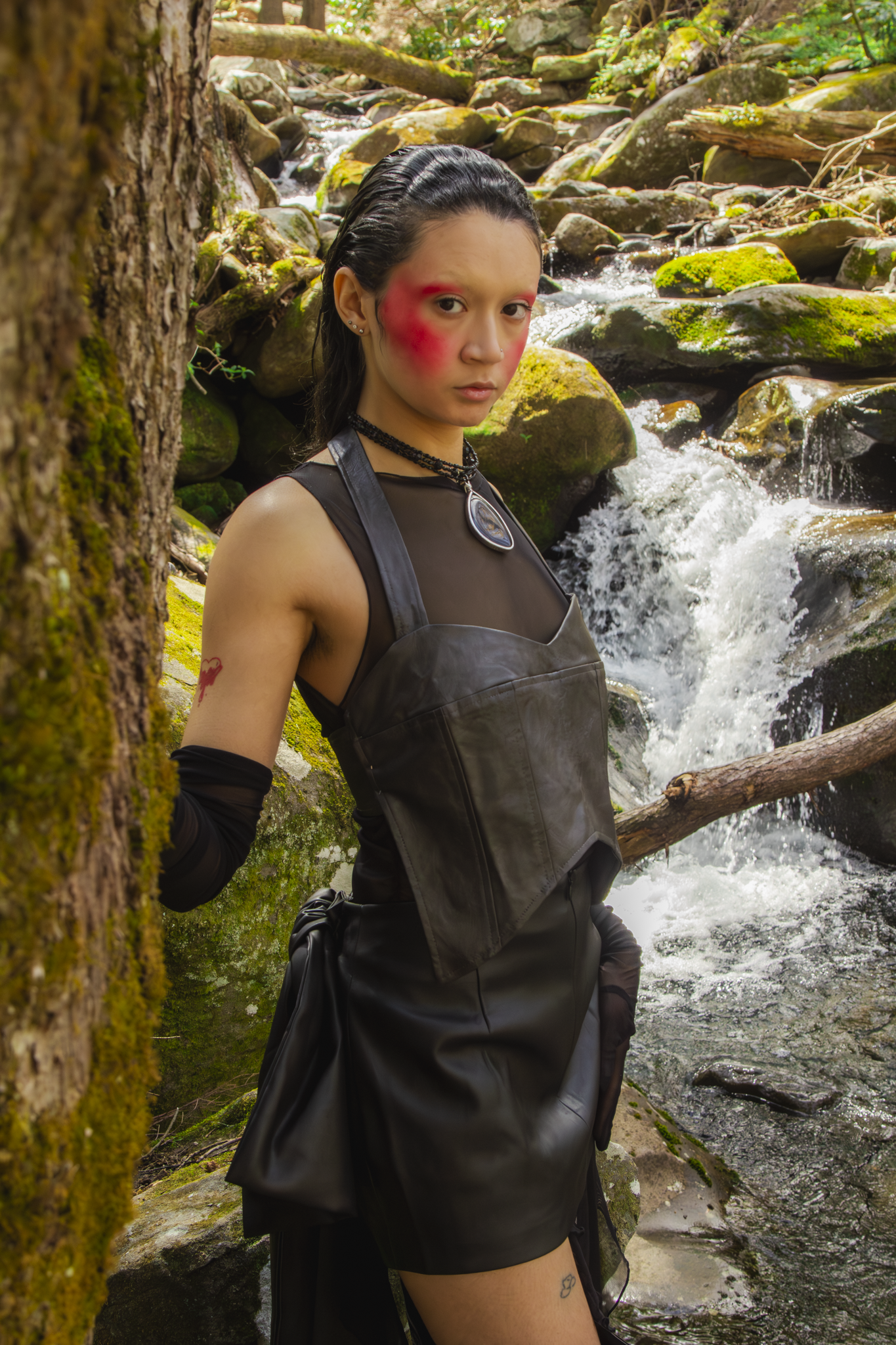
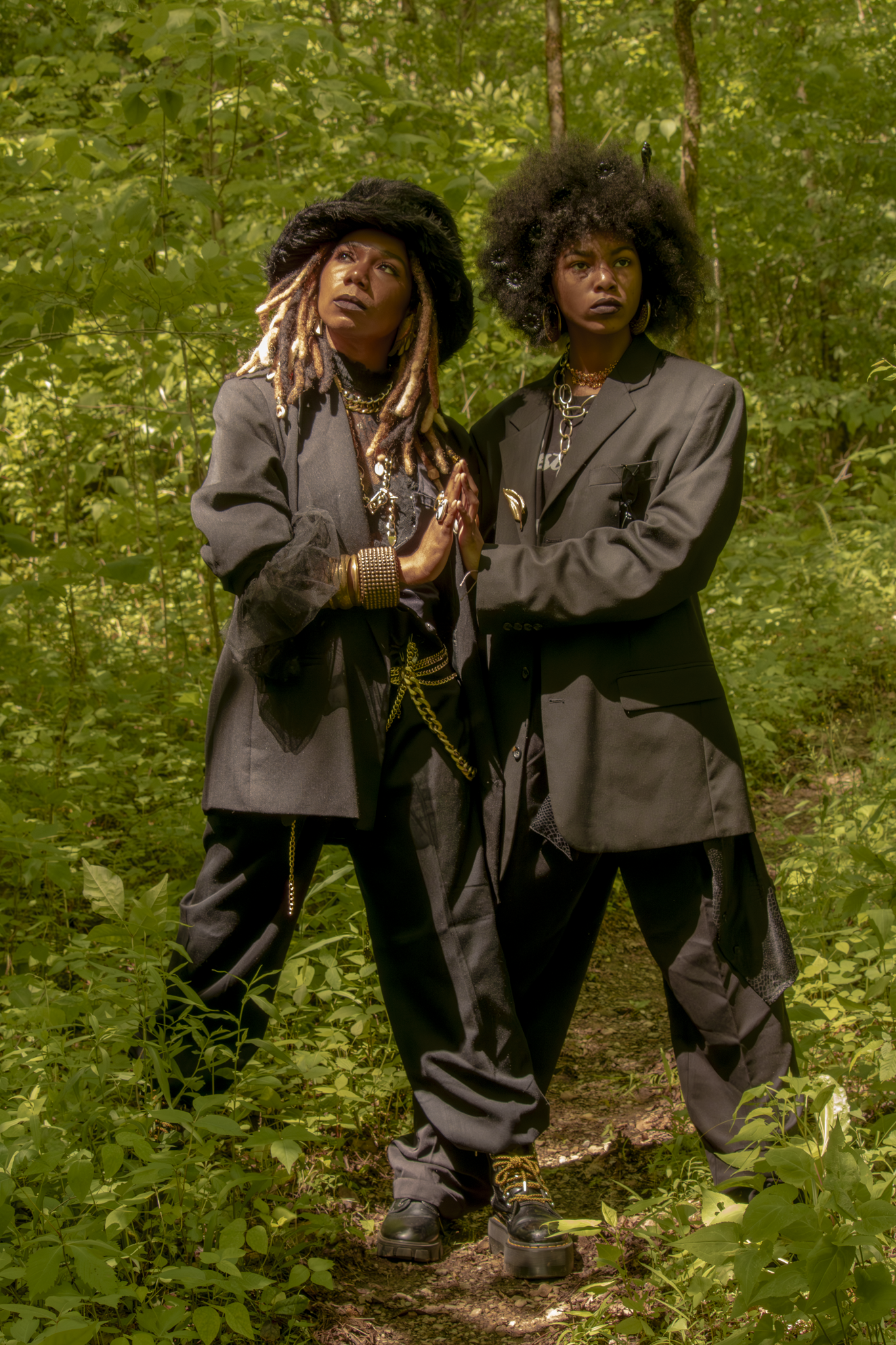
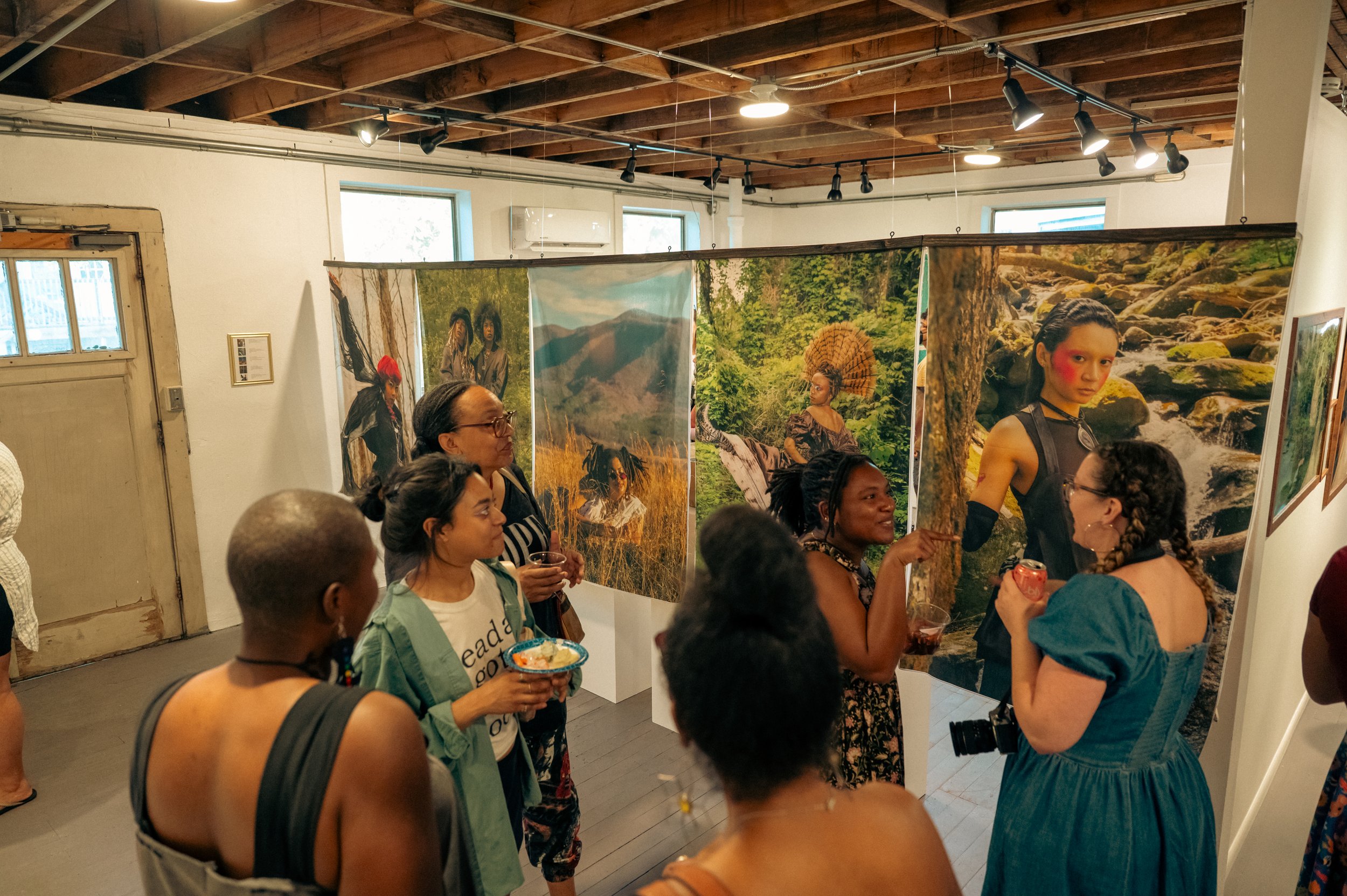
My photographic portraits approach the body as canvas, where each subject embodies an Appalachian mountain animal. Printed on fabric and intentionally unframed, the photographs remain unbound. They move gently with the air, emphasizing breath and freedom of form. Jazmin’s poetry mirrors how she has experienced Blackness in the foothills of the Appalachian mountains. They are part ekphrastic response to the photographs, part intuitive animal-whispher, giving reverence to mother nature and the creatures that inhabit this planet.
This creative kinship cultivates an environment where Blackness is not peripheral to Appalachian narratives, but central to them, and where the act of nurturing both embraces and liberates. The exhibit asks: What if we emphasized the sacredness of Black womanhood, like the animals for whom we build sanctuaries?
Nurturing Nature Exhibition 2026
Nurturing Nature: An Afrolachian Prayer is an ekphrastic exploration rooted in Appalachian landscape and Black Femme identity. This duo exhibition by Ty Murray and Jazmin Witherspoon is a photopoetry interpretation of the nature we inherit and the nature we cultivate within ourselves. A dance between what is seen and what is felt, this exhibit reminds us that we are all animals, sharing many survival and environmental concerns.
“The future of the South’s cultural landscape is being shaped by artists and communities who continue to create, organize, preserve, and imagine despite generations of uneven investment. Our responsibility is not to build these movements from scratch. They already exist as enduring networks of care, creativity, and resistance. Our responsibility is to ensure they have the resources and support necessary to thrive.
At The Bottom, we witness this reality every day. It appears in the artist teaching their first workshop, the ceramicist touching clay for the first time, the neighbor discovering a story that reflects their own experience, and the creative finding community where they once felt isolated.”
Kalil White, Director of Operations, speaking to Back To Our Roots
Back to Our Roots reflects my belief that curatorial practice can be a form of community organizing. It is an opportunity to create space for people to gather, reflect, and reconnect through shared stories, cultural memory, and our relationship with the land. Featuring the work of 12 BIPOC artists from across the Northern Hemisphere, each piece honored the spiritual, cultural, and ancestral connections our communities have carried with the earth for generations.
For me, it was deeply important that this exhibition centered on BIPOC voices because our communities have always held a profound relationship with the land, yet we are also among the first to experience the consequences of environmental injustice and climate change. Too often, conversations about the environment happen without the voices of the people who have protected these lands for generations and who continue to bear the greatest burden of environmental harm. I wanted to create a space where we could tell our own stories, share our own relationships with the earth, and celebrate the knowledge, resilience, and traditions that have always existed within our communities.
Back to Our Roots became more than an exhibition. It became a place of remembrance, healing, and affirmation. It invited people to slow down, reconnect with the wisdom of their ancestors, and recognize that caring for the land has always been an act of caring for one another. Like everything we do at The Bottom, the exhibition reflects a commitment to cultural preservation, collective care, and environmental justice, while reminding us that art has the power to strengthen community, inspire action, and help us imagine a more just and sustainable future together.”
Our experiences as artists have reinforced a belief that cultural work is never solely about production. It is also about relationships, memory, access, and collective possibility. The artwork we create is often shaped by the same questions that emerge through our organizing work: Who gets to belong? Whose stories are preserved? How do we create conditions where people can imagine futures beyond survival?
We think these questions are particularly relevant as arts funders consider their relationship to the South.
Our experiences as artists have reinforced a belief that cultural work is never solely about production. It is also about relationships, memory, access, and collective possibility. The artwork we create is often shaped by the same questions that emerge through our organizing work: Who gets to belong? Whose stories are preserved? How do we create conditions where people can imagine futures beyond survival?
We think these questions are particularly relevant as arts funders consider their relationship to the South.
The future of the South's cultural landscape is being shaped by artists and communities who continue to create, organize, preserve, and imagine despite generations of uneven investment. Our responsibility is not to build these movements from scratch. They already exist as enduring networks of care, creativity, and resistance. Our responsibility is to ensure they have the resources and support necessary to thrive.
At The Bottom, we witness this reality every day. It appears in the artist teaching their first workshop, the ceramicist touching clay for the first time, the neighbor discovering a story that reflects their own experience, and the creative finding community where they once felt isolated.
ABOUT THE AUTHORS
Ty Murray is a visual storyteller, creative strategist, and cultural advocate dedicated to using art as a catalyst for connection and transformation. Rooted in the Appalachian South, she uses bold, expressive, and thought-provoking photographs and ceramics to amplify stories, ignite dialogue, and strengthen community engagement. As the Director of Art at The Bottom in Knoxville, TN, she plays a key role in developing creative spaces that empower artists and uplift cultural expression. As a founding member of the organization, her leadership has been instrumental in shaping The Bottom as a hub for artistic innovation, education, and storytelling. Also known as DJ Soularia, Ty creates immersive sound journeys as a vinyl DJ and fusion performer. Committed to cultivating artistic resilience and collective empowerment, Ty continues to expand opportunities that inspire change and deepen community connections.
Kalil White is an Environmentalist and Multimedia Artist based in Knoxville, TN. Her artistic practice focuses on bringing together her passions for the environment, Black culture, and women's experiences, creating work that celebrates the intersection of these vital elements. Currently serving as Director of Operations at The Bottom, she also brings her leadership to Rooted East Knoxville Collective as a Steering Committee Board Member and Ujamaa Bartering Market Lead. Additionally, Kalil serves as Ambassador and Knoxville Co-Hub Lead for Black Girl Environmentalist. She received her Bachelors of Science in Biology with a concentration in Environmental Sustainability from Georgia Southern University and her Masters of Science in Agricultural Leadership, Education, and Communications from University of Tennessee. Driven by a lifelong passion for nature and community development, Kalil's ultimate goal is to educate and empower marginalized communities through environmental sustainability and redemptive community work.