The Money Is the Cheapest Part of the Deal: What Investment in Black Creativity Requires
Clarissa Crawford
Hey, hey, good people. My name is Clarissa Crawford. I am a former grant maker in the arts, and I am now the founder and lead strategist for Crawford & Co Creative. And I am super excited to come before you and share some thoughts, especially in the name of Black August. For Black August, I have been thinking a lot about what investment in Black artists and Black creativity requires. I've specifically been thinking about that space between funding and follow-through after funding has been committed. And what keeps coming up for me is this, the money is the cheapest part of the deal. The money is the cheapest part of the deal. I say that with care and I say that as someone who knows that money matters, especially in the context of supporting artists and the arts. I know that money pays artists. It supports the development of creative work. It supports rehearsing work, touring work, the administrative production costs, documentation of costs. It also supports rest and wellness for artists. It is absolutely needed. I want to be very clear that I am not attempting to make a case against money. In fact, continue to spend that.
I am saying that in the full picture, in the full life of a partnership process with artists, writing and receiving the check is often the easiest step in the process. The deeper work typically begins after the money moves. And that space between funding and follow-through is where my work lives. Through Crawford & Co Creative, I support senior leaders at artists serving organizations by building partnership strategies that they can practically execute based on their real capacity and resources. And as someone who has spent years working across arts education and arts philanthropy, including as a grant maker, building institutional partnerships and also being on the front lines and really working directly with artists to support and resource them, I have seen through those years of experience what happens when an organization has real resources and very sincere intentions that they are bringing to a partnership program or opportunity. And underneath that opportunity, the investment is underbuilt because the runway that is supporting it is underbuilt. And by runway, I am specifically referring to an organization's role, their internal systems, the partners that it is in collaboration with to help bring the work to fruition, the processes that it creates for staying in conversation with artists and learning what the work requires and how it evolves, that work can really strain when those pieces that I've just named have not been defined and organized.
And so I have a couple of points that I want to share to further elaborate on what I mean when I say that the money is the cheapest part of the deal. And I've got some notes here to just help me keep my thoughts organized and hopefully help you to see what my point is. So the first point is that the money is the cheapest part of the deal because the check is the easiest part to count, while much of the value on the labor surrounding Black creative work lives beyond the budget line. So the money's the easiest part for an organization to see, especially related to spreadsheets and line items. But the more challenging work begins when the organization is really needing to build the understanding about what the funding is actually requesting or asking people to carry.
So what is the labor that is sitting underneath this very visible project that is written out in an application? What are the unnamed skills or expertise that are being relied on to make this work possible? And what does it actually cost? When funding is connected to Black creative work, it is rarely just touching a single artist or a single project. Very often, more often than not, it is reaching a broader community or network. And so that community and network carries more than what is visible in the application. That can include additional elders, young people, farmers, organizers, neighborhoods, other folks who are contributing or touching this work and impacting it in a way that might not show up in a final report. And the value of those relationships and those communal economies and those skills can't always be articulated or itemized because they're lived.
And so I am not suggesting that an organization needs to become an expert and understand every part, every nuance of an artist's community or the cultural context surrounding the work that is being supported, but I would like to suggest that you make a very real intention and effort to leave space for the possibility that you are not seeing the whole picture, and that awareness coupled with genuine curiosity and a desire to be in conversation really can open the door to dialogue that would lead to relationship. It really does help a funding partner to develop more context about what the work is, who it's touching, how it's supporting, who, what, when, where, why, how, all of those things. It'll help to cultivate a deeper understanding of the work and really position you as a partner to be able to better advocate for it. But that type of understanding does take time. I can recall very early on in my grant-making career feeling like I needed to understand to a tee what was placed before me in an application process or even in a community visit. It was like, "I need to get it all. I need to understand it all right away."
And the fact of the matter is that I started to realize we start a partnership process with an artist and the artist is talking about the work one way, and we get down a couple of months later and the way that they're talking about it has evolved. And so it really helped me to understand that it is an iterative process also on my side in being able to cultivate the understanding to really go along the journey and be able to support and build that context so that I can better advocate and support for the artists on my side of the work.
So when I am saying that the money is the cheapest part of the deal here, I am saying that it's only one part of the relationship and that there's always more surrounding the work than the number that we can see on a budget sheet, which brings me to my next point. The money is the cheapest part of the deal because moving dollars doesn't automatically reveal what your organization is positioned or committed to help solve, especially in the context of an artist-led partnership. Multiple organizations can move money. And a check will tell us very clearly how much an organization is giving towards a particular community or cause, but it doesn't necessarily tell us what that organization is uniquely equipped to contribute or whether its people or internal systems are prepared to carry out the roles necessary to support the investment being successful.
And when an organization is partnering with Black artists and communities connected to their work, that type of specificity really is needed. And it is about an organization really stopping to consider like, "What are we positioned to help solve? What role are we prepared to play as it relates to this partnership opportunity on behalf of the artists that we are supporting? What can we contribute consistently and well? And where do we need partners whose knowledge, relationships, or expertise compliment the gaps that we may have in this overall process?"
And understanding an organization's type can be a starting point for being able to get some sense of what the organization does. For instance, you could be a foundation, you can be an intermediary, you could be a producing organization or a training and educational organization. Those categories do offer a general sense of what it is that you do, but it doesn't define the particular contribution that your organization is committed and prepared to make within the context of the partnership. And so that question about what your organization can do with enough specificity, consistency, and capacity to become a reliable partner really is important.
And it's that type of clarity that matters because I've also seen where we could have field-wide conversations or convenings and ideas are shared, and on the surface sound really great and sound like things that need to be implemented. And so they're sometimes just received and accepted as what the new norm is. And that might not always need to be the case. There are instances where there are some valid critiques that those ideas are being responsive to. So for instance, talks around shorter application processes, ideas that are shared in support of shortening the application and access that an artist has to maneuver in order to go through a grant or partnership-application process. Flexible and multi-year funding is another one of those field-wide ideas that are shared and have been helpful and useful and necessary. Lighter reporting, reducing unnecessary administrative labor for artists and cultural organizations.
All of these things are important. And still, those practices can lose their substance if an organization is just adopting them without determining what it really requires internally. So for instance, a shorter application isn't going to create a relationship with an artist automatically. There's still work that has to be done to make a relationship possible. Flexible funding isn't going to resolve delayed or confusing payment processes within your organization. And lighter reporting isn't going to help an organization advocate for the work when no one has built enough of a relationship to understand what happened, what changed and why it matters.
So these new ideas and these new approaches, while very valid and important, it really does have to show up in how the organization actually works, the culture of it. It has to reflect a shift in the internal processes and the day-to-day decisions. It needs to be reflected in what is communicated and understood by the board, by team members and staff members, by your external partners who are also supporting capacity or facilitation needs in the partnership process. Everybody needs to have an alignment and awareness and be clear about what their role is in this ecosystem that is your organization and the process that you're building around the partnership opportunity so that they know what role to play, because again, the money can resource the partnership, but it's not going to define an organization's role or build the internal capacity that is required to honor the commitment that has been made.
Which brings me to my third and final point. The money is the cheapest part of the deal because the funding alone does not build relationships or the support that is needed to carry Black creative work beyond the check. So funding isn't automatically a relationship that is going to support the work beyond the check. And I really want to say that slowly and emphasize that because there's work that has to happen in order to help contribute to what an organization, a funding partner, and an artistic collaborator or artistic community are coming together in agreement on. There is work that has to be done on both sides after the money moves to help this be a successful partnership process, and on the side of the funding partner, an investment that really does help succeed and helps to achieve what you set out for it to accomplish.
So this is where the investment needs to move beyond the check, and this is where partnership really does need to be built. And a partnership pathway within an organization shapes and really contributes to the experience that the artists on the other side of this partnership agreement is experiencing. And so a strong pathway accounts for the internal touch points that the artists will encounter during the engagement, both internally and externally with intermediaries or capacity building partners or facilitators that are also a part of the engagement. It also needs to take into account the power dynamic that is just attached to money conversations. And without that type of thoughtfulness around the partnership pathway, the Black artists that are connected to the work are often left to absorb the gap of that. And they're already navigating significant responsibility on their side of the partnership. So that is what we don't want to do.
And the partnership process also needs to make space for what they're navigating and what might be a challenge in the process. It needs to make space for dialogue and communication around that. It has to anticipate how on the organization or the funding partner's side, how you're going to respond and be supportive when the creative work needs to shift, iterate, or requires more time or even more resources. It is that type of consideration that really supports being able to open up a dialogue that is necessary for the type of ongoing relationship that helps an organization to really be in a position to better advocate and support the work, especially when talking to stakeholders who need more context and understanding.
And especially in this current political climate where there is language connected to Black art and creativity that is being targeted, it is so critical, it's so essential to be able to build the capacity to speak about and advocate for the work beyond targeted labels or language. So that again, that support and that advocating can continue far beyond what is happening outside of or external to the context of the partnership relationship. So again, the check can fund the opportunity, but the partnership pathway really has to be cultivated and built. And it is needed so that you as a funding partner really can have an opportunity to support and learn from and better advocate for the work on behalf of the artists that you are supporting.
So that's my spiel. I hope that you were able to get something out of that, because again, for Black August, I really am thinking about liberation in very practical terms, I'm thinking about how Black artists and Black-led cultural work is receiving investments without being asked to absorb organizational gaps or confusion. I'm thinking about funding that is supporting the labor behind the work and partnerships that make room for Black artists to be able to speak honestly about what something costs, how it needs to shift, or what the work is requiring as it evolves. And again, this is really asking and looking for organizations to really check the capacity that they can honor beyond the check and really be able to consider how you can practically respond to what is our role through and beyond the money, what follow-through must we design to match the promise? And how will we make space for the dialogue throughout the process? Because again, money is only the beginning. I'm going to just throw it in there one more time, it is the cheapest part of the deal, but it opens the door. And so it really is up to you as a funding partner to be able to build a pathway to determine, to support, to help the work live and develop and expand beyond the investment transaction.
So I hope that this was helpful. I hope that you were able to get a little something out of it. Feel free to... Look, I want to talk as if this is YouTube, and I don't even do YouTube, but like, comment and subscribe if you can do that some kind of way. But also feel free to send me a message. You can send me an email directly at hello@crawfordcocreative.com. Again, my name is Clarissa Crawford. It has been my pleasure to connect and share with you today. Wishing you all a very happy Black August. And I hope to be able to see you and speak with you again really, really soon.
ABOUT THE AUTHOR
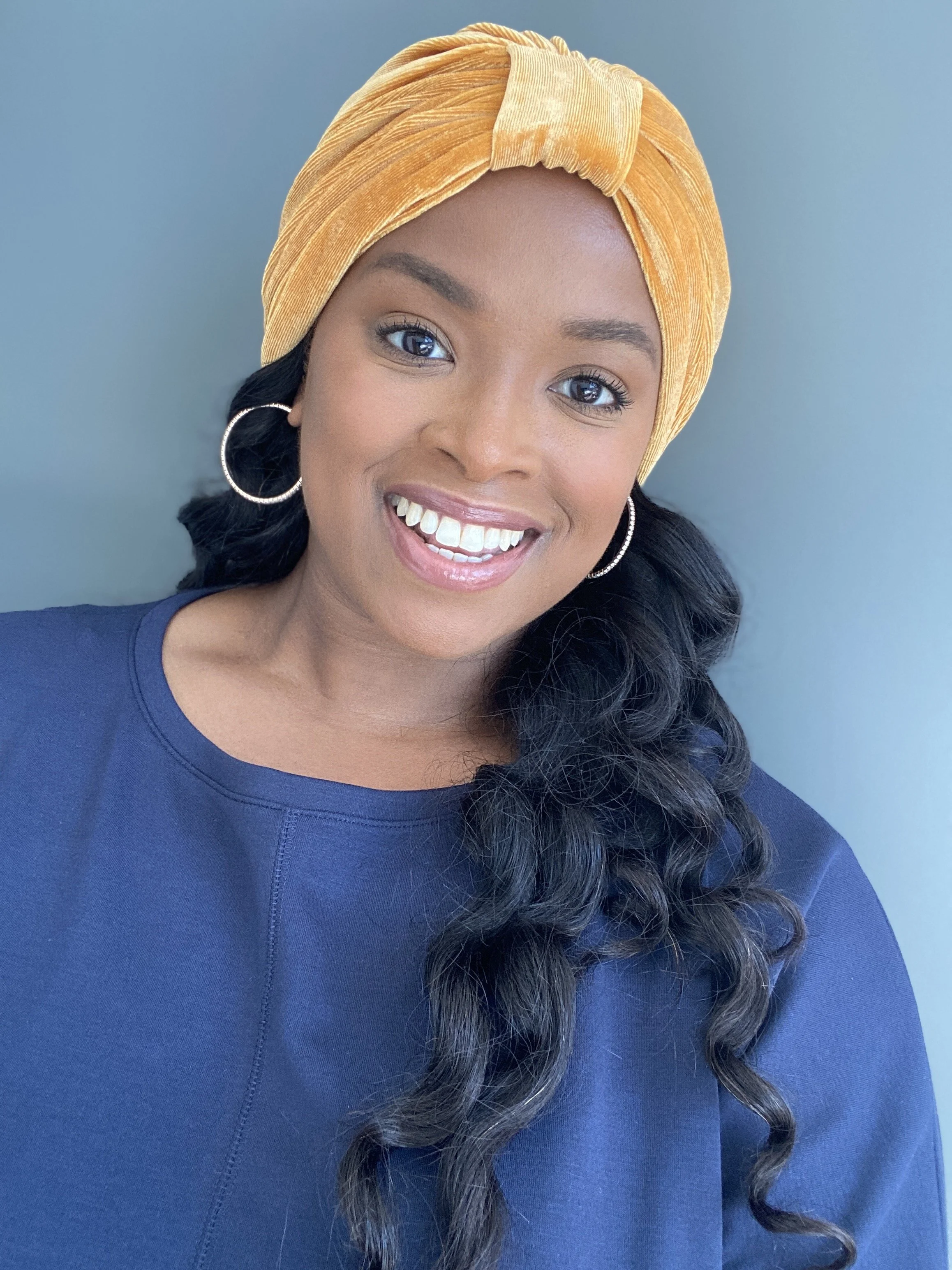
About Crawford & Co. Creative
Crawford & Co. Creative is a boutique strategic advisory and facilitation consultancy supporting organizations that invest in, partner with, and build infrastructure around artists and community-rooted cultural work. The firm works with foundations, intermediaries, arts agencies, higher education institutions, and artist-serving organizations navigating transition, decision-making, resource stewardship, and high-stakes alignment.
About the Founder, Clarissa Crawford
Clarissa Crawford is an investor and strategist, a former grantmaker in the arts, Trustee for the California Institute of the Arts, and founder of Crawford & Co. Creative. Her experience includes work as a producing artist and institutional strategist, leading 20+ funding cycles, stewarding more than $6M in investments to artists and arts organizations, and working across 500+ partnerships spanning 14 states throughout the U.S. South.