Building the Field of Neuroarts: A Framework for Success and Impact
Susan Magsamen and Ruth J. Katz
This is a pivotal moment in recognizing the essential role of the arts in service to society through the evolution of neuroarts, a field emerging at the intersection of the arts, science, and technology. For decades, artists, scientists, clinicians, arts practitioners, educators, technologists, architects, culture bearers, and others with either professional expertise or lived experience have independently advanced how creative and aesthetic experiences shape the human brain and body, as well as our behavior and wellbeing. From clinical care to many other arts-integrated approaches in health, public health, education, business, civic, and community settings, this knowledge has helped address rising mental health needs, chronic disease, learning, social isolation, innovation, and more.
The work itself is not new. While the practices themselves are long established, the current moment is distinctive: advances in science, coupled with growing demand for evidence-informed, scalable, and equitable solutions across multiple sectors, make it both necessary and possible to build the shared infrastructure required for neuroarts to function as a coherent and impactful field. These once-parallel efforts are now forming a growing constellation of interconnected activity. What is needed next is the infrastructure to connect, sustain, and learn from that work. This infrastructure is essential to the field’s continued development and is the focus of this Perspective.
Defining the Neuroarts Field
Neuroarts is a rich and inherently interdisciplinary field of research and practice whose purpose is to investigate how aesthetic and creative experiences influence neural processes, physiology, psychology, behavior, and lived experience—and how this knowledge can be applied to advance health, wellness, and society at large. Rooted in neuroaesthetics, guided by scientific rigor, informed by the arts and humanities, and enriched by cultural knowledge and lived experience, neuroarts bridges multiple domains and sectors that traditionally have operated independently.
As such, neuroarts serves as a unifying force of all arts-related research and practices for individuals and communities alike. It does not aspire to supersede, replace, substitute, or otherwise weaken existing disciplines and fields such as arts and health, arts and public health, arts in education, arts and architecture, arts in business, or arts in civic and community development, to name a few. Rather, it seeks to provide an integrative framework constructed to connect those and similar disciplines, offering a shared language and research foundation capable of supporting discovery, translation, policy, and impact across sectors with the shared outcome of building a sustainable, equitable, and adequately resourced field.
At its core, neuroarts recognizes what humanity has long intuited and what new research now increasingly confirms: creative and aesthetic experiences are biologically consequential and fundamental to human development, learning, resilience, and flourishing.
Why This Field and Why Now
The case for building, realizing, and recognizing the field of neuroarts rests on both legacy and urgency. Vanguards of many fields laid the foundation long before the term “neuroarts” became part of today’s arts-related lexicon. Neuroscientist Dr. Marian Diamond’s seminal work on environmental enrichment demonstrated that experience shapes brain structure.¹ Evolutionary biologist, Dr. E.O. Wilson, and others articulated the evolutionary roots of creativity and aesthetic behavior.² These and many other major scientific contributions established the now widely accepted principle that the environments we create—physical, cultural, and interpersonal—profoundly influence neural, psychological, and physiological function.
What distinguishes the present moment is convergence. Advances in neuroscience, imaging, and data science now allow researchers to study artistic and aesthetic experiences with unprecedented precision. At the same time, arts-based practices are expanding rapidly across clinical care, public health, education, architecture and design, business, and community settings in response to complex and pressing societal challenges.
But the explosion of this knowledge has also revealed a critical gap. The work of the numerous partners within the field—both individuals and organizations—has expanded and spread faster than the infrastructure needed to connect and support them and, ultimately, to achieve mutual outcomes and goals. Without this shared infrastructure in place across all sectors and disciplines, including shared language, best practices, methodological standards, and a cohesive research strategy, the field risks fragmentation and confusion at precisely the moment it is poised to deliver its greatest value. We cannot and we should not forfeit this extraordinary opportunity.
What It Will Take to Build the Field
In 2021, after two years of conducting a global survey, convenings, public outreach, and analysis, the NeuroArts Blueprint: Advancing the Science of Arts, Health, and Wellbeing report was released.³ It was developed to offer a timely, actionable framework for transforming a constellation of dynamic neuroarts-related, promising, but fragmented, efforts into a durable, inclusive, and impactful field. Its core and interdependent recommendations define the structural, cultural, and systemic conditions—the infrastructure, if you will—required for neuroarts to mature as a field; one capable of, and recognized as, generating rigorous knowledge, informing practice and policy, and, ultimately, improving individual and collective wellbeing.
Establish a Shared Language and Conceptual Framework
No field can cohere or scale without shared understanding. Building the neuroarts field requires a common conceptual framework and lexicon that bridges neuroscience, the arts, health, education, culture, and community practice. A shared “language” must enable clear communication across disciplines while honoring the distinct values, methods, and epistemologies of each. This will strengthen collaboration, reduce fragmentation, and provide the scaffolding for cumulative knowledge-building. It will also help to establish a field narrative where each sector is woven into a shared story for all stakeholders including the general public, policy makers, and funders.
Advance Rigorous, Aligned, and Transparent Research Methods
Perhaps more than any other factor or force, field-building—for any field—is dependent on credibility. In the case of neuroarts, this means the work must be supported by research that is rigorous, comparable, and transparent without sacrificing methodological diversity or creativity. Advancing aligned research principles around study design, outcome measures, data sharing, and ethical standards allows findings to be synthesized and translated across settings, which, in turn, helps to accelerate discovery, support replication, and strengthen the evidence base needed to inform policy, practice, and investment.

Photo by James Luedde, October 2019. Used with permission of Straz Center for the Performing Arts.
This is the approach taken in a forthcoming publication, Neuroarts Field Guide: Understanding How the Arts Shape Our Brain, Body, and Behavior. Scheduled for release in 2026, the report was co-developed by an international, cross-disciplinary advisory group and reviewed by scientists, artists, practitioners, community leaders, and individuals with lived experience.
Build Inclusive, Cross-Sector Research and Practice Networks
The neuroarts field is diverse and expansive, spanning artistic disciplines, cultural traditions, research domains, and real-world settings ranging from clinics and classrooms to communities and public spaces. Its strength and credibility are inexorably and rightly tied to intentionally inclusive, cross-sector networks that connect researchers, artists, practitioners, culture bearers, and institutions. Progress demands moving beyond parallel efforts toward sustained collaboration, understanding that no single discipline or sector can address the field’s most pressing questions alone—and then acting on that understanding together.
Develop the Workforce and Academic Pathways Needed for Integration
A durable neuroarts field requires people trained to work across boundaries. Developing the neuroarts workforce includes investing in interdisciplinary education, cross-training models, academic pathways, and professional development with curriculums that integrate research, artistic practice, community engagement, communications, and implementation. The growing global demand for such training signals both the readiness and urgency for it while underscoring the need for institutional structures that support careers at the intersection of the arts, science, and technology.
Center Community Engagement, Lived Experience, and Translation
Neuroarts will only succeed as a field if it remains grounded in the lived experience, values, and priorities of the communities it serves. Meaningful community engagement strengthens relevance, ethics, and equity, while ensuring that research questions and outcomes are relevant in the context of the real world. Critical as well are bidirectional translation pathways that move insights from research into practice—and from practice back into research—creating a continuous learning ecosystem that drives impact. This also requires attention to power: who defines the research questions, whose knowledge is treated as evidence, how communities are compensated for their expertise, and how benefits flow back to the people and places from which knowledge emerges.
Advance Policy Alignment and Sustainable Funding
Without developing policy and reliable funding, the field of neuroarts (like all others) can neither grow nor be sustained. Building the field requires coordinated investment strategies and policy frameworks that recognize neuroarts as a legitimate, evidence-informed domain spanning health, education, culture, and community development. This includes dedicated funding streams for research, training, communications, implementation, and evaluation; incentives for cross-sector collaboration; and policies that support equitable access, workforce stability, and long-term infrastructure. The field will be strongest when scientific inquiry deepens, rather than narrows, the cultural, relational, spiritual, civic, and imaginative dimensions of creative practice. Strategic policy alignment ensures that neuroarts is fully embedded within both private and public systems capable of producing and maintaining impact at scale.
What This Means for Arts Funders
For arts funders, the emergence of neuroarts raises practical questions: Why and how can grantmaking support individual projects or pilots as well as the connective infrastructure that allows artists, researchers, culture bearers, practitioners, and communities to shape this field together? One of the central goals of the neuroarts field is to weave together the many sectors that already use arts and creative practices to support a range of needs. In doing so, it creates opportunities to strengthen the evidence base, expand practice and training pathways, and inform policy that can sustain and scale arts-based approaches across diverse settings.
The opportunity is not simply to prove the value of the arts, but also to invest in the conditions that allow creative and aesthetic practices to inform health, wellbeing, learning, and community life without narrowing their purpose.
This presents both an opportunity and a responsibility. Arts funders, in collaboration with other funders including from the science, health, community, and technology sectors, can help build durable bridges across arts, health, science, education, technology, civic engagement, and community development. But they also have a role to play in ensuring that those bridges do not extract from artists, culture bearers, or communities, but instead strengthen and add measurably to the ecosystems in which creative practice already lives.
This means funding beyond short-term pilots. It means investing in relationship-building, shared learning, community-led inquiry, artist compensation, ethical research partnerships, policy advocacy, and the intermediary infrastructure that allows knowledge to move across sectors. It also means supporting the networks, convenings, training opportunities, and field-building organizations that help connect practitioners and institutions working across disciplines and sectors. By strengthening these connective tissues, funders can help create the conditions for greater sustainability, collaboration, and long-term impact.
Neuroarts can help expand the evidence base for what artists and communities have long known, but it should do so in ways that honor cultural knowledge, creative autonomy, and self-determined definitions of wellbeing. The promise of neuroarts lies not only in generating new evidence, but in helping align research, practice, training, and policy so that arts-based approaches to human flourishing can thrive across sectors and communities.
A major goal of the neuroarts field is to expand funding and sustainability for arts-based research and practice. To be sustainable there must be a hybrid business model including public and private philanthropy as well as earned income to ensure a robust path for every stakeholder in the field. Neuroarts is already seeing the emergence of start-ups and for-profit companies and services. This is a healthy sign of an economic ecosystem that can grow at local and global scales.
Building the Field Together
The burgeoning field of neuroarts will continue to advance and mature only through strong and meaningful relationships—true partnerships—between researchers and choreographers, clinicians and musicians, architects and public health professionals, advocates and communities, and so many others. Silo-busting collaboration is not simply beneficial; it is absolutely fundamental to success. Indeed, the record is clear: when multiple ways of knowing converge in taking on society’s greatest challenges, discovery accelerates and innovation becomes possible in ways no single discipline could possibly achieve acting alone. By bringing together diverse disciplines, experiences, and perspectives, we can enhance what is working and discover new possibilities together, honoring the old but true adage, “the sum is greater than the individual parts.”
We now stand at a threshold. The challenges ahead are certainly significant, but the opportunity is unquestionably extraordinary. Our time has come not only to deepen understanding of the human experience, but also to help transform the conditions that allow individuals and communities to thrive.
We are at a promising moment of growth for all of us working at the intersection of arts, science, technology, health, wellbeing, learning, and society at large. With our collective commitment to supporting individuals and communities, we have an opportunity to strengthen the neuroarts infrastructure in ways that complement and build on the important work already underway.
It is not simply about deepening understanding; it is about creating deep and lasting change in how the arts are consistently integrated into the practices and behaviors that shape healthy lives including quality sleep, good nutrition, physical activity, and engagement with nature. Together we can move beyond awareness to action and ensure that the arts are recognized, valued, and reflected in the systems that shape our future, making the arts not an addition to wellbeing, but a fundamental driver of human flourishing.
References + Resources:
Diamond MC, Krech D, and Rosenzweig MR. The effects of an enriched environment on the histology of the rat cerebral cortex. J. Comp. Neurol. 1964; 123: 111-119. doi.org/10.1002/cne.901230110
Wilson EO. The Origins of Creativity. Liveright; 2017.
NeuroArts Blueprint: Advancing the Science of Arts, Health, and Wellbeing. The Aspen Institute; 2021.
——
ABOUT THE AUTHORS
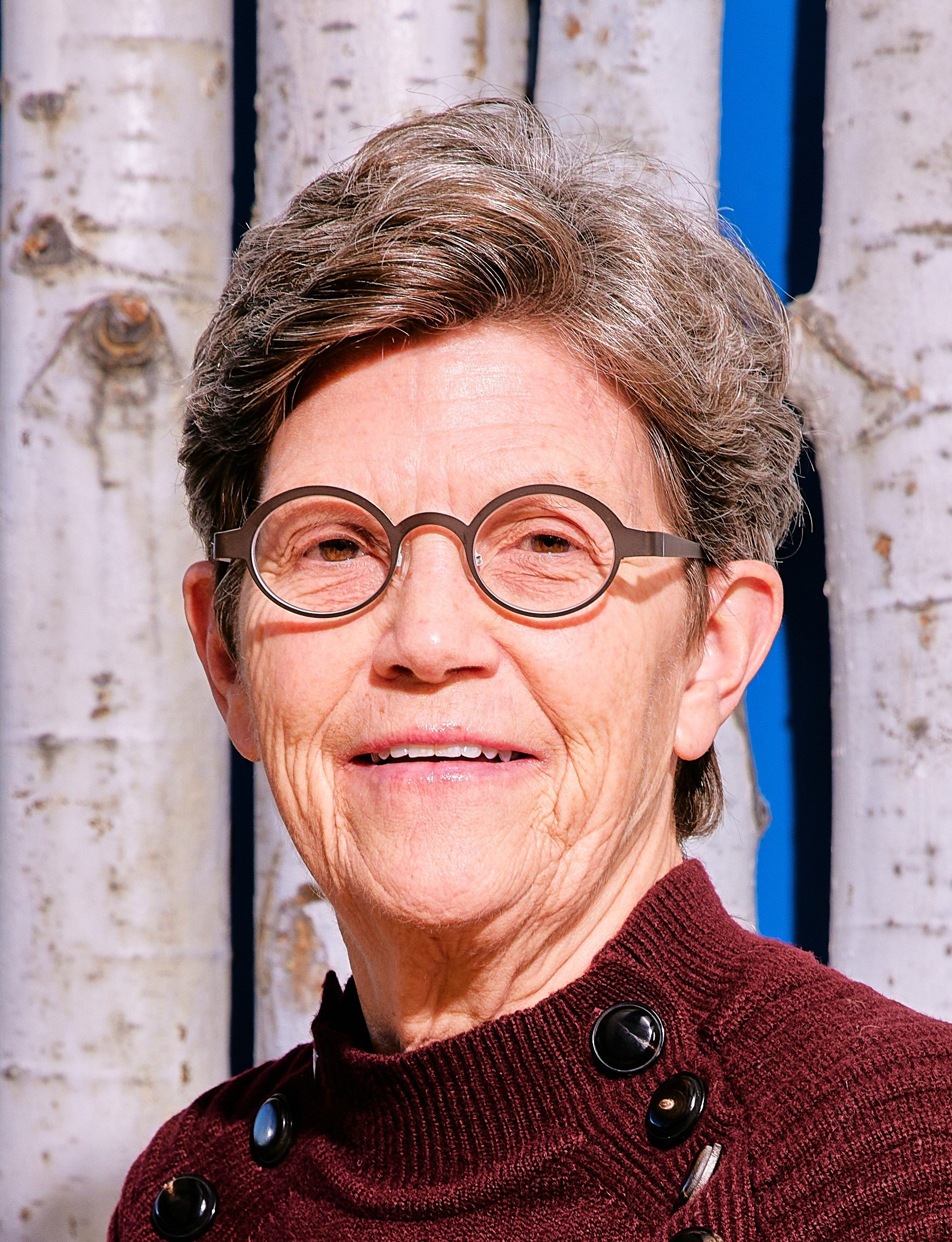
Ruth Katz is director of Aspen Ideas Health, a vice president of the Aspen Institute, and executive director of its Health, Medicine & Society Program, which brings together groups of thought leaders, decision-makers, and the informed public to consider US health challenges and identify solutions. Previously, she was the Walter G. Ross Professor of Health Policy at George Washington University Milken Institute School of Public Health, where she served as dean from 2003 to 2009. From 1997 to 2003, Katz was associate dean for administration at Yale University School of Medicine. She also served as chief public health counsel to the US House of Representatives’ Energy and Commerce Committee on the Affordable Care Act.

Susan Magsamen is the founder and executive director of the International Arts + Mind Lab Center for Applied Neuroaesthetics (IAM Lab), a groundbreaking initiative at the Johns Hopkins University School of Medicine and a faculty member in the Department of Neurology. Her work explores how the arts and aesthetic experiences measurably change the brain, body, and behavior—and how this knowledge can be applied to improve health, wellbeing, and learning across medicine, public health, and education. In addition to her academic and research leadership, Susan is a successful entrepreneur who has founded award-winning arts education companies, including Curiosity Kits and Curiosityville, which have received many awards for innovation and impact.