Arts Funding Is Not in a Post-Crisis Moment
Nadia Elokdah
A recent Inside Philanthropy article, “Trends to Watch in an Arts Funding Ecosystem Beset by Federal Cuts,” examines the current arts funding landscape amid ongoing federal cuts and political pressure on nonprofit organizations, artists, and communities.
The article features Eddie Torres, GIA President & CEO, who cautions against treating this moment as “post-crisis.” As Torres argues, the arts and culture field remains under active pressure. Nonprofit organizations, cultural workers, artists, and communities continue to experience instability as federal cuts, political targeting, and broader attacks on civil society unfold.
That distinction matters. If this moment is understood as a temporary crisis that has passed, funders may be tempted to respond with short-term fixes alone.
The arts and culture field remains under active pressure. Nonprofit organizations, cultural workers, artists, and communities continue to experience instability as federal cuts, political targeting, and broader attacks on civil society unfold.
But if this moment is understood as part of a broader restructuring of the conditions in which arts and culture operate, then the call to the field is different. Arts funders need to consider not only how to replace lost dollars, but also how to support advocacy, strengthen public policy engagement, protect cultural workers, and sustain the civic infrastructure that makes cultural life possible.
Arts funders need to consider not only how to replace lost dollars, but also how to support advocacy, strengthen public policy engagement, protect cultural workers, and sustain the civic infrastructure that makes cultural life possible.
The Inside Philanthropy article identifies several trends shaping the current arts funding ecosystem. Emergency support has helped some arts and humanities organizations respond to federal cuts, but demand continues to exceed available resources. Funders with open application processes are overwhelmed, while organizations are competing for limited dollars in an environment where many other nonprofit sectors are also facing federal retrenchment.
At the same time, emergency funding is just that. It is not a permanent solution. Without clear commitments to sustained support, artists and cultural organizations are left to manage uncertainty while also trying to demonstrate stability in a moment of extreme vulnerability. This creates a difficult bind for the field: organizations are asked to adapt to instability while also proving that they are strong enough to merit continued investment.
The article also points to shifts in individual and corporate giving. Some donors are redirecting support toward direct-service organizations and other parts of the social safety net. Corporate support has also become more fragile, particularly for organizations whose work is connected to racial justice, LGBTQ+ communities, or other areas that may be targeted by political attack. These shifts are not simply fundraising challenges. They are signs of a broader civic environment in which cultural organizations are being asked to justify their work while absorbing the impacts of public disinvestment.
The human cost of this moment is also central. Arts leaders are exhausted. Organizations are laying off staff, reducing programs, delaying projects, and asking workers to carry impossible levels of uncertainty. Artists are adapting projects, seeking new sources of support, subsidizing work themselves, or canceling projects altogether. The creativity of the field should be recognized, but not romanticized. Adaptation under duress is not the same as sustainability.
These shifts…are signs of a broader civic environment in which cultural organizations are being asked to justify their work while absorbing the impacts of public disinvestment.
Torres’s analysis points to a central challenge for the field: emergency support is necessary, but not sufficient. Within this context, he calls on arts funders to understand their role not only as grantmakers, but also as advocates, field-builders, and public policy actors. This is not a departure from arts funding. It is a recognition that arts grantmaking is inseparable from the public systems, policies, and democratic conditions that shape cultural life.
The article also notes GIA’s recent advocacy efforts, including our campaign encouraging action in response to terminated NEA grants, our guidance for funders on supporting advocacy and lobbying, and our work to connect GIA members with federal representatives. These efforts reflect GIA’s broader commitment to supporting arts funders as they navigate the relationship between grantmaking, advocacy, and public policy.
Torres also resists the idea that there is a “silver lining” in the current crisis. That refusal is important. The field’s resilience should not be used to soften the severity of the moment. Creativity, collaboration, and adaptation are real, but they do not erase the harm of federal cuts, political targeting, and chronic underinvestment.
The field’s resilience should not be used to soften the severity of the moment. Creativity, collaboration, and adaptation are real, but they do not erase the harm of federal cuts, political targeting, and chronic underinvestment.
For arts funders, the call is clear: move beyond short-term crisis response and toward sustained advocacy, engage more deeply in public policy, and strengthen accountability to the artists, workers, organizations, and communities most affected by the current environment.
The work ahead is not only to help organizations survive this immediate shock but to strengthen the conditions that allow arts and culture to thrive.
ABOUT THE AUTHOR
Nadia Elokdah is Grantmakers in the Arts’ Vice President & Director of Programs
ABOUT THE ARTWORK
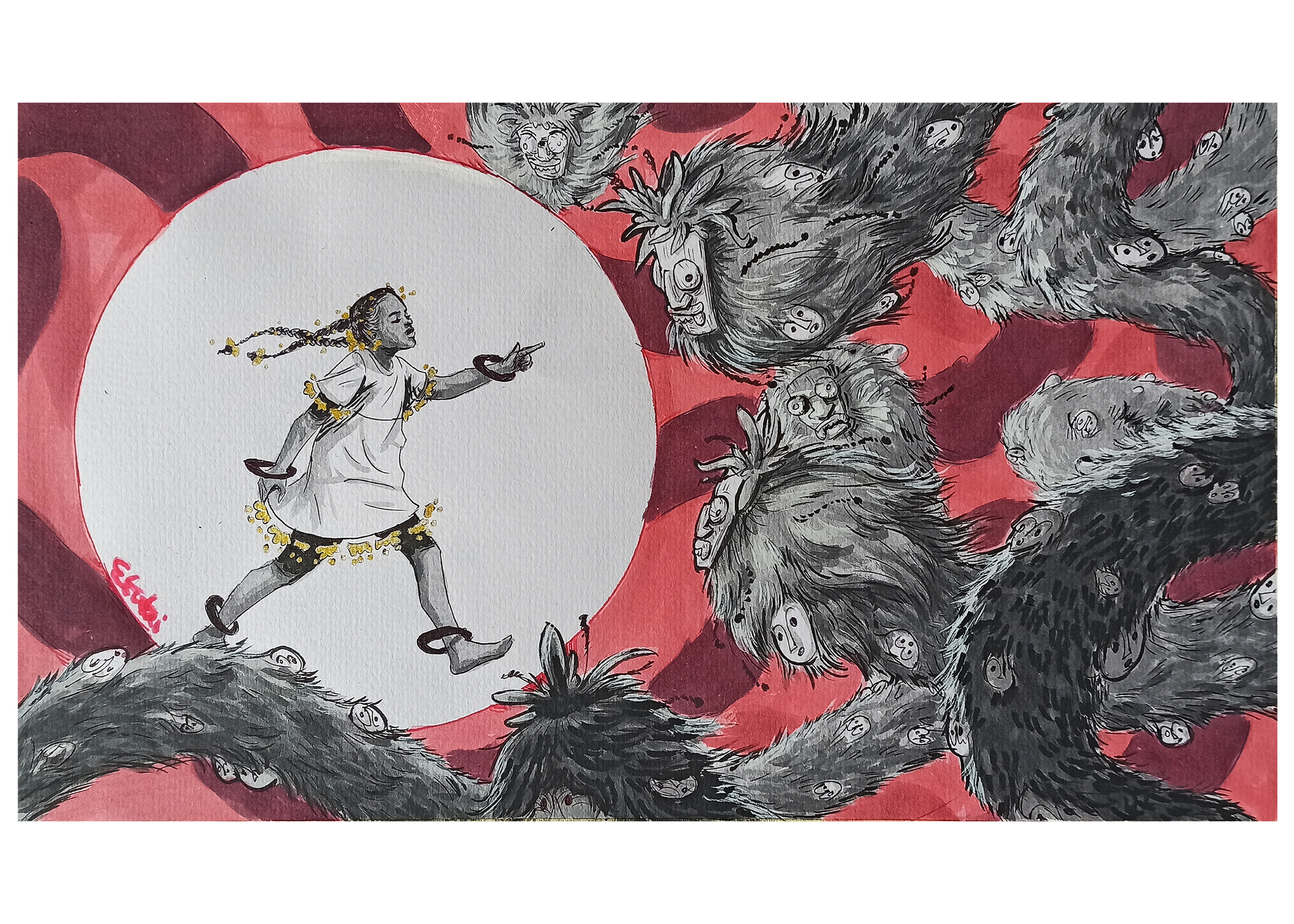
Resist & Prevail (2020) by Etubi Onucheyo for Fine Acts x OBI. Connect with Etubi Onucheyo online at @mumu.illustrator and Fine Acts on Facebook: @fineacts.co, Instagram: @fineacts, or Twitter: @fine_acts.