Pouring Into Our Own: A Black Tradition of Collective Investment
Joseph Bannerman
How are you navigating, resisting, or reshaping today’s funding realities in your work?
Greetings! My name is Joseph Bannerman, and I am a rising third-year doctoral student in Humanities with a concentration in African American Studies at Clark Atlanta University. I am also a digital historian who founded the digital platform Learn Mo’ With Joe to make Black history more accessible to all. I have amassed a growing and engaged following across platforms with content that primarily focuses on Black Atlanta history, delivered in easily digestible bites that make the history come alive. I do this by traveling to sites connected to Black history, where I provide a short 1–3-minute historical interpretation of the site and its relevance to both local and greater Black history. I additionally research the topic at hand, film and edit the videos, and manage all of the social media platforms. I also try to highlight lesser-known stories, in line with my vision of making history accessible to all.
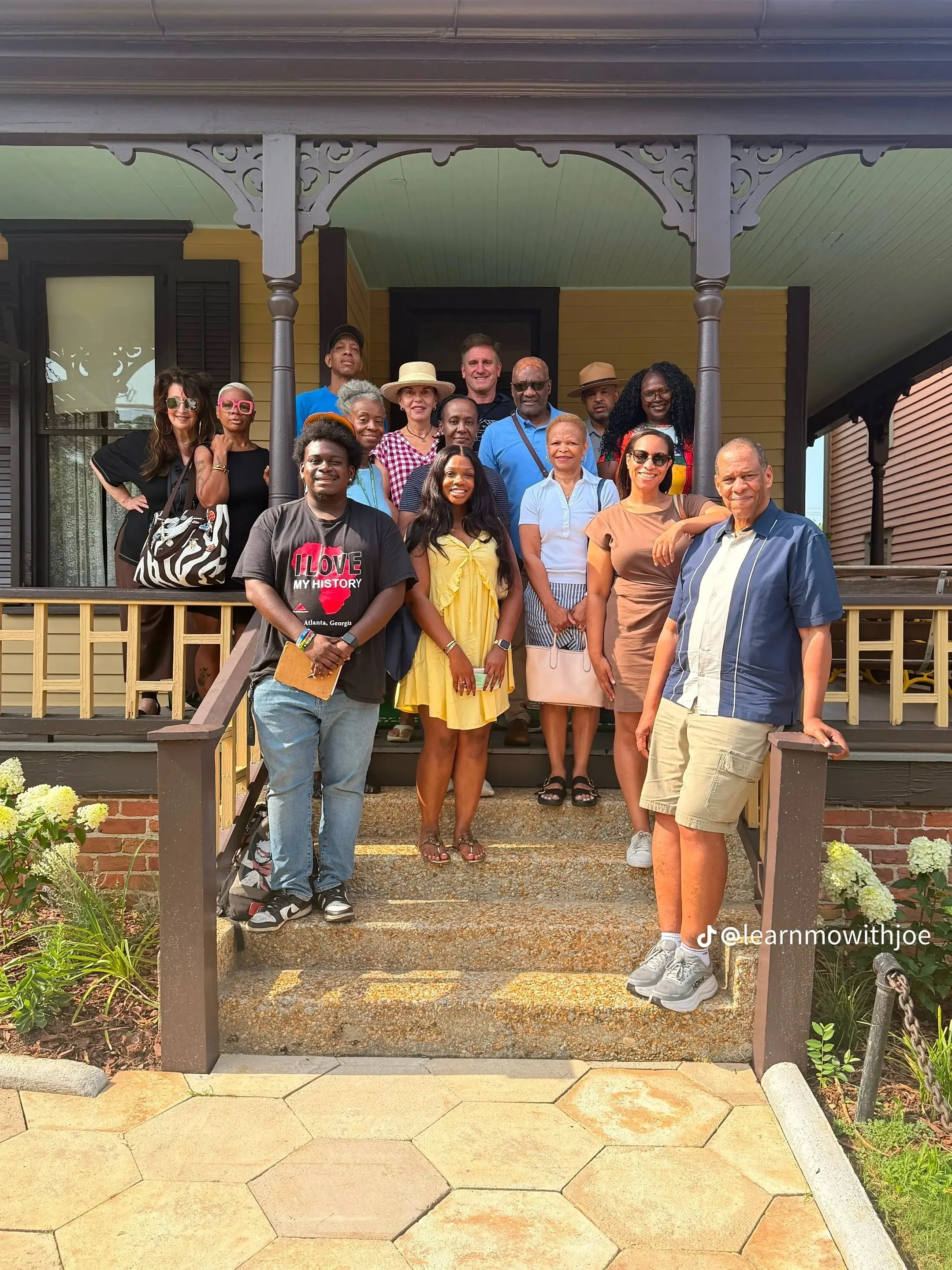
Joseph Bannerman and community members pictured at the re-opening of Martin Luther King Jr.’s Birth Home after 3 years of closure.
Many of the equipment and travel costs related to this platform are self-funded; wherever possible, I try to use whatever is left after bills to invest in my platform. From equipment to transportation, my platform is funded primarily by what I can make stretch. All of this is done without traditional funding mechanisms. These experiences have shown me that the possibilities for reimagining today’s funding structures exist through collective support. This platform has taught me that community investment has been instrumental in sustaining my academic and public history work.
I have had a couple of instances where I experienced a gap in educational expenses; crowdfunding, such as GoFundMe, supported by my audience, has been foundational in raising the money necessary to stay enrolled and further my education, and for that, I am forever grateful. Additionally, there have been times when my community has donated resources, including a bus pass (I take the bus to record all my content, conduct research, etc.), and contributed equipment such as microphones and tripods. This is especially important because all my videos for my platform are recorded on location at these historic spaces, inviting the viewer to learn the history where it happened.
The preservation and teaching of Black history present unique challenges when it comes to navigating funding, and community investment is necessary to make it possible to continue this work of historical education. These experiences have taught me to reimagine funding opportunities and envision a sustainable model of support. My platform does not have a single sponsor or financial backing; it is funded by multiple small donations from a community of supporters who also believe in the vision of making Black history accessible to more people.
Atlanta’s Only Fine Arts Museum Dedicated to Artists of African Descent: Hammonds House Museum
Nestled in Atlanta's historic West End neighborhood, Hammonds House Museum is a vital cultural institution dedicated to preserving and celebrating the artistic legacy of the African Diaspora. Founded in 1988 and housed in the former residence of Dr. Otis Thrash Hammonds, a respected physician, community leader, and avid art collector, the museum serves as a bridge between history, culture, and contemporary artistic expression.
Significantly, Hammonds House Museum is the only fine arts museum in Atlanta dedicated exclusively to artists of African descent. Through its exhibitions, collections, and educational programs, the museum highlights the creativity, innovation, and cultural contributions of Black artists from across the globe. Located in one of Atlanta's most historic African American communities, it provides an essential space for preserving stories, fostering dialogue, and showcasing artistic excellence that might otherwise be overlooked.
For more than three decades, Hammonds House Museum has enriched Atlanta's cultural landscape by honoring the past, supporting contemporary artists, and inspiring future generations to engage with the diverse and powerful narratives of the African Diaspora.
The Carver Theatre: A Landmark of Black Culture in Alabama
In the heart of Birmingham, the Carver Theatre stands as a significant cultural institution within African American history. Opened in 1935 during the height of segregation, the theater was part of a growing network of spaces designed to serve Black audiences who were excluded from white-owned venues. It quickly became a central gathering place within Birmingham's Black community, offering access to film, live performances, and shared cultural experiences.
The Carver Theatre was more than an entertainment venue. It operated within a broader system of Black business districts that supported economic independence and cultural expression. Located in what was once a thriving center of Black commerce, the theater contributed to a local ecosystem where Black entrepreneurs, artists, and audiences could engage on their own terms. These spaces helped cultivate talent and provided representation at a time when mainstream media often excluded or misrepresented African Americans.
During the era of the Civil Rights Movement, Birmingham became a focal point for national attention as activists challenged segregation and systemic inequality. While protests and demonstrations shaped the political landscape, cultural institutions like the Carver Theatre played a quieter but equally important role. They offered spaces for reflection, communication, and preservation of identity within a rapidly changing social environment.
Today, the Carver Theatre remains an important historical landmark, now part of the Alabama Jazz Hall of Fame, and continues to represent the intersection of art, history, and community. Studying its legacy provides valuable insight into how African American cultural institutions sustained resilience, creativity, and collective memory in the face of segregation.
The Birthplace of the “Motown Sound”: Hitsville, U.S.A.
Hitsville, U.S.A. was the original headquarters of Motown Records, founded by Berry Gordy in 1959 with just $800. What started as a small, unassuming home quickly became the birthplace of the iconic, “Motown Sound,” a blend of soup, pop, and R&B that reshaped the music industry.
Inside its famous Studio A, nicknamed "The Snakepit", artists recorded countless hits that crossed racial barriers and brought Black music into mainstream audiences around the world. Legends like Stevie Wonder, The Supremes, Marvin Gaye, and The Jackson 5 all began their rise right here.
More than just music, Motown created a cultural movement, breaking boundaries, shaping identity, and defining an era that still influences artists today.
Follow Learn Mo With Joe on Social Media
This community-supported model for Black public historians and creatives reflects a broader tradition of collective investment in Black academics and creatives, one that is deeply rooted in our culture and history. Just as past Black creatives had patrons and the greater community, such as the Black church, to pour into them so that they could continue their work, today we need to model those same support systems for young Black creatives to not only survive but thrive. Institutions such as the Black church, civic organizations, and HBCUs have historically been instrumental in assisting when mainstream institutions were insufficient, and I believe this is a legacy that could be continued through supporting Black creatives. Just as we come together for academics with scholarships and other modes of assistance, we should also work to uplift Black creatives as well.
I am a first-generation doctoral student, chasing a dream that God has shown me: I want to make history accessible to as many people as possible. If just one person learns something new from me, I will feel one step closer to making this dream a reality. However, while I may be the face of this platform, I know that this is a collective effort, and this shared investment has been instrumental in advancing my mission and bringing me closer to achieving the goal of preserving Black history.
The support I receive directly enables me to bring Black history to a wider audience, and that is why I am so appreciative of every person who shares a belief in this mission. This community investment is necessary to allow Black history to remain accessible when mainstream funding structures may not prioritize it. Creating multiple funding pathways for Black creatives to sustain their work ensures that community investment is not limited to helping my specific platform thrive.
ABOUT THE AUTHOR
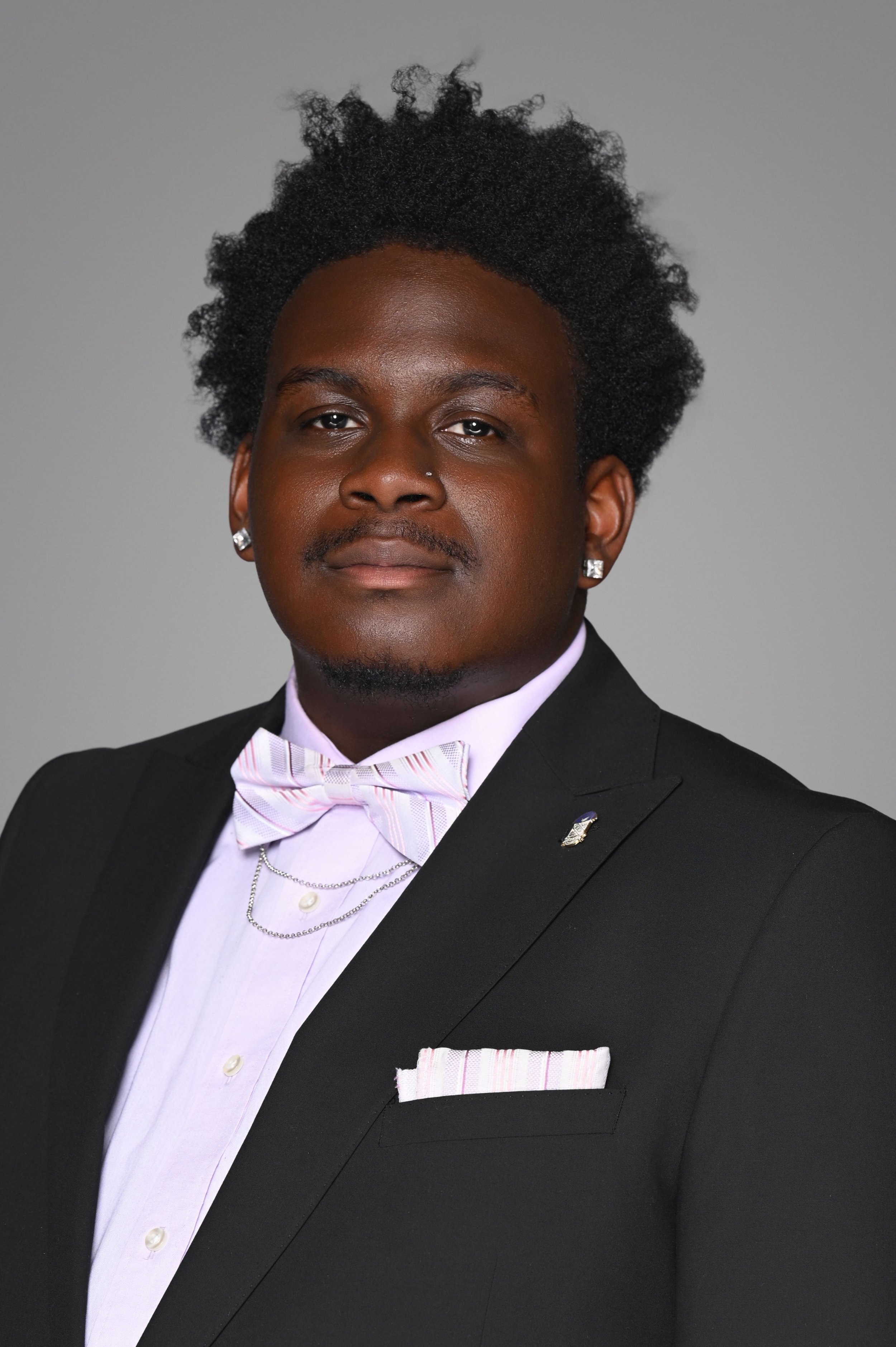
Joseph K. Bannerman, M.A.
"Just an ordinary man telling extraordinary stories."
Learn Mo' With Joe was initially conceived during the Summer of 2020 as a medium to share often unknown or overlooked features of Black history. In 2023, he began sharing history on Instagram; the first video was created in 2025. Since then, he has amassed a healthy following across Instragram, Twitter, Tiktok, and now YouTube. His current focus, as an intern at The APEX Museum in Atlanta, GA has been on Black Atlanta History. Please feel free to watch, like, comment, and share his videos far and wide. In love and solidarity!