Arts and Culture, Collective Efficacy & Civic Engagement
Eddie Torres
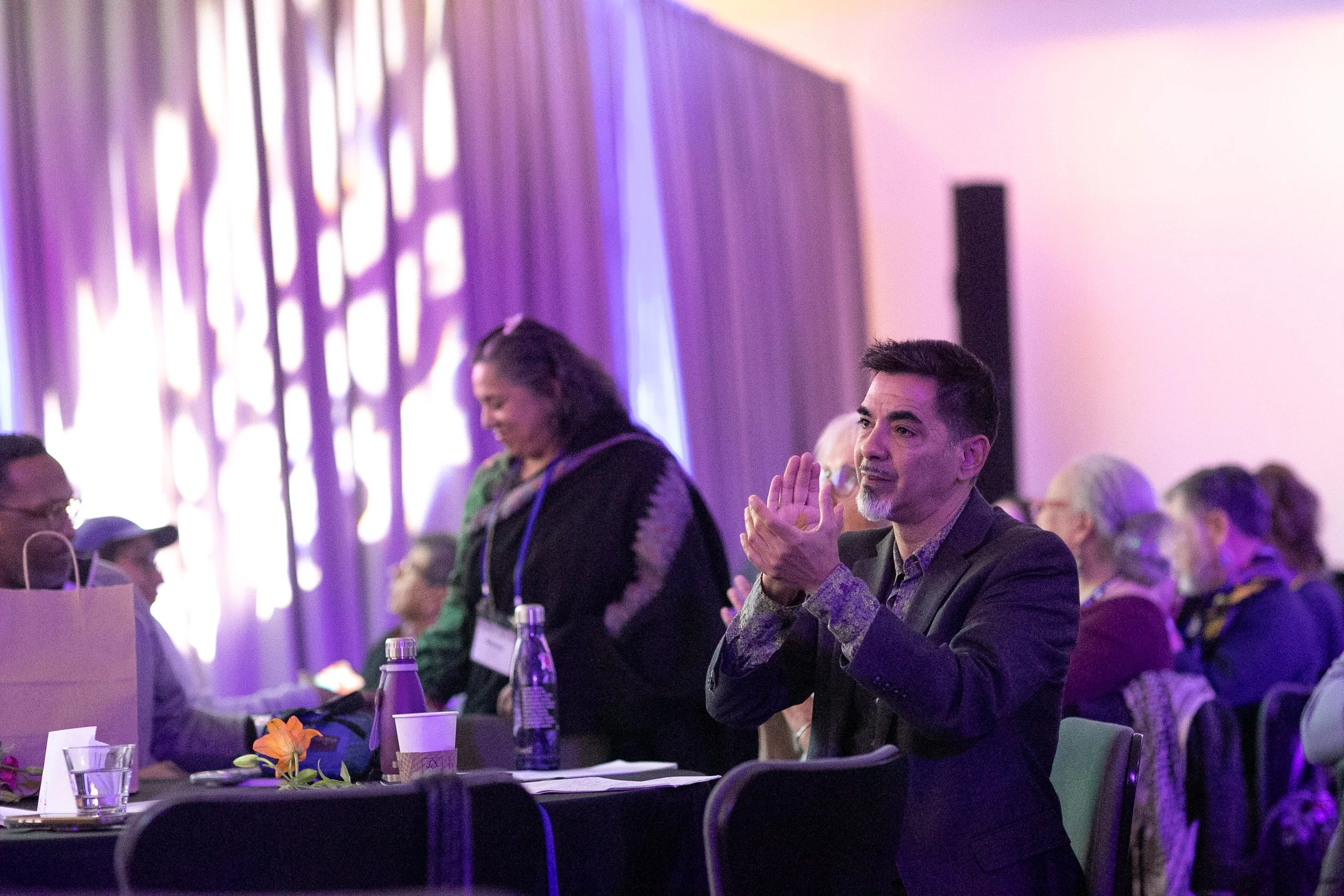
Torres pictured at a plenary at GIA’s 2025 Conference in the Twin Cities.
As the United States celebrates its 250th anniversary, Grantmakers in the Arts is reflecting on the role of arts and culture in our nation’s civic life.
Why should we support arts and culture when our communities are so vulnerable and when democracy itself is at risk?
Grantmakers should support the cultural expression of the communities that are under attack to affirm that community members are more than just problems to be solved–but are instead people with humanity, brilliance, and agency. These key values are essential parts of their self-determination.
Supporting culture is the ultimate asset-based community investment that has been proven to yield results. Housing policy scholar Lisa T. Alexander, in her legal studies research paper Cultural Collective Efficacy, Social Capital and Place-Based Lawmaking, uses William Julius Wilson’s framing of culture as central to collective efficacy when describing culture as “the micro-level processes of meaning making…” As Alexander points out, the mental constructs of community residents that are engaged with community art and culture shift from regarding their communities as sources of shame to sources of pride and empowerment. “These frames, narratives, and group meanings can also provide the basis for effective community organizing that helps traditionally marginalized groups…” Alexander describes cultural collective efficacy as “positive social networks that inner-city residents develop through participation in musical, artistic, and other neighborhood-based cultural endeavors"–a true source of power.
It is in this spirit that Grantmakers in the Arts has shared Community Opportunity Alliance’s work leveraging culture for equitable community development. Cultural expression is constant. What doesn’t automatically happen is culture being resourced for the people we care about. Support for culture alone does not protect or transform communities under attack. Cultural support must be part of a larger mix of support. However, that mix is incomplete and deficit-based without support for the culture of the people we care about.
Culture does more than give people a language for self-expression–cultural engagement leads to improvements in educational outcomes, health, and safety. Perhaps most importantly, cultural engagement yields greater collective efficacy and civic engagement.
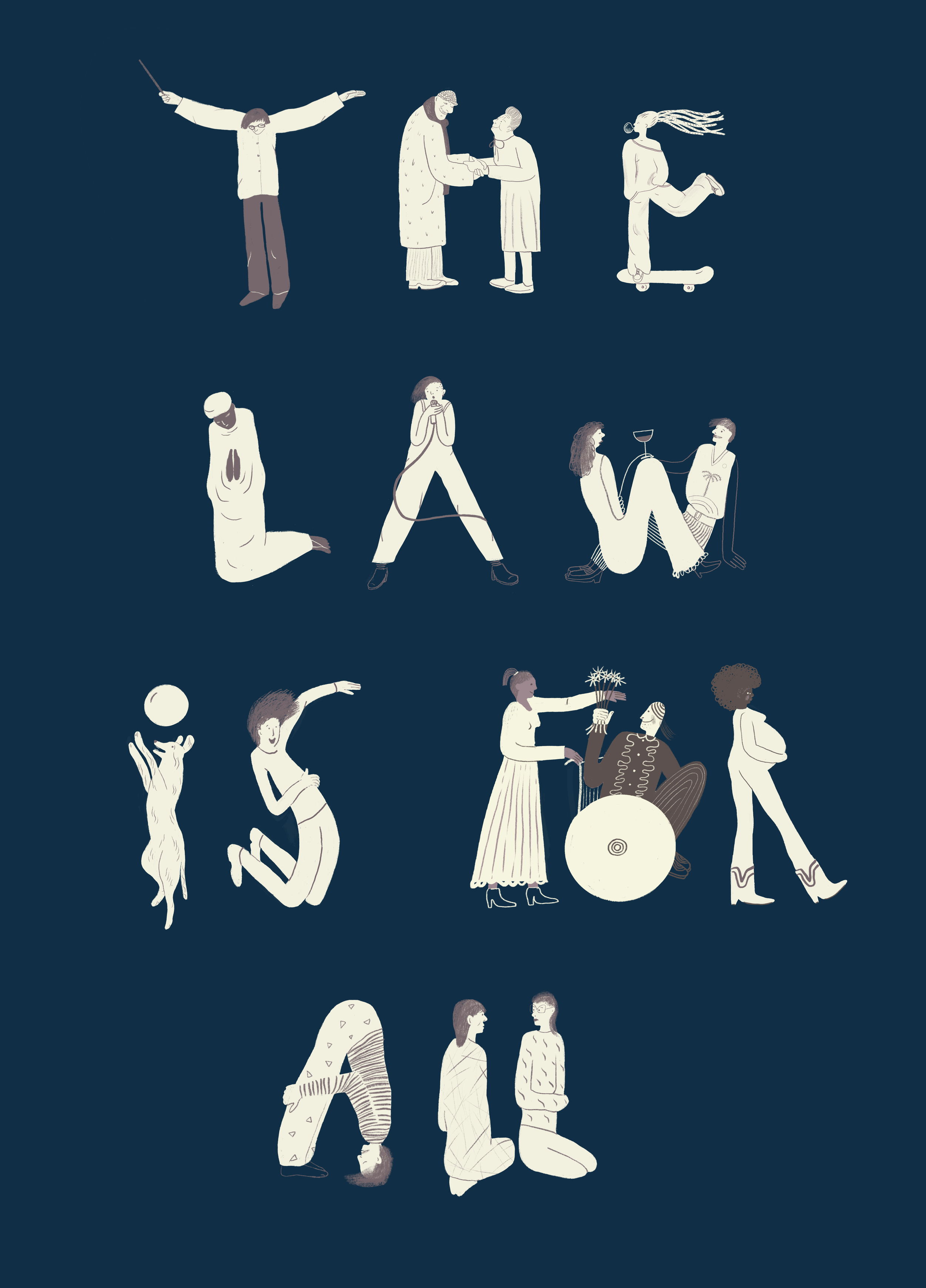
Denitsa Boyadzhieva for Fine Acts, The Law is for All (dark)
Whether cultural participation is in the form of quilting circles, choirs, community murals, social practice, or ciphers, multiple studies have shown that engagement with arts and culture develops participants' ability to imagine change and the willingness to work toward that change. Social Impact of the Arts Project has revealed that cultural engagement builds collective efficacy, or “social cohesion among neighbors combined with their willingness to intervene on behalf of the common good.” This relationship between cultural participation and collective efficacy has been revealed in addressing such issues as neighborhood stewardship, mental health support, and civic engagement.
Alexander cites the Mexican immigrant community’s cultural expression in Chicago’s Pilsen neighborhood–their cultural festivals and their renewal of the Mexican mural tradition–as central to their anti-gentrification efforts. Compared to other Chicago neighborhoods facing gentrification, Pilsen was one of only a few communities that successfully contested and stemmed mass gentrification, halting or modifying development projects that did not include sufficient benefits for existing residents. Pilsen’s residents and community-based organizations created significant affordable housing on vacant lots that otherwise may have been purchased by market-rate developers. Among the Pilsen leaders that Alexander cites in the use of culture to equitably develop their own communities are Hector Duarte, who Grantmakers in the Arts was privileged to meet with as part of our preparing to share Chicago’s cultural innovators with our members from across the nation.
Alexander also cites how the development of hip hop in the South Bronx has been central to the asset-based frame of anti-gentrification community organizing efforts in the area. Alexander also describes how hip hop was born of cross-culture and cross-socio-economic class collaborations. South Bronx artists’ development of hip hop required complex coordination, organizing, and entrepreneurship–developing into not just artistic pride but pride of place among the Bronx’s cultural innovators. As Alexander writes about Bronx community organizers influenced by hip hop, “They develop an alternative narrative that counteracted the notion that their building and their neighborhood was an undesirable place to live.” Alexander further elucidates that cultural collective efficacy did not simply generate bonding social capital but also bridging social capital necessary to connect with those different from us for success. “Their alternative framing was also accepted by city officials interested in preserving affordable housing and combating gentrification.”
Needless to say, hip hop’s cultural power has grown far beyond the South Bronx. I recall how moved I was by the fight for all states to honor Dr. Martin Luther King Day–including artists’ refusal to perform in Arizona until they agreed to annually honor Dr. King. I specifically recall how Public Enemy released By the Time I Get to Arizona in 1991, followed by Arizona voters approving the celebration of Dr. King in 1992 and starting to annually celebrate Dr. King in 1993.
Can’t these successes be explained by other factors besides cultural participation?
Studies have made clear that the relationship between arts engagement and civic participation could not be explained away by demographics including socio-economic status, area of residence, education level, employment status, family structure, or by the personal qualities of the participants. In fact, it appears that arts participation nurtures personal qualities like tolerance, empathy, the ability and inclination to take others’ perspectives, and to help others–the key values behind civic participation.
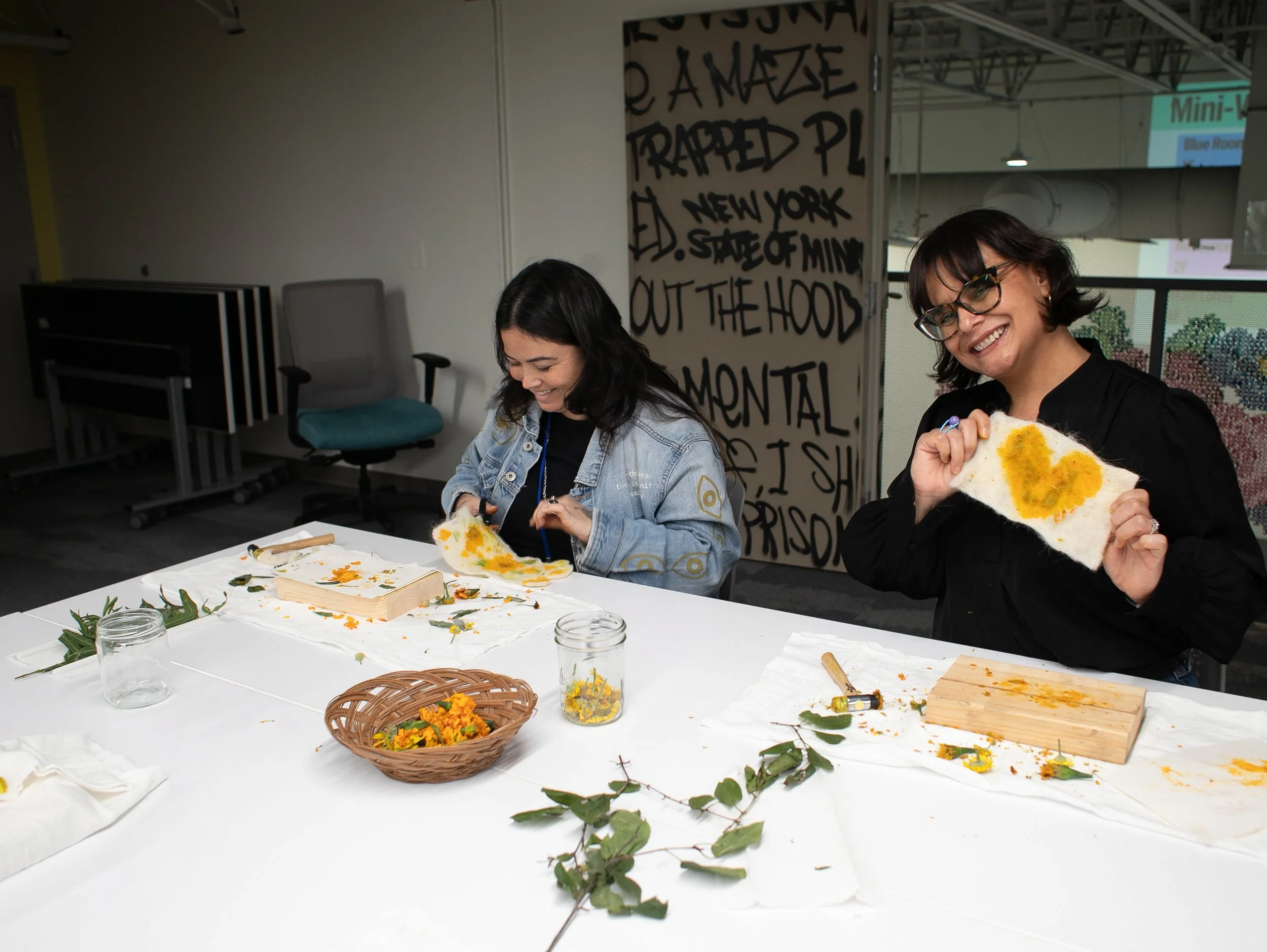
GIA attendees in a craft-making activity during the Supporting the Source: Resourcing Local Creative Ecosystems preconference at Springboard for the Arts during GIACON25.
Crystal Wallis’ research and Nick Rabkin’s research identified how informal arts participation engages people cognitively, emotionally, physically, and socially and requires planning and consideration of how others may interpret the work. The research found that arts practice fostered tolerance of difference, consensus-building and trust, collaborative work habits, innovation, and creativity to solve problems. The studies found more than just statistical correlation, finding instead that art-making was the mechanism for developing the skills, inclination, and trust needed for civic participation.
Listening to and giving feedback necessary for creating art as part of a group builds listening skills and empathy. These processes make it more likely that neighbors help neighbors, while building social skills and tolerance, and move beyond normative social divisions while appreciating and sharing gifts with people unlike us. These skills and inclinations do more than make us better neighbors–they also facilitate social mobility. Alexander found that arts participation created the kind of bridging social capital necessary for social agency and success.
Don’t arts and culture primarily benefit the wealthy?
The U.S. Department of Education studies show that the benefits of arts participation are greater for those from low-income communities. The studies also found that students from low-income backgrounds who are engaged in the arts are more likely to have higher academic performance across the curriculum, and are more likely to graduate from high school, go to college, and secure full-time employment. The studies also found that youth engaged in arts and culture consistently asked, “what if?” questions and used modal verbs like “would” and “could”–signs of considering alternate scenarios, developing the ability to imagine alternate futures, to plan for those futures, and to adapt to changing conditions–all skills needed for civic engagement and active self-determination.
Couldn’t we fund other things that lead to the same results?
Several high-integrity studies have found that not only does arts participation correspond to civic activities such as voting, community organizing, and volunteering–but that arts participation is a better predictor of civic engagement than participation in sports or church groups.
Sacrificing support to culture would also sacrifice the corresponding impacts on educational outcomes, health outcomes and other social impacts of arts engagement, such as safety. Alexander’s scholarship includes stories of how such leaders as Afrika Bambaataa and DJ Kool Herc pioneered hip hop’s participatory cultural forms explicitly as alternatives to crime and violence.
Besides these impacts, supporting the cultural expression of communities under attack is essential to replacing the dehumanization that fuels our current toxic political climate.
As GIA articulates in our Theory of Transformation, denying the validity of the cultural self-expression of people different from us is central to denying their humanity.
Why do the powerful deny the humanity of certain segments of our nation’s populace? To separate the poor from one another to prevent them from organizing against economic exploitation of all by the few. While we’ve long worked against the legal frameworks that support these separation strategies, the cultural framework for our nation’s separation strategy has been provided by the assimilationist racism that continues to this day unless we replace it.
According to Ibram X. Kendi, assimilationist racism is the belief that the inferiority of BIPOC folks is cultural and can be corrected through exposure to western European or white culture.
Assimilationist efforts are often well-intended. Many early abolitionists believed that African slaves could be saved and freed–as long as they abandoned their African cultures and assimilated into the culture of their would-be "saviors."
Assimilationist racism often uses cultural hierarchy to justify and obfuscate economic hierarchy. Assimilationist thinking persists to this day in many forms–including in philanthropy, in the arts, and in the overlap between the two. We evidence this thinking when we passively parrot phrases like “mainstream organization,” when we mean “white.”
Resourcing the self-determination of the cultural expression of cultural “others” is central to affirming their humanity. Supporting the cultural expression of the people under attack–people with disabilities, racialized people, immigrants, members of the LGBTQIA2S+ community, female-identifying people–is essential to supporting their collective efficacy and self-determination.
Needless to say, cultural engagement alone cannot spur collective efficacy and civic engagement. Nothing alone can. We must support ecosystems that include cultural engagement as well as cultural self-determination.
It is in that spirit that Grantmakers in the Arts shares these thoughts and some samples of our work below highlighting how arts and culture work with other social change efforts to fuel self-determination by our nation’s communities. Pa’lante!
GIA Resources and links:
Grantmakers in the Arts’ Cultural Organizing Community of Practice with Midwest Academy & The Highlander Center, in which we feature the voices of cultural organizers such as:
ABOUT THE AUTHOR
Eddie Torres is president & CEO of Grantmakers in the Arts.