Making the Invisible Visible: NPN Reflects on Five Years of Southern Grantmaking
Caitlin Strokosch, National Performance Network (NPN)
The National Performance Network (NPN) occupies an unusual place in cultural funding: a national intermediary with deep roots in New Orleans and a growing regional commitment in the South. That position gives the organization both reach and responsibility. Over the last five years, NPN’s Southern grantmaking has become a testing ground for what it looks like to move resources with accountability to place, resist extractive funding patterns, and have artists, culture bearers, and movement partners reshape how grantmaking works.
Preface
For 40 years, the National Performance Network (NPN) has operated as a national funding and field-building intermediary in the arts. Founded in New York City in 1985 as a network to build better touring and working conditions for artists, NPN has grown to a national coalition of 60 arts presenters, with grantmaking programs that support nearly 1,000 artists a year.
NPN relocated to New Orleans in 2000, where its local and regional commitments deepened in the years following Hurricane Katrina. With a strong track record as a national intermediary, NPN was able to leverage its position among peer-funders to move resources to New Orleans artists and small arts organizations for relief, stabilization, and recovery at a critical time. An early investment from the Lambent Foundation, which has continued to be a catalytic funder and partner to NPN, supported our Southern Programs, through which much of our ongoing work continues.
In 2018, NPN launched a new mission that made explicit a commitment to racial and economic justice, envisioning a network of trans-local strategies where the arts and artists are central to a future in which justice, humanity, and dignity belong to everyone. This position – national in scope, rooted in place, and accountable to a regional cultural ecology – has made NPN a strategic piece of infrastructure in the funding field.
Over the last five years, one part of that work has come into sharper focus: what it means for a national regranting body to be grounded in the South. That grounding includes being accountable to both the history of justice work in the South and the lineage of cultural expressions that have had global impact, like the Free Southern Theater.
Not Just Moving Money
Across all NPN programs
20% of National Programs grantmaking supports artists and arts organizations in the South*, including 10 of 58 national presenting partners
74% of Fiscal Sponsorship projects are in the South
Since 2020
Southern Programs has provided more than $2M to over 300 artists in Alabama, Louisiana, and Mississippi
National Programs has provided $1M to 490 artists across the South
*For the purposes of this data collection, NPN used South Arts’ nine-state region.
NPN’s Director of Southern Programs Stephanie Atkins had long dreamed of developing grantmaking for artists in New Orleans. Unlike NPN’s National Programs, which distributes funding to artists through its network of arts presenters, she envisioned grants that would respond to the region’s meager philanthropic support and allow NPN to distribute funds directly to artists.
Noting a history of funding patterns where national foundations invest in the South for a few years before moving on to other initiatives, leaving behind a legacy of extraction and distrust, Stephanie was adamant: “If we do [grantmaking] here, we have to do it right.” For NPN, the question was not just whether to move resources into the region, but how a national intermediary would do so without repeating the transactional and temporary habits that have long defined much outside investment in the South.
When the Surdna Foundation implemented its Radical Imagination for Racial Justice strategy in 2019, NPN was invited as one of 12 regranting partners to develop a pilot program. We decided to use these funds to launch NPN’s first regional grantmaking program to artists and culture bearers in Alabama, Louisiana, and Mississippi – a program shaped by Southern conditions, relationships, and histories – rather than absorb the funds into NPN’s National Programs. This program became NPN’s Southern Artists for Social Change (SA4SC). Now in its fifth year, SA4SC provides $25,000 a year to artists co-designing projects with local partners around a community-defined vision that centers racial justice.
Stephanie, who was born and raised in New Orleans, believes NPN’s place-based approach is instrumental to our success:
For NPN, these relationships aren’t just about who we know, but how we practice relational work through reciprocity, learning, humility, and care – practices that benefit from both time and proximity.
“As an intermediary – particularly when redistributing resources from funders not based in the South – we bring relationships, presence, and accountability to this work.”
NPN’s Southern Programs lived deeply into its values at the start of the pandemic when the Ford Foundation asked NPN to move emergency funds to New Orleans’ cultural community. Rather than launch an application process that would create more barriers in a time of crisis, NPN drew from our existing relationships to get resources where they were needed without adding friction, competition, or new demands.
Stephanie made phone calls to elders, sought out family members who could accept payment on behalf of artists who didn’t have bank accounts, and quickly distributed relief funds to more than 100 local artists. She asked each artist who received a grant to connect her with others who were particularly vulnerable, working in batches until the fund was depleted. NPN was able to reach culture bearers operating outside of the nonprofit system and artists who would never have known about the funds otherwise; everyone Stephanie contacted who was eligible received a grant, and we did not require grantees to share trauma stories to receive funds. This commitment to center dignity and trust in a time of crisis continues to inform NPN’s national policy and philanthropic work.
In 2021, NPN launched the Take Notice Fund, also with support from the Ford Foundation – a $5,000 no-strings-attached grant to BIPOC artists in Louisiana. Stephanie described the intention of the Take Notice Fund, saying:
“Systems have been created – and continue to exist – that limit resources for Southern artists or just completely overlook artists who are practicing here. [This fund] honors artists who are doing powerful work often under the radar.”
The fund’s name is both an invitation and a critique, responding to artists of the Global Majority who feel invisible to national arts funders while simultaneously being excluded from Southern institutions, policies, and philanthropy: notice the artists national funders routinely miss, and the systems that make that invisibility possible. And as NPN’s first statewide grantmaking program, NPN’s team was challenged to look beyond New Orleans and take notice of – and build relationships with – artists across Louisiana as well.
The Visibility Gap
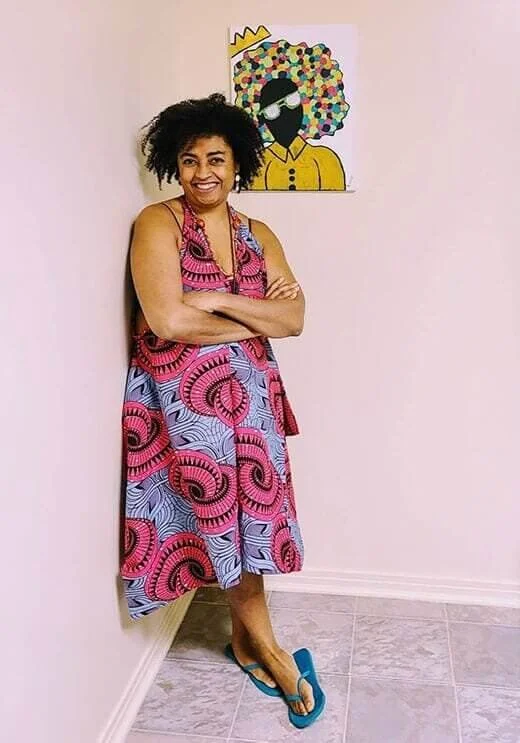
Photo credit: Anna Beatrice Scott
After five years of Southern Programs’ grantmaking, invisibility and erasure are common themes among grantees.
For example, SA4SC artist Anna Beatrice Scott centers Black land liberation and the preservation of cultural assets to disrupt the erasure of Black histories in Holly Springs, Mississippi. Her performance-based, interactive game ART+FACT draws upon community narratives and local landmarks to uncover historical facts, as well as memories and stories from residents. Describing the origin of this project, Anna says, “There’s a pattern in Holly Springs where the white community has access to physical spaces and resources, and Black residents are left on the margins, with their stories often left untold.” Anna’s work makes clear that this funding is not simply supporting an individual artist’s project; it is resourcing community memory, land-based truth-telling, and local power.
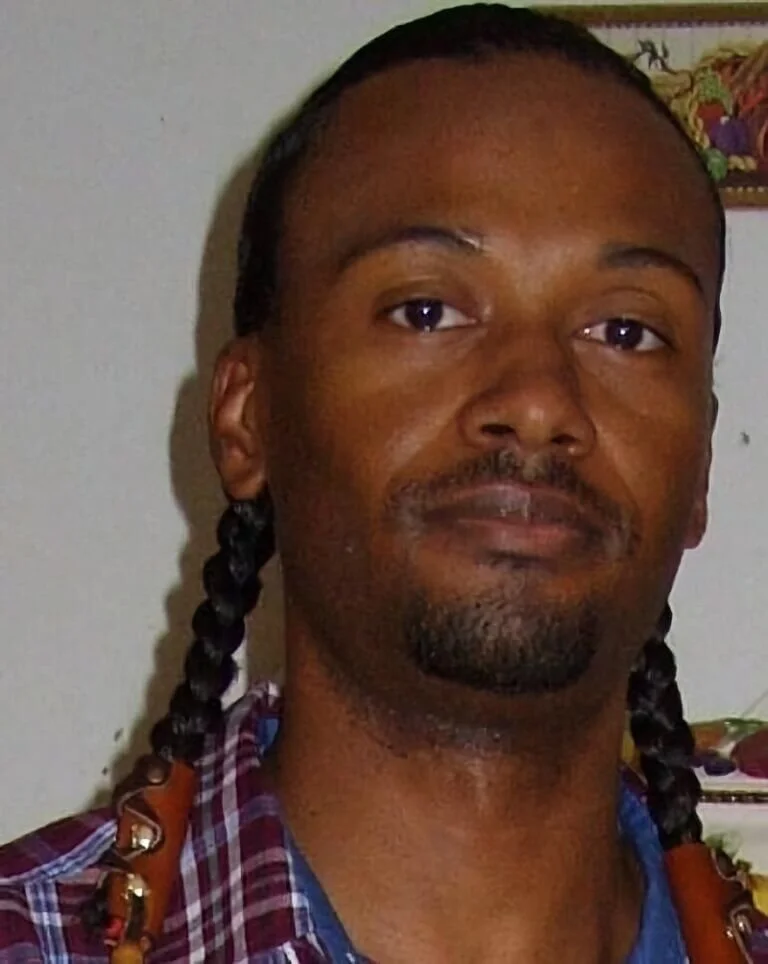
Photo credit: Self Portrait of Nant’a (Chief) Cougar Goodbear
Similarly, Cougar Goodbear, another SA4SC awardee in Lafayette, Louisiana, is working tirelessly to revive and sustain the traditions of the Canneci Tinné (pronounced shaw-neh-shih tihn-neh) people in an ongoing fight against erasure. NPN’s Southern Programs team recently visited Canneciville, the site Cougar is developing with his community as a Canneci gathering place, which uses art as a vital means of cultural preservation essential for passing down the knowledge and skills that define Canneci identity. “Our culture is also art,” says Cougar. “The things we do, like the pottery, the basketry, our dances, our songs, it’s all intertwined.”
The Work Changed Us, Too
As NPN has intentionally moved to the intersections of arts and social justice, its program structures and practices have changed as well.
“Southern Artists for Social Change really challenged us to rethink what an artist’s body of work is and how to manage a selection process around civic practice,” says Stephanie. SA4SC pushed NPN to reconsider not only what counts as artistic practice, but what grantmaking must recognize when artists are working through civic, cultural, and movement-based forms. These projects are about civic imagination, reshaping communities, and righting wrongs from colonialist, racist, extractive systems—from repatriating Indigenous remains, to re-entry programs for formerly incarcerated people, reclamation of land and foodways, community development around Black entrepreneurship, environmental justice, and more.
NPN’s Southern Artists for Social Change envisions a world in which people of color living, working, and organizing for community change in the South have the power, resources, and opportunities to thrive.
In its three-year pilot phase, SA4SC was a one-year grant, with 12 projects awarded $25,000 each. Then the Surdna Foundation made a powerful commitment to its regranting partners, extending funding for another six years so partners could build multi-year grants and explore other forms of support for the artists’ projects. For NPN, this support provided more than program stability. It allowed for the hiring of a permanent program coordinator, and it made possible a sustained accompaniment in this work, engaging more deeply with the artists to develop long-term strategies for success.
Following Surdna’s renewed commitment to SA4SC, NPN organized a gathering for grantees in 2024, convening all four cohorts in New Orleans. NPN’s new Southern Programs Associate, Daniel Pruksarnukul, had just started when the 40 artists convened. Afterward, he spoke to the importance of gathering these artists:
“I realized they didn’t know each other, that everyone was working in their own community and taking on these big justice issues in isolation. But NPN can be the hub.”
In that sense, NPN’s role is not only to fund projects, but to reduce isolation across communities doing parallel justice work and to build connective infrastructure across the region. Last year, Stephanie and Daniel began organizing community visits to grantees outside New Orleans. NPN had planned to conduct site visits as part of SA4SC’s initial outreach, but the pandemic made that impossible.
“It’s better that community visits are happening after the grants have been awarded ... How and when we enter your community with you matters. We didn’t want our site visits to feel like a dog-and-pony show where artists and community members are forced to perform for their funder.”
That distinction is important: accompaniment is not the same as surveillance, and relationship is not the same as performance for a funder. Stephanie has been particularly moved by these experiences: “We are walking on hallowed ground with artists, stepping into spaces where sacred, healing work is happening. We are ten toes down with you.”
Sustained, reciprocal relationships are at the heart of all of NPN’s work, as both a value and as a foundation for collective power. NPN hopes to deepen these new relationships beyond the grant period, to connect the artists to other networks of support and be ongoing partners in advancing justice in the South. For example, when CERF+ asked NPN to help evaluate its emergency response grantmaking practices, Stephanie gathered BIPOC artists with whom NPN had established trust for candid, powerful conversations redefining “crisis” and “emergency” by and for Black and Brown communities in the South. That work changed CERF+’s grantmaking and continues to shape the national policy and philanthropic coalitions NPN belongs to as well. It speaks to a growing strategy for NPN as an intermediary: to carry artist-informed Southern analysis back into national funding practice.
In the years since SA4SC launched, NPN has worked to make good on its commitments to be a hub where artists tackle issues together and to leverage our national network for Southern artists. These relationships are not symbolic; they create pathways into national visibility, professional development, and cross-program support. Southern Programs’ grantees are now included in National Programs’ Documentation & Storytelling Fund; more than 40 Southern artists received scholarships, honoraria, and travel support to participate in NPN’s national conference; National & Southern Programs have co-designed an artists’ professional development program with Artists U; and NPN’s Department of Racial Justice & Movement Building collaborated with Southern Programs to host its first Mixed Metaphor Learning Lab in New Orleans.
Staying In It
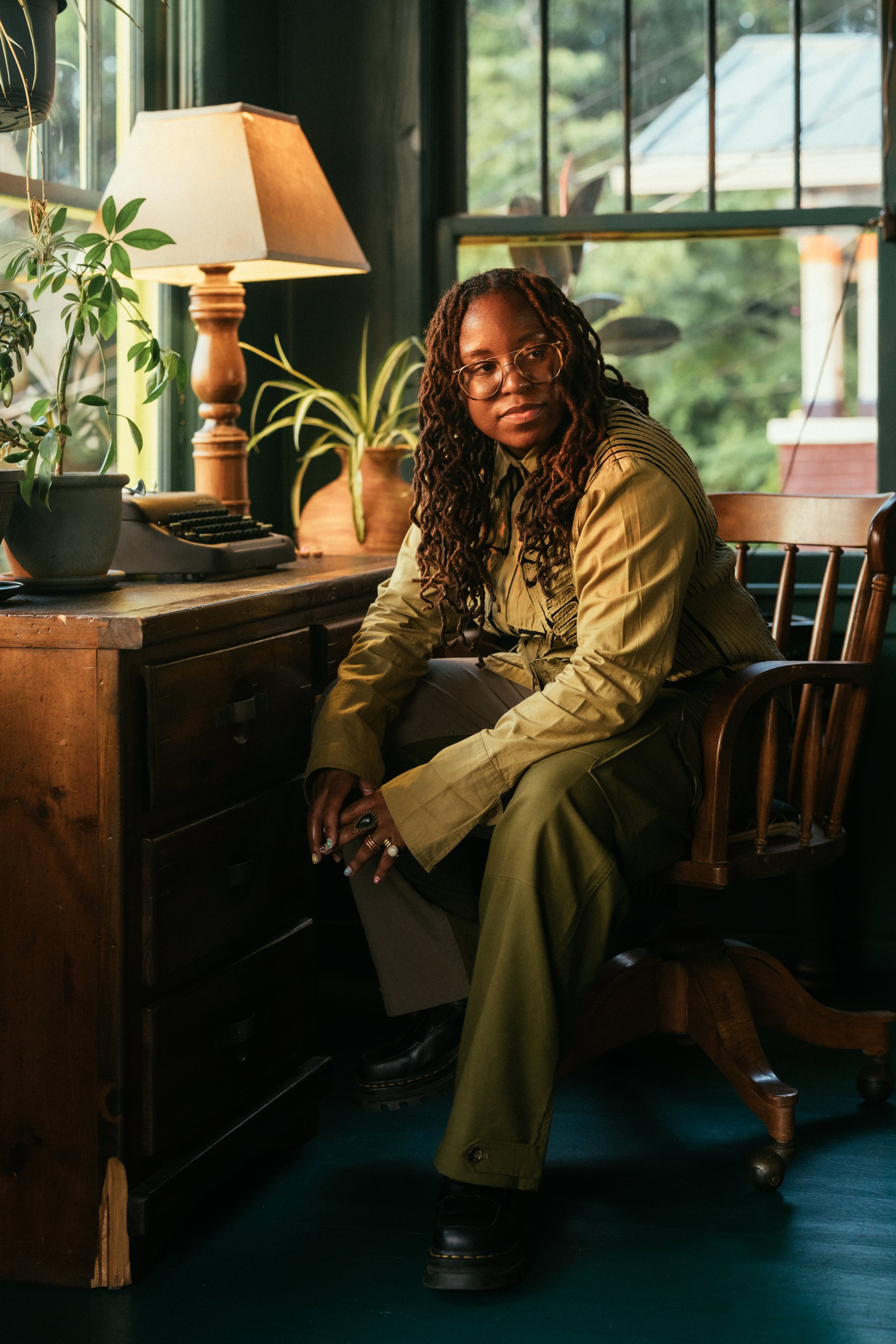
Photo credit: Sydney A. Foster by Mary Fehr (2026). Sydney’s website.
NPN’s identity has been a sometimes-murky hybrid of funder, service organization, and intermediary. As the different arms become increasingly intertwined—between our national network of presenters and artists, the newer Department of Racial Justice & Movement Building, cultural policy and advocacy efforts, and our work in the South—the organization is sharpening its capacity as a political instrument for justice.
In the South, that includes deepening engagement with social justice groups beyond the arts, including Project South, who NPN partnered with recently to develop a Cultural Movement Assembly; and Grantmakers for Southern Progress, where Stephanie has been named a 2026 Fellow. These relationships reflect that NPN’s Southern work is not confined to the arts alone, but is increasingly in conversation with broader movement, policy, and regional power-building ecosystems.
As an intermediary funder, NPN provides something the field too often takes for granted: the trusted, relational layer that can reduce barriers and move resources – quickly and across distance – where they are needed most, in ways that are more responsive to local realities. When intermediaries are under-resourced, access narrows, and artists and communities are left to navigate crises alone.
Stephanie says, “NPN is evolving—the programs we have right now won’t all stay the same, but we have to continue investing in the South. The way injustice and discrimination work is that it will always wrap around and attack you from another point. So we can’t give up.”
On a recent visit to Montgomery, Alabama, Daniel met with artist Sydney A. Foster, whose project pray the gay away – addressing queerness and religious identities in the Black American South – was part of NPN’s first round of SA4SC grants. Visibility and cultural memory remain central to their work, and today Sydney is expanding their role as an artist and organizer to create multigenerational spaces of intentional community care for artists of the Deep South. Their new project, Art Pays Us, is building an ecosystem to nourish and sustain artists – from storytelling and documentation, to supporting artists in creative transition, growing a base of art collectors, mutual aid circles, and more.
“We have to continue investing in the South. The way injustice and discrimination work is that it will always wrap around and attack you from another point. So we can’t give up.”
Their work points to what NPN is increasingly trying to support: not just individual projects, but ecosystems of care, visibility, and material survival shaped by artists themselves. “We build a record of Southern life, while collectively envisioning more sustainable futures,” says Sydney. “These are acts of both care and resistance.”
NOTES & ADDITIONAL RESOURCES
For readers who want to spend more time with the artists, projects, and funding context surrounding NPN’s Southern work, the resources below offer a wider view of the ecosystem this essay points toward. Together, they expand on key themes running through the piece: self-determination, cultural continuance, visibility, place-based practice, and the role of funding structures in either reinforcing or disrupting exclusion.
Southern Programs — NPN’s landing page for its Southern work, offering a broad overview of the regional commitments, context, and program structure behind this essay.
Southern Artists for Social Change (SA4SC) — A closer look at the regional grantmaking program referenced throughout the piece, including its focus on artist-led, community-defined projects rooted in racial justice.
Take Notice Fund — Background on NPN’s statewide Louisiana fund for BIPOC artists, shaped by the need to recognize artists too often overlooked by mainstream arts funding systems.
Voices from the Network — NPN’s artist blog, featuring first-person and artist-centered stories that reflect the broader values, struggles, and liberatory practices animating the network.
Devonta Ravizee: Transforming Birmingham through the 5 Lil’ Penguins Project — A succinct story from Birmingham about transformation, self-determination, and the life-shaping potential of deeply rooted creative work.
The Art of Resistance: Kerrigan Casey’s Vision of Healing and Change — A profile of visual artist Kerrigan Casey’s work in Florence, Alabama, engaging systemic injustice, healing, and resistance through art.
On Efficacy and the Institution — Ann Glaviano’s thoughtful reflection on place, institutional presence, and the familiar pattern of support structures arriving, investing, and then receding.
Bvlbancha Public Access: Amplifying Indigenous Voices in the Gulf South — A useful resource for readers interested in Indigenous cultural work, media, and narrative presence in the Gulf South.
Building Beauty with Spy Boy Walter — A feature highlighting Black Masking Indian culture in New Orleans and the sustaining force of cultural practice, beauty, and inheritance.
“Looking Back to Move Forward: Place & Rhythms of Change—Detroit, Memphis, and New Orleans” — A 2024 rootoftwo report and digital/print publication, funded by The Kresge Foundation, based on participatory mixed-methods research with BIPOC artists and culture bearers in Detroit, Memphis, and New Orleans. Designed to inform funders and intermediaries, it offers a broader lens on how place, racial equity, community development, and cultural practice intersect in shaping more responsive support systems.
ABOUT THE AUTHOR
Caitlin Strokosch (she/her) was appointed President and CEO of the National Performance Network in 2016. Most recently, she served the Artist Communities Alliance — an international association of artist residency centers — from 2002 to 2016, where, as Executive Director, she was instrumental in creating the Artist Communities division at the NEA in 2008. Caitlin was elected to the Chicago College for Performing Arts’ Advisory Board in 2025. She has previously served on the board of directors of Grantmakers in the Arts, where she was a member of the Racial Equity, Support for Individual Artists, and Finance committees; as Secretary of the Performing Arts Alliance board; and as Chair of Girls Rock! Rhode Island’s board. Caitlin has a BA in music performance from Columbia College Chicago and a Master’s in musicology from Roosevelt University, where her research focused on music as a tool for building communities of resistance. She is also an avid costumer and award-winning dioramist.
ABOUT THE COVER ART
Photo credit: Tomas Montoya Gonzalez (2015), courtesy of NPN, Image description: Black-and-white photo of people chanting during a march. At center, a person costumed as a pirate holds a bucket, while a person in a shirt bearing the Puerto Rican flag faces them in the foreground.