Letter to the GIA Membership: Looking Ahead to 2026
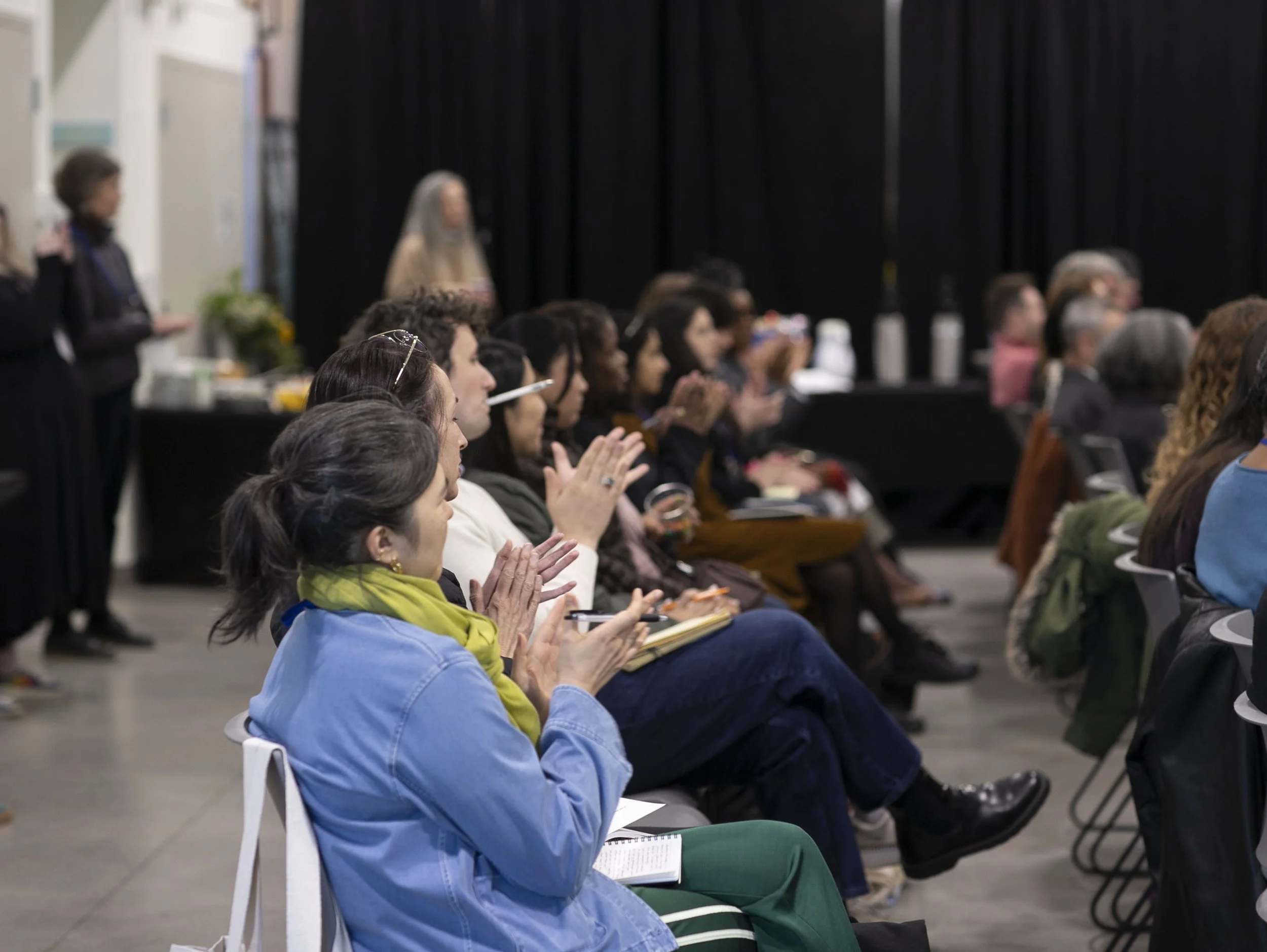
Image from GIACON25 in the Twin Cities.
As we move into 2026, many of the communities connected to our work are navigating a period of ongoing change and uncertainty. Shifting political conditions, economic pressure, and uneven access to basic resources continue to shape the environments in which artists, cultural workers, and the organizations that support them are operating. These dynamics are complex, long-standing, and deeply contextual—and they show up differently across regions, institutions, and communities.
At the same time, we continue to see artists, cultural leaders, organizers, and funders engaging these conditions with care, creativity, and commitment. Across geographies and roles, people are building relationships, testing new approaches, and drawing on cultural practice to sustain connection and possibility. It is within this shared context that Grantmakers in the Arts enters 2026.
Over the past several years, GIA has been intentional about deepening its role as a space for learning, connection, and exchange across the arts funding field. Through our programs, publications, and convenings, we have increasingly centered questions of cultural and economic self-determination, cross-sector collaboration, and the conditions artists and communities need to thrive. In 2026, we are continuing this work with a focus on coherence, depth, and sustained engagement—building on what we have learned together rather than rushing toward new frames or responses.
A year for clarity, connection, and continuity
The year ahead calls for steady leadership—leadership that is informed by context, rooted in equity, and willing to slow down enough to think clearly. Across GIA’s programming in 2026, we are prioritizing spaces that support funders in navigating complexity without losing sight of long-term commitments to justice, cultural power, and community wellbeing. Our aim is not to prescribe solutions, but to create conditions for thoughtful action, peer exchange, and durable partnerships.
Deepening practice through learning and reflection
Throughout the year, GIA will offer a focused set of online learning opportunities—webinars and podcasts designed to help funders explore issues such as fairness and accountability in grantmaking, public sector cultural policy, arts and technology, and the realities artists are navigating today. These offerings are intentionally paced and connected, allowing members to engage without being overwhelmed, and to build understanding over time rather than in fragments.
In parallel, the GIA Reader will continue to serve as a critical space for reflection and field-building. In 2026, this includes the publication of Arts Service Organizations, Parts II and III, an expanded Self-Determination series featuring voices from across the South and beyond, and new guest-commissioned pieces that surface emerging questions and practices in cultural funding. Together, these publications are meant to support deeper inquiry and offer funders language, context, and examples they can carry back into their institutions.
Bridging across sectors, roles, and geographies
A central focus of 2026 is strengthening bridges—between public and private funders, between arts and other social sectors, and between local practice and national policy conversations. This year, GIA is also being more intentional about how we show up in spaces beyond our own. We are working to align more strategically with peers across philanthropy and adjacent fields—engaging around shared issues such as democracy, economic justice, gender justice, technology, and community care—while bringing a stronger presence of arts and culture funding, practice, and analysis into those arenas.
This includes participating in conferences, publications, and peer spaces that are not traditionally arts-focused; sharing lessons from cultural organizing and creative practice with broader philanthropic audiences; and challenging funding silos that limit how culture is understood and resourced.
At the same time, we are continuing to invest in newer, deeper learning spaces within GIA, including Fair Funding Access (FFA) and the Cultural Organizing Community of Practice (COCoP). These offerings are designed as multi-month, relationship-based engagements that allow participants to learn together over time, wrestle with real challenges in practice, and build shared accountability. In 2026, we look forward to further developing these spaces and to carrying their insights, questions, and lessons directly into the 2026 Annual Conference, where they will shape sessions, discussions, and collective reflection.
Alongside FFA and COCoP, GIA will continue to support other communities of practice—including public sector cultural policy, support for individual artists, and arts education funders—that provide sustained opportunities for members to learn together and stay connected across roles and geographies.
Building toward Memphis—and beyond
All of this learning and engagement will build toward GIA’s 2026 Annual Conference in Memphis, a gathering shaped in close collaboration with local cultural leaders and organizations. The conference will be grounded in the South as a site of cultural leadership, resistance, and innovation, and will invite participants to learn from place, history, and community-rooted practice. Importantly, this gathering will look and feel different from past conferences—placing greater emphasis on Southern-connected work, cross-sector practice, and insights emerging from sustained learning communities such as FFA and COCoP.
An invitation to engage
At its core, GIA is a community, and 2026 is a year when member leadership and participation matter deeply. We invite you to engage in ways that feel aligned with your experience, capacity, and curiosity, including:
Propose Southern-focused or Southern-connected sessions for the 2026 Conference in Memphis.
We are especially interested in proposals that move beyond general case studies to engage Southern histories, present-day realities, and cross-regional connections—whether your work is based in the South or in deep relationship with Southern communities, movements, or cultural ecosystems.Propose ideas for online learning or GIA Reader series.
We welcome contributions that pull back the curtain on real practice: how you’ve navigated struggle, uncertainty, or contradiction; how collaboration or cross-sector work actually functions in your context; and what funders can learn from the realities of implementation, not just intention.Participate in—or propose leading—a Monthly Member Discussion.
These informal, peer-led conversations are spaces to surface timely questions, share dilemmas, and learn together in real time. Whether you want to host a discussion, suggest a topic, or simply join the conversation, these gatherings are an important part of how we stay connected and responsive as a field.
Whether you are seeking space to reflect, opportunities to collaborate, or support in navigating complex institutional and political terrain, we see GIA as a professional home base you can return to throughout the year.
We are grateful for the ways members continue to show up for one another and for the field, and we look forward to learning alongside you in the year ahead. If you would like to talk through your priorities, explore ways to engage more deeply, or simply connect, we welcome the conversation.
With appreciation,
Nadia Elokdah
Vice President & Director of Programs
Grantmakers in the Arts
ABOUT THE AUTHOR
Nadia Elokdah is Vice President and Director of Programs of Grantmakers in the Arts.