Documentary as Civic Commons
Sahar Driver and Sonya Childress
There are constellations of cultural organizations and community spaces all across the US–from bookstores and film festivals to libraries and museums–that for decades have been quietly creating opportunities for people to come together, learn together, and lean into discussions about important themes. Among them are the 120+ documentary organizations led by people of color within the Color Congress membership that we lead. Their role is more important than ever as trust in public institutions, as well as traditional news and media, are at historic lows, undermining both confidence in objective truth and civic engagement. This comes as the administration has achieved its main Project 2025 media goal: shutting down the Corporation for Public Broadcasting (CPB). To-date, CPB was the most reliable source of funding and distribution for documentary storytelling — a trusted source of news and information — to reach audiences.
Why has the documentary art form been targeted so severely by this administration?
For decades, independent documentary filmmakers endeavored to produce work for the public good, burrowing their films into the hearts and minds of viewers who watched in living rooms, classrooms, film festivals, museums, and community spaces. This cinema was rarely profitable, but it wove stories into our cultural and historical tapestry, erecting monuments to our history rather than theme parks of nostalgia. For that reason public interest documentary film has been historically funded by federal and philanthropic grants. This protected it from market demands. And it freed documentarians to wield their cameras at the truth, exposing injustices, telling intimate stories of our natural world and society, enticing us to be aware and courageous. But between public media defunding and rising market dominance of commercial streamers that found immense profit in true crime and celebrity portraits — genres that reflect the status quo rather than challenge it — suddenly the platforms with the largest audiences all but closed their doors to independent stories of educational, political, or cultural importance. Today, documentary filmmakers who want to continue producing work for the civic commons are finding fewer mainstream outlets to broadcast or stream their films. As commercial streamers shift the documentary from enlightenment into escape, the integrity of the form is threatened.
And much is at stake if this largely trusted form of media is diminished into reality TV, or worse propaganda for the government and wealthy elite. Because in its purest form, documentary film feeds audiences’ desires for authentic storytelling that reflects our shared interests, culture, history, and values, fuels connection and belonging, and shifts our positions from passive to active viewers. Whether viewed at home or in a community setting, they push us to reflect on our past, envision the collective future we want to build, and then do something about it. Documentary cinema acts as fertilizer for a thriving democracy that relies on free speech, informed citizens, and a culture of care. Importantly, documentary storytelling that is authored by filmmakers of color on their own terms is particularly resonant among audiences of color who recognize in them storytelling that rings true, about experiences they recognize, and that point to futures they can dream into.
Helping filmmakers connect directly with their audiences is an important way to ensure public interest documentary films continue to exist in our country.
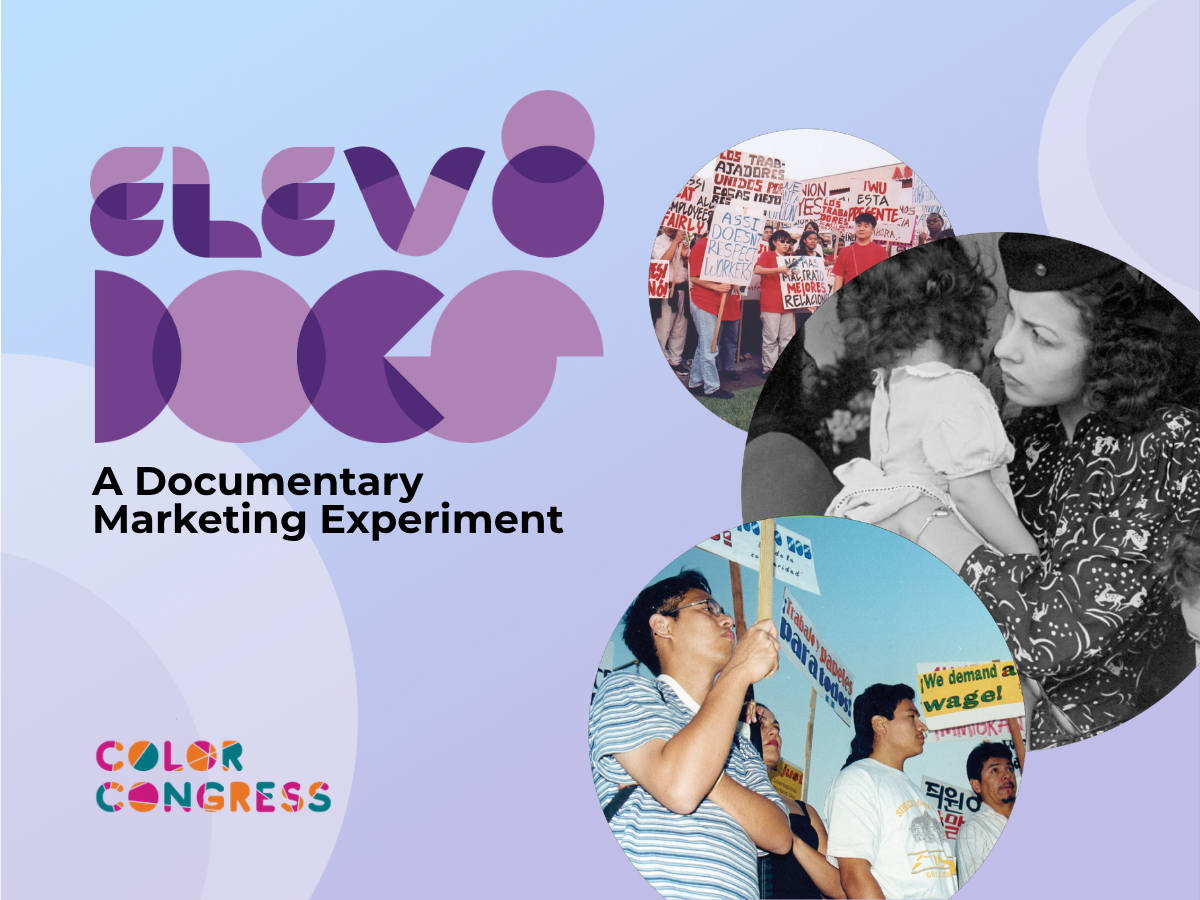
That was the premise of the Elev8Docs experiments. Over a year-long period in 2025, our organization launched a series of marketing experiments on behalf of our members. The goal: to leverage new and novel marketing strategies that reveal pathways to reach diverse audiences. This project built experiments around over two dozen documentary films that were diverse in every way — from feature-length historical portraits to new, experimental short films. The experiments were varied — placing digital ads on social media to attract new viewers to an archival film on the Young Lords, a radical Puerto Rican political organization; employing content creators to encourage their social media followers to watch short documentaries produced by young filmmakers; and building a retrospective to raise the visibility of a filmmaker whose respected body of work was ubiquitous on cable and PBS, but who lacked name recognition.
The results of these experiments reveal successful strategies that enable filmmakers to market documentary work at a time of massive disruption in the film distribution landscape. And they revealed the massive miscalculation on the part of public media, cable, and streamers of a hungry, yet wildly underserved audience for this work. But more importantly, the learnings signal something about the enduring relationship between the documentary form and the health of our pluralistic democracy. In the wake of historic defunding of a critical art form and in the lead up to the potential Paramount Skydance merger, the Elev8Docs experiments point to a hopeful future that situates the form back where it belongs: supporting a much-needed civic commons today.
The Experiments
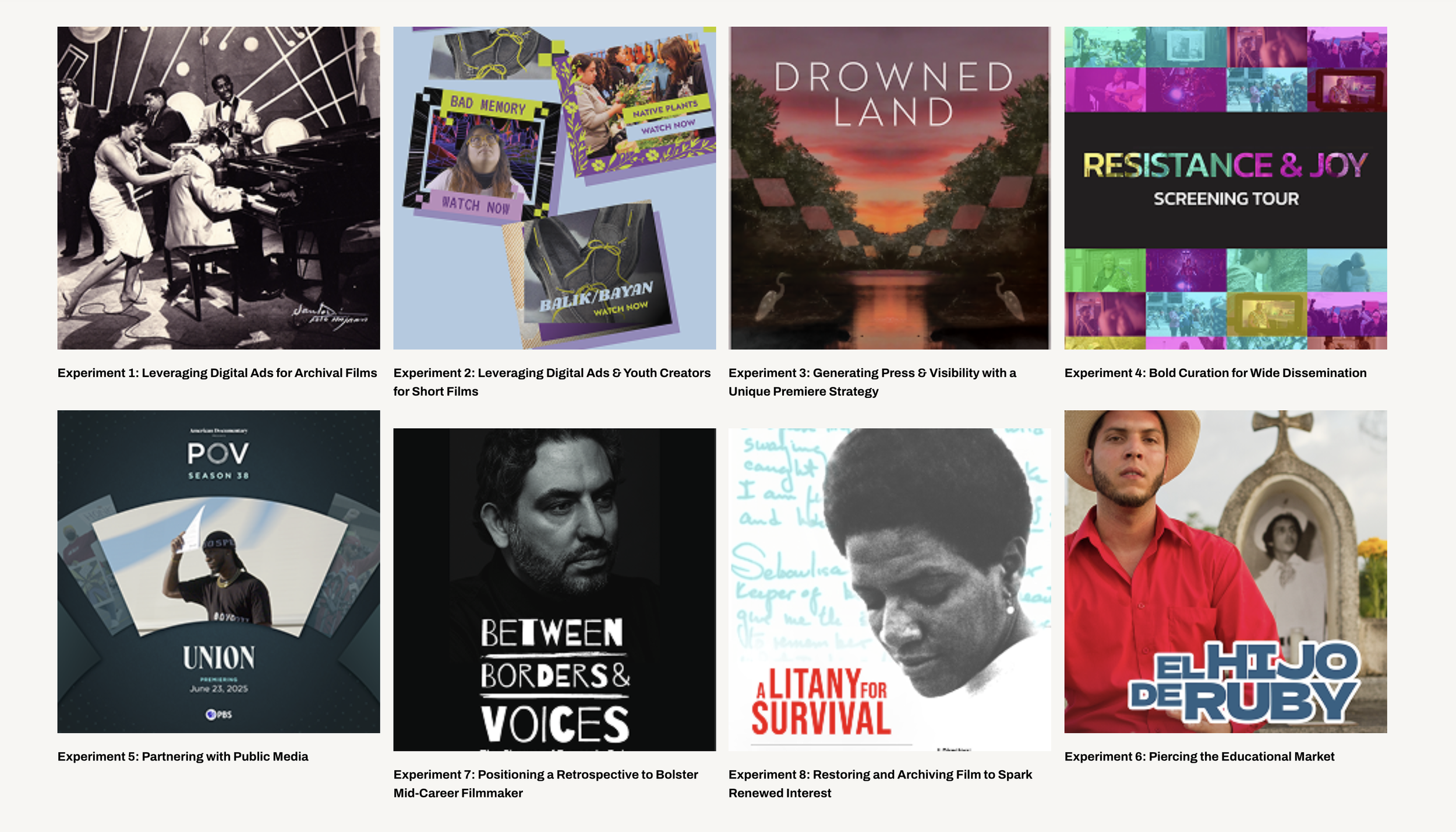
Eight recent Elev8Docs experiments. Visit the website to learn more bout each case study.
After a year of Elev8Docs experiments we know a few important things:
Diverse audiences crave storytelling that honors their contributions, culture and validates their experiences. One doesn’t have far to look to understand this fundamental desire. Bad Bunny’s Super Bowl Halftime Show demonstrated what is possible when you offer content that affirms rather than ignores or denigrates the new American majority. Multiple marketing experiments found that diverse audiences responded to documentary films when the subject matter (and the marketing of them) used language and images that positively reflected their cultural and ethnic identity. Communities are looking for their own reflection, and there is no better mirror than documentary.
Nuanced storytelling deserves nuanced audience engagement. Cultural specificity in marketing can be a potent signal to viewers that the company supporting the film understands and values them as an audience. We found that this cultural specificity and nuanced understanding of the subject and target audiences matter, and possibly even trumps budget size. The experiments demonstrated that culturally-specific search terms improved digital ads, culturally-informed TikTok creators drove higher-than-average engagement rates, and trusted, community-rooted organizations contributed to increased participation at in-person events. While hardly a novel idea, it flies against market logic dominating film marketing today that only bigger budgets bring bigger audiences and a one-size-fits-all strategy is most effective and efficient. In fact, having a smart strategy that is culturally specific and exhibits a nuanced understanding of both the subject and audiences that is resourced appropriately is a winning combination. And for communities that often feel overlooked or misunderstood in our media ecosystem, identifying the core audience for a particular story, and crafting strategies that use nuanced language, images and signals to reach that community, is not just savvy marketing, it’s the respect and consideration we deserve. It’s also the future of political organizing. Just as the Mamdani campaign recognized the untapped political power of immigrant aunties, the marketing experiments used language and images that revealed enthusiastic responses among older women of color — hardly the face of the typical documentary viewer. And like political organizing, core to this strategy is the cultural competence of the filmmakers and strategists themselves.
Artistic validation exists, and persists, within diverse communities. It’s hard to remember a time when the value of documentary films was not measured by box-office results or streaming numbers, but by their ability to educate and engage audiences. And yet, two experiments upended the idea that view counts are king: an experiment to elevate a respected documentary filmmaker through a retrospective helped secure his vital body of work into the film canon, and a second experiment to restore an archival film breathed new life into the work to the tune of sold-out screenings among a new, younger generation of fans. In a time of historical erasure at the highest levels of government, retrospectives and film restorations are understood now as practices of resistance, historical memory, and cultural survival.
Trusted messengers cut through noise. One experiment successfully leveraged social media creators as film curators. In this example, we learned the value of trusted messengers that can connect to, and speak in ways that are authentic to the communities they are a part of, and without an obvious commercial agenda. At a time when trust in corporate-controlled media is waning, social media creators who are largely defined by their editorial independence, help their audiences make sense of data, news, and storytelling through the cultural and political lenses they share. Just as place-based conveners like many of our members play a role building bridges in person, online these influencers and creators can be a valuable bridge between their communities and storytelling, expanding networks of influence if and when working in community partnerships rooted in respect, trust, transparency, and care.
The political climate is creating new, complex challenges for documentaries. In almost every experiment, the veteran marketing strategists we hired either encountered or were forced to navigate challenges that can only be construed as politically motivated. On the one hand, digital ads for documentary films about people of color were frequently suppressed or declined on social media platforms and considered political speech, even when the subject matter was not overtly political. On the other hand our strategists worked to mitigate against evolving forms of censorship throughout 2025: the banning of words and images deemed partisan, federal defunding of public media resulting in limited broadcast options, significant budget cuts at liberal college and university libraries, concerns over the security of archival material in government archives, and physical safety concerns for filmmakers and audiences targeted by federal agents. All of these new modes of censorship or surveillance were factors our strategists considered and tried to work around to maintain access to documentary films. These forces threaten the protection of free speech and open dissemination of ideas, and documentary film is caught in the crosshairs.
Audiences are seeking connection in community. The COVID pandemic and supremacy of streaming platforms drove viewing habits towards an individual, rather than communal experience. But our experiments pointed to an increasing desire for moments of in-person connection with people of shared interests and values. We found that diverse audiences across the nation entered theaters, community centers, libraries, even bookstores, to watch or discuss documentary films. While the particular viewing conditions varied, we found a strong appetite for screenings of culturally or politically-engaged work that bring communities together and create opportunities for communal reflection and deep engagement. Audiences responded positively to the content of the films, but were also drawn in by the trust and connection they have with the people, organizations, and venues that curated the programming. One experiment circulated a series of short films by a diverse cohort of filmmakers called “Resistance & Joy” throughout a network of organizations that serve communities of color. We saw films play successfully beyond their expected "niche" audiences. Because the films were presented side-by-side in a single slate, audiences of completely different communities and experiences found their experiences reflected in others, fostering a sense of connection and solidarity that people crave in a time of manufactured division.
For grantmakers, these findings suggest that sustaining documentary as a civic commons requires resourcing the infrastructure around cultural production, not production alone. Distribution, audience development, archival preservation, community-based exhibition, and the organizations and networks that connect cultural work with audiences are all part of the infrastructure that allows public-interest storytelling to circulate and matter.
Put simply, documentaries, in their purest form, invite us to engage with the world around us, rather than escape it. Our political future rests on cultural production that strengthens our democracy, rather than weakening it. If we cede an art form that fuels our civic commons, we may not recover that ground. Our appetite — and access — to documentary film is a powerful litmus test for the health of our democracy. What’s clear from the experiments is that diverse audiences are seeking out and responding to these films. Despite powerful forces pulling us apart, lulling us into passivity, and attempting to rewrite our collective history, Americans of diverse backgrounds want to grapple with the beauty and contradictions of their nation. We must ensure this powerful art form remains accessible by sustaining the infrastructure that allows it to reach and engage audiences, and remains a force for public good in the years to come.
ABOUT THE AUTHORS
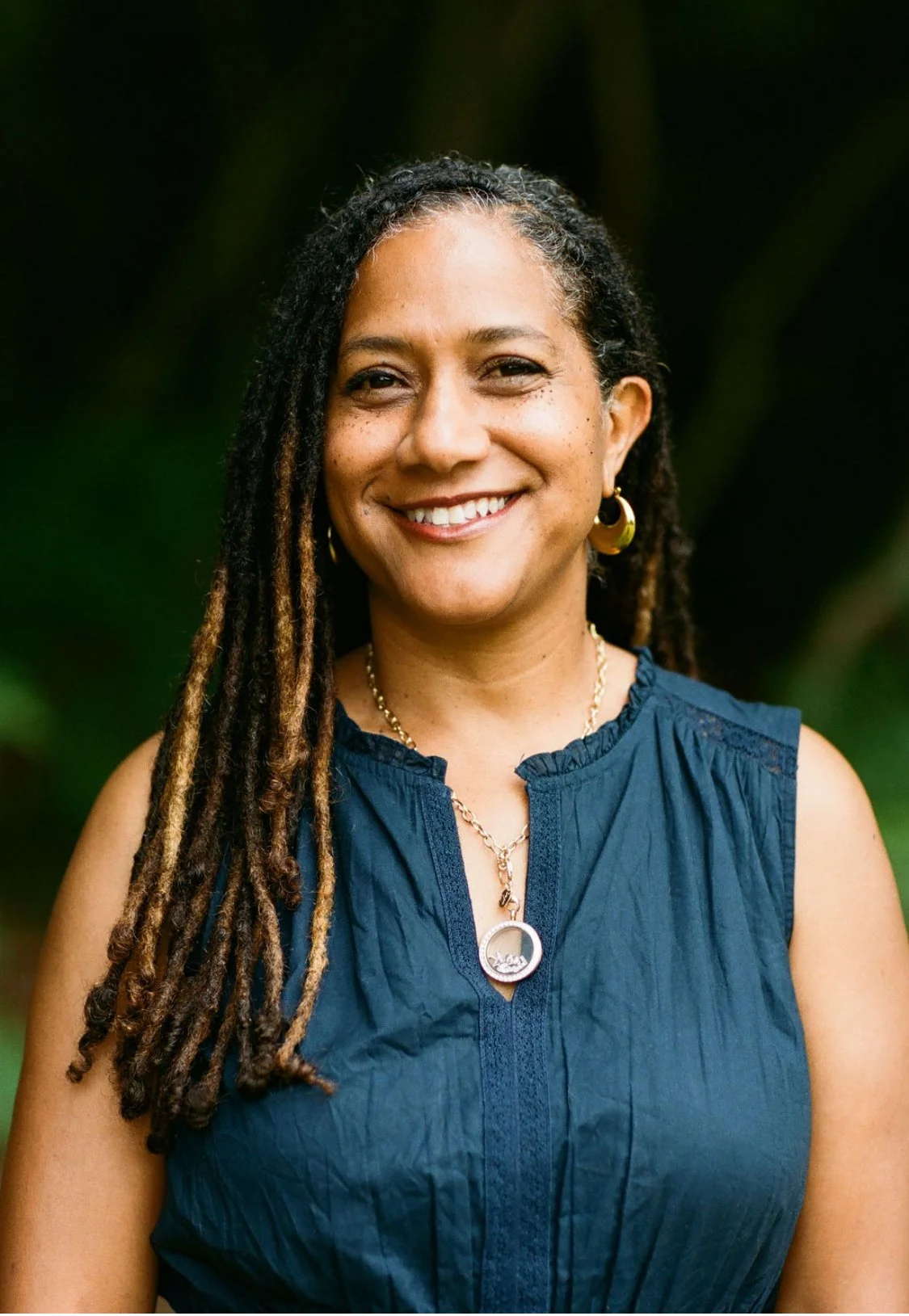
Sonya Childress - Co-Founder + Co-Executive Director
Sonya Childress is a veteran strategist and organizer in the documentary field. Sonya has held staff and consulting roles with Firelight Media, Active Voice, California Newsreel, Kartemquin Films, Independent Television Service and Working Films, and has advised hundreds of filmmakers on their impact and release strategies over two decades. She recently served as Senior Fellow with the Perspective Fund, where she conducted field-building writing and initiatives around equity, accountability and impact of nonfiction film. A former trustee of the Whitman Institute, she serves on the board of the Center for Cultural Power, and was an advisor to the Constellations Fund, which raised $10 million for the field of cultural strategy. As a founding member of the Documentary Accountability Working Group, she co-produced From Reflection to Release: A Framework for Values, Ethics and Accountability in Nonfiction Filmmaking. She co-designed The Lens Reflected, a groundbreaking study on representation in documentary film. As a steering committee member of the Global Impact Producer Assembly she helped design and administer a COVID relief fund which supported 132 impact producers across 27 countries. She has presented at countless film and philanthropic conferences, and her writing has been commissioned by the Ford Foundation, MacArthur Foundation, Documentary Magazine, Stanford Social Innovation Review, Filmmaker Magazine and BlackStar’s film journal, SEEN. Sonya was an inaugural Just Films/Rockwood Fellow, a recipient of the 2022 Leading Light Award from Doc NYC, and is a member of the Academy of Motion Pictures Arts and Sciences.
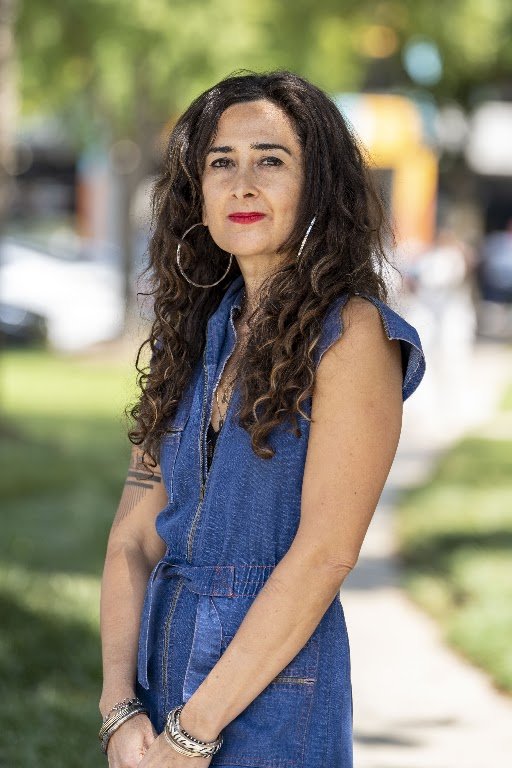
Sahar Driver - Co-Founder + Co-Executive Director
Sahar Driver is a veteran documentary impact strategist, field builder, and researcher. Her career has focused on social and cultural transformation through nonfiction storytelling. She has led impact campaigns and strategy for over two-dozen documentaries, independently and with Active Voice. She has designed and led impact trainings and grantmaking programs to support impact producers and filmmakers of color with Firelight Media. She worked with Doc Society to update the second edition of their Impact Field Guide and wrote the 2019 Impact Hi5 case studies. She is on the Picture Motion Advisory Board, was a 2022 Intercultural Leadership Institute Fellow, and a 2021 Rockwood/JustFilms Fellow. In 2020 she authored the Ford Foundation commissioned report, Beyond Inclusion: The Critical Role of People of Color in the U.S. Documentary Ecosystem. Sahar is a second generation, Iranian American living in Oakland, CA on unceded Muwekma and Ohlone land.
Sahar Driver and Sonya Childress co-founded Color Congress, an ecosystem-builder and membership organization that is committed to organizations led by people of color that serve nonfiction filmmakers, leaders, and audiences of color across the United States and US islands. They serve 120+ film festivals, artist support and narrative change entities, micro cinemas, filmmaker collectives, and public media.
You can read their piece, The Evolution of Impact: The Future of Social Change and Nonfiction Storytelling, which was published by Filmmaker Magazine in August 2022.