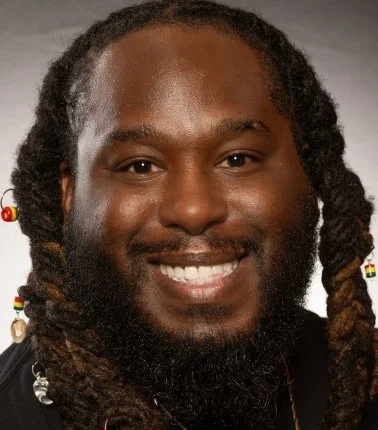
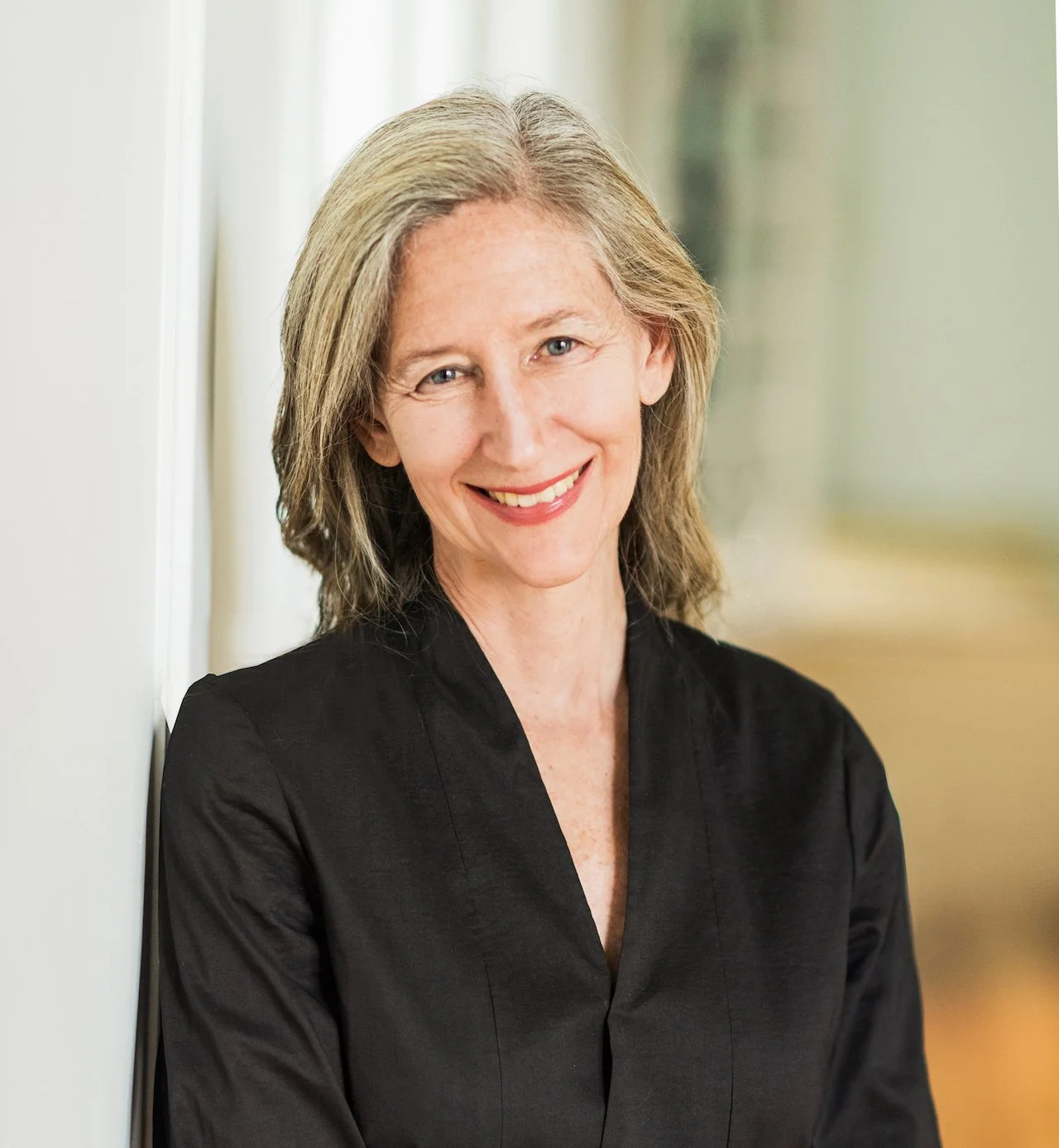
Dr. David Olawuyi Fakunle II and Susan Magsamen (NeuroArts)
Episode 2
What role do arts and research have in influencing policy? In this episode, public health storyteller David Olawuyi Fakunle II and NeuroArts Blueprint Co-Director Susan Magsamen explore how stories, creative practice, and research can make the case for the arts’ contribution to health and well-being, helping bring that evidence into policy conversations.
NeuroArts invites you to the first-ever NeuroArts Global Summit in D.C. from December 2-3, where leaders across sectors will "celebrate the field's progress, demonstrate its impact, and chart the path ahead."
Jaime Sharp:
Hello, and welcome to Grantmakers in the Arts podcast. My name is Jaime Sharp, and I'm the senior program manager here at GIA. In honor of November's Arts and Health Month, GIA brings together experts from across the field to explore how the arts contribute to healthier, more connected communities. Throughout the series, guests consider the arts' role in wellbeing, environmental health, cultural organizing, and policymaking. Listen to the episodes for shared ideas and experiences on how creative work can support community life.
What role do arts and research have in influencing policy? In this episode, Public Health Storyteller David Olawuyi Fakunle II, and NeuroArts Blueprint Co-Director Susan Magsamen explore how stories, creative practice, and research can make the case for arts contributions to health and wellbeing, helping bring out that evidence into policy conversations. I hope you enjoy.
Susan Magsamen:
Thank you for having me. I'm Susan Magsamen, the executive director of the International Arts + Mind Lab Center for Applied Neuroaesthetics at Johns Hopkins University School of Medicine. And I'm also the co-director of the NeuroArts Blueprint Initiative, which is an initiative with the Aspen Institute.
Jaime Sharp:
And Susan, could you provide a little bit more background of what NeuroArts is and what the programming is about?
Susan Magsamen:
Sure, I'd be happy to. So NeuroArts is really rooted in the science of neuroaesthetics, which is how we look at how our body neurophysiologically changes on arts and aesthetic experiences, but it's also more broadly focused on what I like to call ways of knowing. So while it's really important to understand the physiology of what's happening with the arts and aesthetics, ways of knowing also includes indigenous culture and knowledge, lived experience, what artists understand and what's practitioners understand. And it's all of this knowledge coming together to really help amplify humanity through mental and physical health, education and learning, community development.
So NeuroArts as a field really was evolving over the last seven or eight years as we started to understand what was happening all over the world in all of these sectors. And what we saw was that whether you were in the healthcare sector, public health sector, in business, in education, there was a lot of things happening, a lot of research happening, but the fields were not coalescing. They hadn't really yet come together. So one of the major things that the NeuroArts work is really looking at is how do you come together to understand the evidence, the infrastructure, and the community building? And I'm happy to talk about this. We have really five core recommendations on how this field really can be built for sustainability.
Jaime Sharp:
Do you mind elaborating on those five?
Susan Magsamen:
Sure. Yeah, so the blueprint, we spent about two years talking to people all over the world and the NeuroArts Blueprint document outlines five core recommendations.
The first is to expand the evidence base, so that's research in all forms, whether that is neurophysiological research, psychological research, outcome level research, so that we really start to know what's happening when we're talking about these arts and aesthetics in different use cases.
The second is to honor the practitioners in all their forms, whether we're talking about creative arts therapists, community artists, teaching artists, neurologists, psychologists, PT, OT, all of the different places, community activists that are using the arts.
The third is to expand the educational and training opportunities, in other words, workforce development. How do you really build the workforce that has trained and knowledgeable healthcare related or education related arts-driven workers? And what's that space look like? So where do those workers go? So we're really looking very deeply at both policy in all of these different sectors and also funding. How do you make this sustainable?
And I believe that there's going to be, and it's emerging, a hybrid business model where there'll be public-private partnerships, there'll also be entrepreneurship and businesses, but we're going to see this emerging in different sectors for different outcomes.
And then the last, which I think is really important, is capacity building. So building leadership, building strong awareness and communications across multiple stakeholders, and really thinking about how we ensure that this is sustainable, not for the next five years, but for the next 50 to 100 years, that we really make the arts part of mainstream society and a value health pillar like good sleep, good nutrition, and exercise.
David Olawuyi Fakunle II:
I am Dr. David Olawuyi Fakunle II. I am an assistant professor in the public health program, which is within the Department of Public and Allied Health, which is within the School of Community Health and Policy at Morgan State University in Baltimore, Maryland. I also serve as the director of the Transforming Equity through Arts, Culture and Health Division of the National Great Blacks in Wax Museum, also in Baltimore, Maryland. And I'm associate faculty in the mental health department at the Johns Hopkins Bloomberg School of Public Health, also in Baltimore, Maryland.
Jaime Sharp:
And David, I would love to hear more about your practice of storytelling as a tool for healing and some of the initiatives that you're involved in.
David Olawuyi Fakunle II:
Yeah, so storytelling is a universal creative practice. It's a universal cultural practice. It's a universal human practice. So everyone is a storyteller one way or another. I just happen to be an intentional storyteller and it's intentional storytelling that is immensely powerful.
Look no further than last night. For people, we're talking about November 3rd, 2026. Storytelling works. Storytelling is a methodology by which people can acknowledge the truth of their living experiences. It's a process by which people can connect with the living experiences of other people, even if it's not reflective of their own. It gives us an opportunity to see the commonality that we all share in this thing called life, and it helps to make sense of the challenges and circumstances that we all navigate one way or another, whether that is our own personal journey or if it's the result of systemic, structural, or historical forces.
The only way that we can explain this thing called life is through our stories. There is no equation, there is no statistic that captures the essence or the context of life, but stories do. When people have an opportunity to share those stories openly, without judgment, without rebuke, without shame, it's freeing. Storytelling is an act of freedom. So collective storytelling is an act of liberation, and those are very powerful movements that can shake up the history of any space.
Audience, look no further than last night, November 3rd, 2026. We can see the best in humanity. We don't have to understand all of it because we don't understand all of ourselves, but we can strive for the healthiest version of ourselves when we tell our stories, and most importantly, when we listen to each other's stories. The best storytellers are the best story listeners. You do not have one without the other.
So if you want to think about if a tree falls in the forest and no one hears it, does it make a sound? Well, yes. And if someone hears that sound, it also makes a difference. The same with telling your story and having someone listen to it with a genuine interest to learn and understand.
So simply, all I do is create space for people to have that moment and that experience. It's not hard. It just has to be intentional. When you create the space of trust and mutual vulnerability, it quickly shifts from vulnerability to openness. Openness is a virtue. It's the best of our humanity when we are open, when we can share how we think, how we feel, how we're navigating the world. We can learn, we can grow, we can understand, and we can ultimately move collectively in the same direction because the stories will reveal that we want the same thing. We may go about it different ways. We may call it by different terms or different names, but it's truly the same things that we desire in this thing called life. The stories will reveal that, they usually do. And if we pay attention, we can all win. So storytelling is a mutual benefit when done correctly. Last time I'll say it, look no further than last night, November 3rd, 2026.
Jaime Sharp:
Thank you. Yeah. And I mean, connected to last night, what do you feel the role of arts and research is in influencing policy?
David Olawuyi Fakunle II:
There's so many ways that it can happen, and I know Susan and I and many of our colleagues in arts, culture, and health, yourself included, continue to explore that.
I would say from a very pragmatic standpoint, and this revealed itself through a number of candidates who successfully won their campaigns, they were better conveyors of the message. They were better conveyors of the policies that people truly want in the United States of America in this moment. So it is not a surprise to me that we had preachers, storytellers, win elections. It is not surprising that those who were able to embrace culture, and I think it's very, very important to not just uplift art, but uplift culture, is the cultural context that a lot of people have been looking for within the political space, because if there is true cultural appreciation, not just acknowledgement, not just recognition, but appreciation of the ways that we navigate our lives in this very, very, very big country of ours, then it should show up in the policies that are meant to order our steps in certain ways, in our health and wellbeing specifically.
So to me, those who are more embracing of their creativity at the very least are better communicators of the policies. But then we can also think about what creativity looks like as a tenet, as a core principle of policy. One of my, I guess, holy grails is to explore how storytelling shows up in policy. And what I mean by that is that so many policies are written because of a moment in time. Something happened in 2024, we write a policy about it in 2025. 2025, we write about it in 2026 and so forth and so forth. But we know that things change all the time, last night. So how do we have policies that can reflect or adjust to the fluidity of the spaces that they are meant to govern or the spaces that they're meant to oversee?
I think from a pragmatic standpoint, that just seems much more efficient to me. And I also think that it would demonstrate just how versatile and how valuable creativity is as a principle and how arts and culture is just a necessity when it comes to all forms of society, especially policy, big P and little P.
Susan Magsamen:
Well, I'd add to that that maybe from a slightly different perspective, because David's so eloquent in talking about storytelling and creativity, so he needs no help, but I'm going to say we pay for what we value. And I don't think we have valued culture or the arts. And I think it has been a great peril to individuals in all aspects and also to community. So when you really start to think about how you provide this opportunity to have creative expression at an individual and a collective level, how do we share our voices, as David's talking about, and how do we tell those stories in ways that others can see themselves and learn about the wide ranges of ways that we express ourselves?
So policy is, I think, really a mirror to values and ethics. And I think what we have seen over the last 100 years is a decline in the value around the arts for lots of different reasons. And I think reprioritizing them is an economic imperative also. There's an ROI here and a true value, a true economic value.
And I'll just give you two data points. One is we spend in this country alone about $3 billion on Alzheimer's research. We have spent in the last six years in arts research about $50 million. So think about the equation there, when we know the arts provide immediate support for frustration, anxiety, for quality of life for people with Alzheimer's. So no, arts are not going to cure Alzheimer's, but are they going to delay the progression of the disease? Are they going to make it possible for us to have relationships? Are they going to keep family members and employees at work? Yes.
So we did an economic analysis and we looked at, well, if someone listened to music once a month for a year who had Alzheimer's, what would the true value to the economy be? And that's taking into all considerations of the different places where you might think about medication, you might think about employees, you might think about the time on task for working with someone who is frustrated or needs additional attention, and then the family. And what we found was it was a three to one return on investment. We would save billions of dollars a year, increasingly as the percentage of people using that one intervention of one music experience a month for a year.
So what if we could take those billions of dollars and tens of billions of dollars and reinvest those back in nutrition, in thinking about early childhood development where we're building stronger neural pathways? What if we were thinking about our funding as not being throwaway dollars, but dollars that we could then reinvest into prevention, protection, intervention through some of these things that are our birthright?
And what we do know is that we're neurobiologically wired for art and aesthetic experiences. Art sounds like a big word, but it really is our sensory systems are creating these experiences where we actually grow the best. So storytelling is the greatest example. It's the oldest form of narrative, and we just have not really made that visible, yet it's right in front of us. So I think it's a really exciting time for researchers and artists and policymakers to come together to really look at how do you create the policies in all sectors using arts and culture.
David Olawuyi Fakunle II:
Susan, I think you said it so beautifully. Don't discount your eloquence as well, okay?
You're right about the return on investment. You're also right about the visibility. Arts and culture has always been taken for granted because it's ever present. We are born into culture, we are born into creativity, so it just becomes background. I remember even growing up when I would pay attention to some elements of politics, not super deeply, but it would always be arts and culture, the first things on the chopping block when you need to save money to balance a budget because it was always a nice to have. You and I know full well, Jaime, you know full well, arts and culture is not a nice to have. It's a necessity, an absolute necessity.
And it's interesting, and we talk about this intersection of arts, culture, and health. It was COVID-19 that revealed it so powerfully. We need each other, so we are social creatures. We need other human beings and we need creativity because those were two things, amongst many things, including people, that we lost during that pandemic. So now in the six years since, and I know it's been like 30 years, but the six years since, we have had the opportunity to say, "See, this is what we meant." So it's not just about the beauty of aesthetics, the necessity of aesthetics. We feel better when we are around pretty things. We feel better when we tell our story. We feel better when we are expressing our particular navigation of life. That's culture, that's cultural practice.
So now more than ever, again, I think we have a better choir than we had literally like two days ago. We can share these stories with people who will listen. And I think that's all we've been looking for in this field, just listen. Listen and have the experience and let us help you and you help us to write the policies and the laws and the implementation. Policy without implementation is like a dog without teeth, doesn't matter. All bark, no bite. The implementation of what arts and culture already does, with the intentional benefit of health and wellbeing in all aspects of society.
So education, that's where we need to start. Bring it back to schools the way it used to be and then make it even stronger than it was before then because now we're saying this is not a nice to have for our kids from K to 12. This is not a nice to have even in higher education institutions. In order for kids to be the best academically, they need to be the best creatively. It is a non-negotiable.
Susan Magsamen:
I think the language gets so word salad-y early on. There's so many... I know when we say creativity, the first thing people often say is, "Well, I'm not creative." We've been taught that in third grade, if you aren't talented and gifted, you can't be creative. You haven't earned that right. So we take off the table at eight years old, this ability to be able to self-soothe, to cope, to find meaning, to figure out how to express ourselves, to even go from interest to mastery. If you're not instantly a great piano player, you're not going to put the time in for eight hours of practice a week or whatever it requires. And not everybody's going to be a great artist, which is really different than finding your own creative expression and using it in service of your own physical health and mental health and learning and wellbeing.
And I don't think we have the narrative yet to do a good job of really expressing this to people who are outside the bubble. The artists have always known, kids have always known, philosophers have always known, but I don't think we are yet there with the narrative that helps people that need to move us forward in a way that they really understand it and are comfortable with it.
And that's part of this work in NeuroArts too, is to build a narrative where we all see ourselves and we are able to explain it to others. And that's a big thing that I've been pushing on lately is how do we understand what other people need to hear?
My mom's a great example. Whenever I tell my mother what I do, if she doesn't understand it, I haven't done a good job. And it's taken a long time for me to really help her understand that these artistic expressions and this aesthetic spaces that we live in are really good for her health.
And the best way to describe it is, she's in the hospital, the warm blanket that they put over you immediately lowers your blood pressure, lowers cortisol, makes you feel safe, right? That is an amazing outcome. Other kinds of arts and aesthetic experiences help you focus, help you pay attention, help you use critical thinking skills and executive function skills. We need to start being able to use the language that other people understand outside of our community, and I think that's beginning to happen. So these new policymakers that now have come on board that are open, I think we need to figure out how we communicate with them in a way that lets them do their jobs. And prior to that, that wasn't even possible. We were just circling. Now I think we're ready to move.
Jaime Sharp:
Well, firstly, I appreciate you all just providing so much perspective and insight. I think a lot of our folks maybe feel that health is not an area for them or something that they're very unfamiliar with. So I'm just curious, what would you say to our folks, other than obviously funding this work, how can they support and uplift this intersection of arts and health, even if they feel like that's not necessarily a direct area that they're funding?
Susan Magsamen:
I'll just say it's all arts. It's all arts and wellness. I think of it as a weaving where when you're investing in arts and culture, you're investing in physical health, you're investing in mental health, you're investing in community development, you're investing in child development, you're investing in human resources. And I think the weaving horizontal is the practitioners in all these different forms is the research, is the policy, is that sustainability of coming together as one community.
So when you are an arts investor, you're already investing in this. You may just not be visible to you, and that's our job. That's where David as a storyteller and from my perch in terms of being a translational researcher and working to build this field, it's our job to help investors and philanthropists understand that they're already doing it and that the dividend is greater than they think it is. And I don't think we've done a good job of explaining that yet.
David Olawuyi Fakunle II:
To me, it starts with a very simple question that I know anyone can answer and it's usually the same response. If I ask people how they engage in creativity, they usually have an answer, especially when I break them beyond. I didn't say whether you were talented in it. I just said, do you do it? So Susan, you brought up a great point. Being creative doesn't mean you have to be talented at it. It just means you have to be intentional about it.
How does it make you feel? Anytime I get a response to that question, it is very, very, very rarely an unhealthy response. It's usually, I feel good, I feel great, I feel at peace, I feel exhilarated, I feel acknowledged, all these things. Okay, so then you've already demonstrated an appreciation for arts and culture for your health. That's health. If you can at least accept and embrace that, we can work on the rest and then break down all the ways that it specifically contributes to your wellbeing.
That is what Susan and I and many of our colleagues are doing. We're expanding what I feel good around arts and culture truly means. It means your brain feels good, your heart feels good, your body feels good, maybe even your wallet feels good because of arts and culture. It's possible, right? It's possible. I mean, my career is built on storytelling. It helps me take care of my family. It works financially and economically.
So there's no element of health and wellbeing that isn't already touched by arts and culture. We're just asking people to embrace it, embrace it for all that it does. And for people who are supporting arts and culture already, keep doing it. And if you want people to help you expand that understanding and appreciation for what it does for health and wellbeing, reach out to us. There are so many of us in this field who would love the platforms that arts funders, that cultural funders have to just tell the story, right? We're not even asking for anything beyond just let us speak this truth because we have the utmost certainty, at least I do. I'd say Susan, I think you do too, the utmost certainty that when people hear the story, it's going to resonate. It may not resonate exactly in that moment. It may take a week, a month, a year, but it's going to hit them at some point and they're going to say, "You know what? They're right." And if all I got to do is create more space for it to happen, that's all we're asking for.
Jaime Sharp:
Amazing. Thank you both so much. I think this is the perfect place to end.
Susan Magsamen:
Oh, perfect. Thank you so much. Yeah, as you were talking, David, I was thinking what we really need is a five-point plan. What are the first five things that need to be operationalized right now to really begin to make this work sustainable? And I really do think it's research, honoring the practitioner's living wage, also looking at what kind of training really needs to happen, and what's the policy that needs to support those top three things. And if we were able to do that, that would be extraordinary. And that ties into things like social prescription, living wage for artists, but it really starts to provide the underpinnings that we really need. So I think we're at that point where we really need to create a plan that's that targeted for movement, for real movement.
Jaime Sharp:
Thank you so much for listening to this GIA podcast episode. To find more episodes as part of our arts and culture series, visit giarts.reader.org. We hope to catch you next time.
ABOUT THE SPEAKERS
David Olawuyi Fakunle II, Ph.D. is a “mercenary for change,” employing any skill and occupying any space to help elevate everyone divested from their truest self, especially those who are Black, Indigenous and People of Color. David serves as Adjunct Assistant Professor at the University of Florida Center for Arts in Medicine, and Associate Faculty in the Mental Health department of the Johns Hopkins Bloomberg School of Public Health. David’s interests include stressors within the built environment, societal manifestations of racism, and the use of arts and culture to strengthen health, equity, and ultimately liberation.
David Olawuyi Fakunle, Ph.D. is a “mercenary for change,” employing the necessary skills and occupying the necessary spaces to help strengthen everyone divested from their truest self, particularly those who identify as Black, Indigenous and/or a Person of Color. David serves as Assistant Professor of Public and Allied Health at the Morgan State University School of Community Health & Policy, Adjunct Assistant Professor at the University of Florida Center for Arts in Medicine, and Associate Faculty in Mental Health at the Johns Hopkins Bloomberg School of Public Health. David’s interests include stressors within the built environment, manifestations of systemic oppression, and the utilization of arts and culture to cultivate holistic health through humanity, justice, equity and ultimately, liberation.
Additionally, David has applied artistic and cultural practices such as Black storytelling, African drumming, singing and theater in the proclamation of truth for over 25 years, collaborating primarily with organizations in the Baltimore/Washington, D.C. region. Among many affiliations, David is co-founder and CEO of DiscoverME/RecoverME, an organization that utilizes the African oral tradition to empower use of storytelling for healing and growth, previously served as Executive Director of WombWork Productions, a Baltimore-based social change performing arts company, and serves as Chair of the Maryland Lynching Truth and Reconciliation Commission, the first state-level commission in the U.S. dedicated to chronicling and bringing justice to racial terror lynchings.
Susan Magsamen, MAS, has dedicated her career to putting basic science in service to health, well-being, and learning.
Susan Magsamen has dedicated her career to putting basic science in service to health, well-being, and learning. Committed both to rigorous research at the intersection of the brain and the arts, and to rigorous translation of the findings, she is founder and executive director of the International Arts+Mind Lab, a pioneering neuroaesthetics initiative from the Pedersen Brain Science Institute at Johns Hopkins University School of Medicine. Ms. Magsamen is author of the evidence-based Impact Thinking model, designed to accelerate the use of art to enhance human potential, and has also written seven books, including The Classic Treasury of Childhood Wonder, The 10 Best of Everything Families, and Family Stories.