Across Borders, Within Reach: Reflections from GIA’s San Diego/Tijuana Board Convening
Ericka Jones-Craven
What does it mean to gather in a place where a border is both ever-present and, in many ways, beside the point?
For Grantmakers in the Arts’ recent board meeting and convening, our board, team, and cultural partners spent time in the San Diego/Tijuana region—a bi-national community of nearly seven million people that functions less like two separate cities and more like a shared cultural ecosystem. As one local leader framed it early on, this is a region that “just happens to fall between two countries.”
That framing stayed with us.
The GIA crew was hosted by the International Community Foundation (ICF) and Art Scene Baja who made our excursion smooth while guiding us to some of the most impactful organizations in the community. Together, we were well-prepared and able to navigate across the border with ease, preparedness, and assurance. This was integral to the safety of our participants and the communities we explored, especially considering the increased presence of ICE agents, border crossing personnel, and an overall increase in political and economic strife across the country.
In 2027, GIA is excited to hold our Annual Conference in San Diego/Tijuana to explore the ongoing successes, challenges, and to uplift this dynamic region in arts and culture.
Day of Learning Partner Organizations
International Community Foundation
Art Scene Baja
A Region in Motion
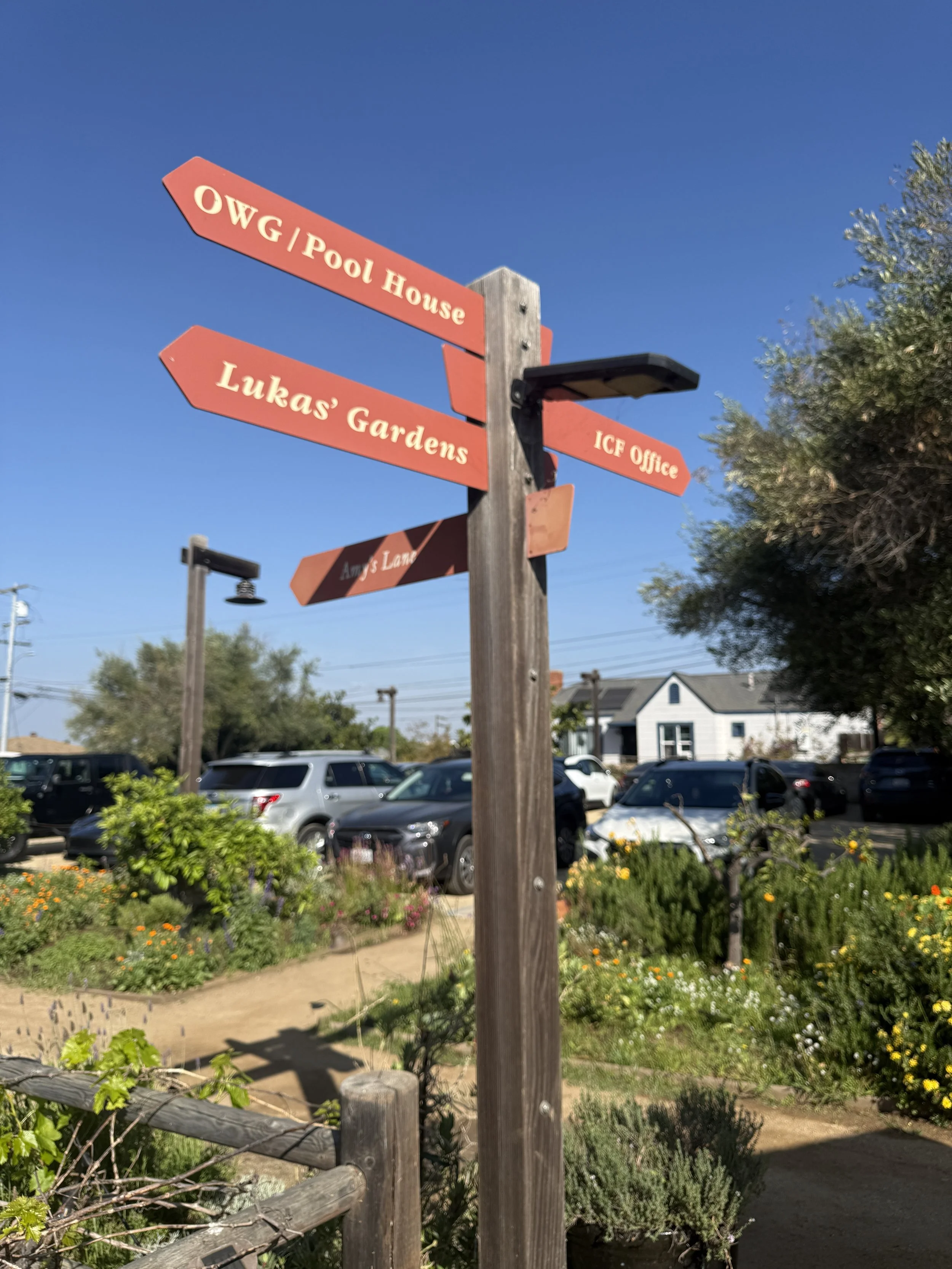
A photo from the ICF office and Olivewood Gardens.
From the outset, we were encouraged to suspend our assumptions about borders—what they mean, how they function, and who they’re built for. While comparisons to places like Detroit and Windsor helped orient us, the San Diego/Tijuana region revealed something distinct in both scale and lived experience.
This is the largest land border crossing in the world. Nearly 30% of San Diego’s workforce lives in Tijuana. Economically, culturally, and aesthetically, the region moves together; despite the systems that attempt to divide it.
That tension, between connection and constraint, shaped much of our time together.
We began our day at the ICF office and a fruitful garden tour of the Olivewood Gardena and Learning Center hearing from our Marisa Quiroz, Jennifer Martin Del Campo, Eyra Erickson, and others.
Investing in Artists Across Systems
In conversation with leaders like Felicia Shaw and Ines Nefzi of San Diego Art Matters, we saw how that tension plays out in real time. Through initiatives like Artists Count, partners are working to better understand artists as a workforce—collecting data not just for research, but to inform a $1.3 million workforce development effort aimed at directly resourcing artists on both sides of the border.
The work includes building two professional development hubs (one in each country) and producing a public-facing project designed to catalyze broader awareness and investment.
Public sector leadership echoed this need for alignment. As San Diego Arts and Culture Commissioner Kamaal Martin (California Arts Council, Far South/Border North) shared, there are ongoing efforts to braid together state and private funding streams in ways that reflect the realities of this region. With GIA’s 2027 conference on the horizon, there’s a sense that this moment could be a watershed, if approached with intention and connectivity across these two dynamic communities.
And still, challenges persist. Funding often stops at the border, even when artists do not. Structural issues—from education systems that require students to navigate bilingual expectations to broader policy constraints—continue to shape what’s possible.
Artistic Ecosystems Rooted in Community
In Tijuana, we experienced how artists are building independent, community-driven ecosystems that are both deeply local and globally connected.
At Teatro Las Tablas, we were welcomed into an intimate performance space that seats just 30 to 40 people; a setting that immediately shifts the relationship between artist and audience.
Led by directors Jesús Quintero and Ramón Verdugo, the company has spent decades developing not only productions, but an entire ecosystem around theater-making: festivals, youth programs, audience schools, and research platforms that nurture long-term engagement.
Their work extends far beyond the stage. Programs like the Interprepas Festival and the Binational School for Theatre Audiences center young people and cross-border exchange, while initiatives like Cartografía Escénica document and archive the region’s performing arts landscape.
What stood out most wasn’t just the scope of the work—it was the philosophy behind it. Access to the arts here isn’t treated as a one-time experience, but as a continuous relationship that evolves over a lifetime.
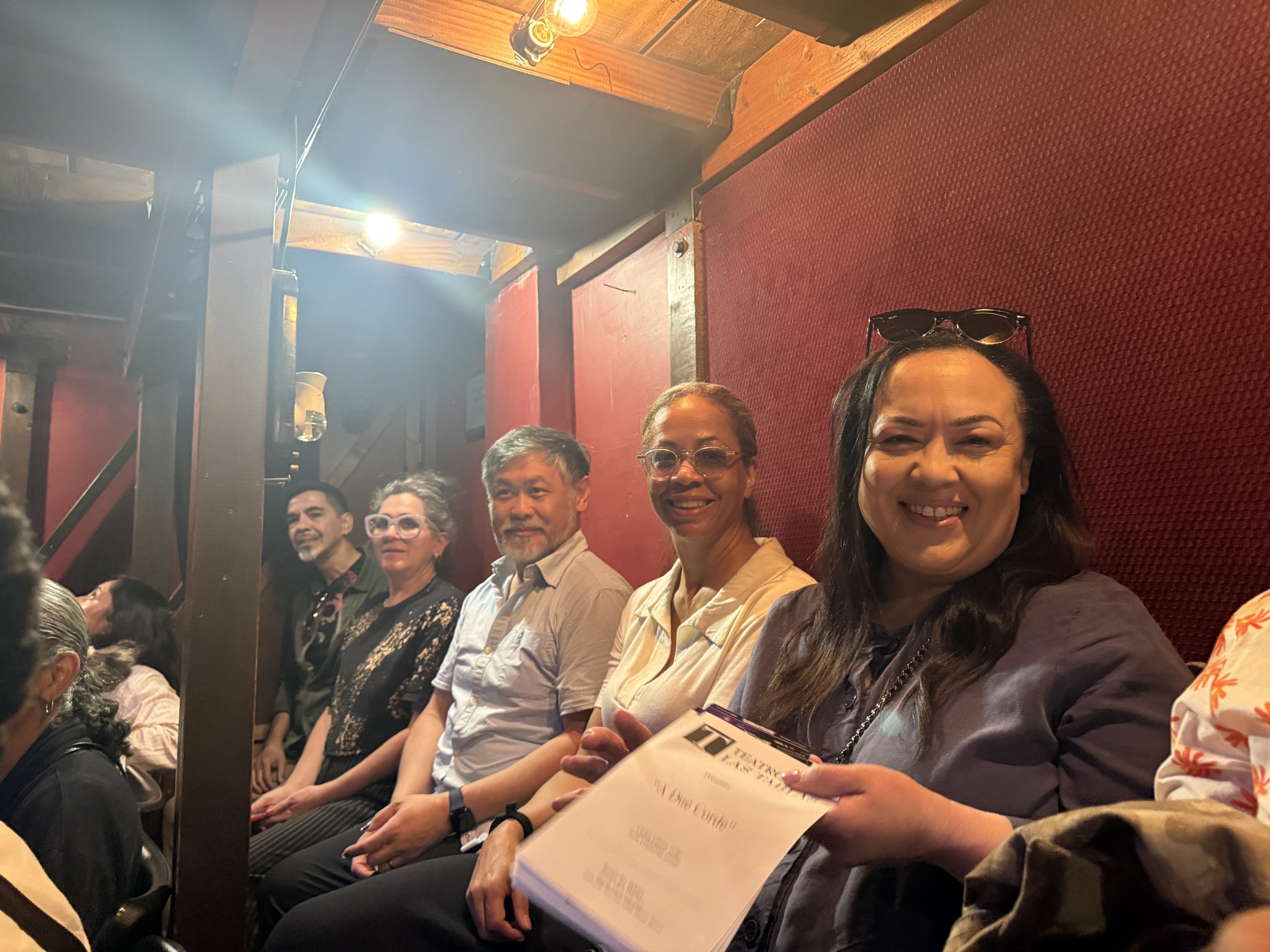
GIA board members, preparing to enjoy a private performance from A Due Corde Group. (L to R; Eddie Torres, Rocío Aranda-Alvarado, Sixto Wagan, Jennifer Coleman, and Pam Breaux).
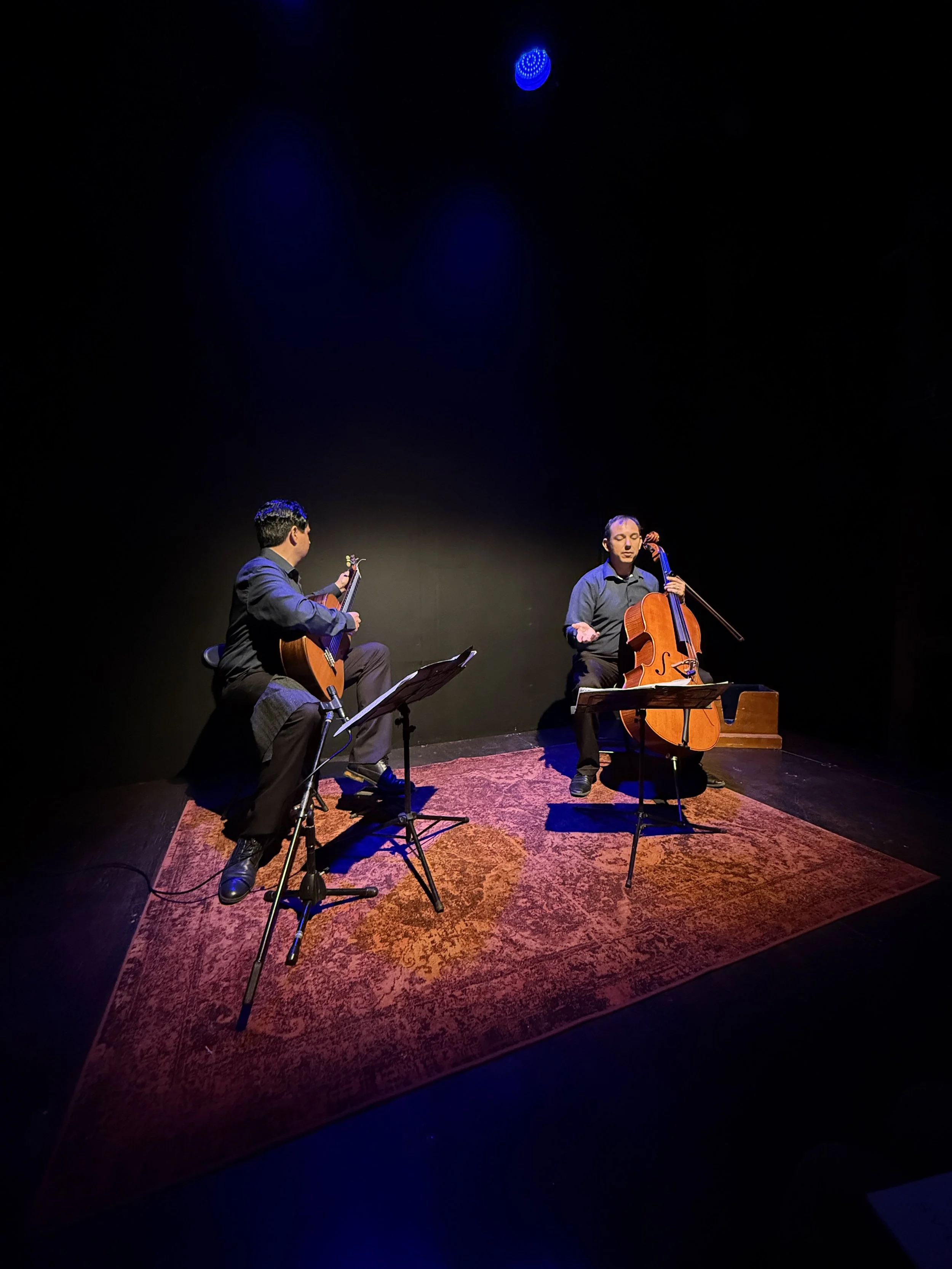
A Due Corde Group; Musicians: Carlos Castro and Justo Contreras.
Spaces That Hold History—and Keep Evolving
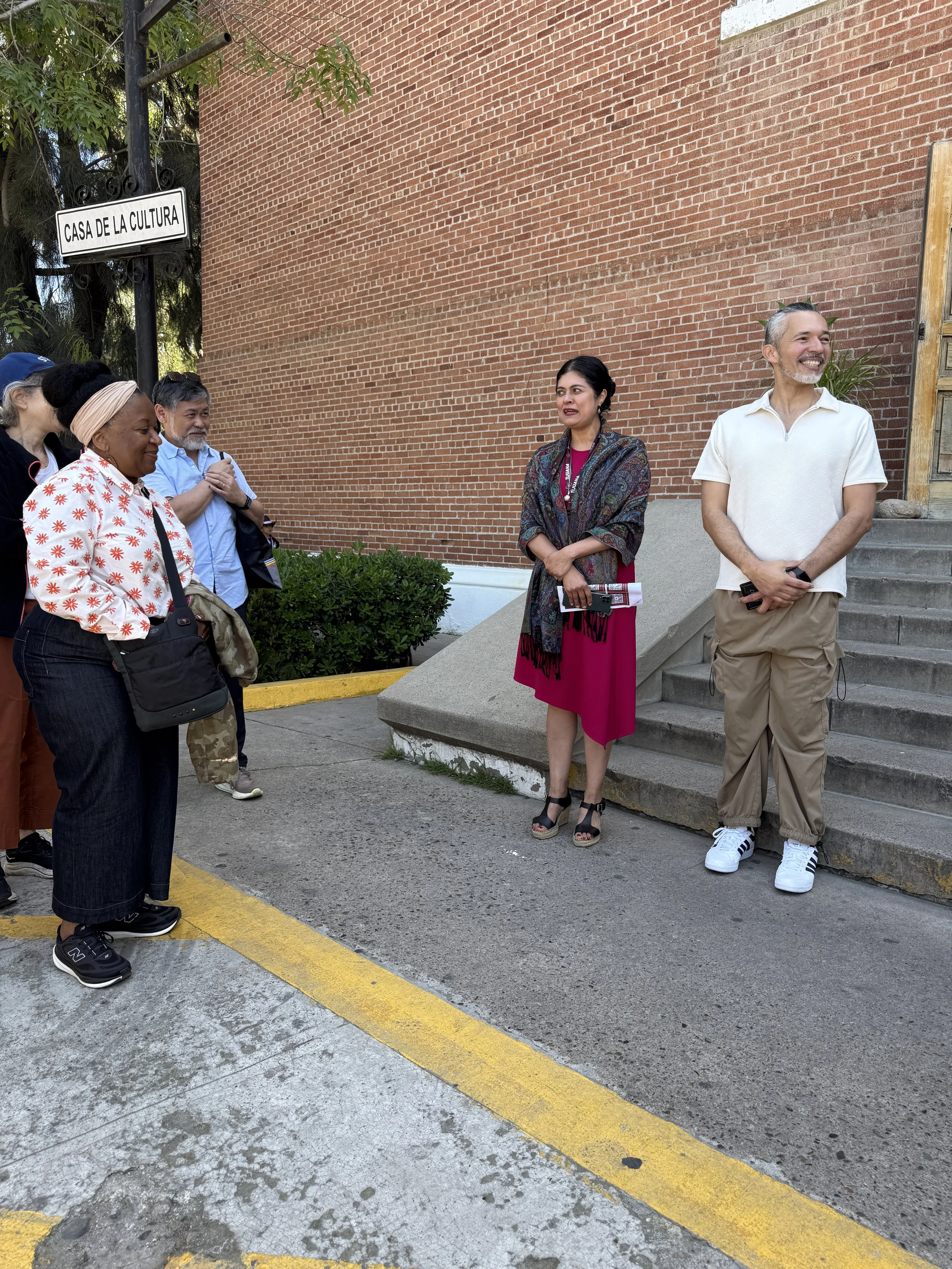
General Coordinator Casa de la Cultura, Lic. Mara Maciel and Tour Guide, Henry Torres, Director of Lux Boreal.
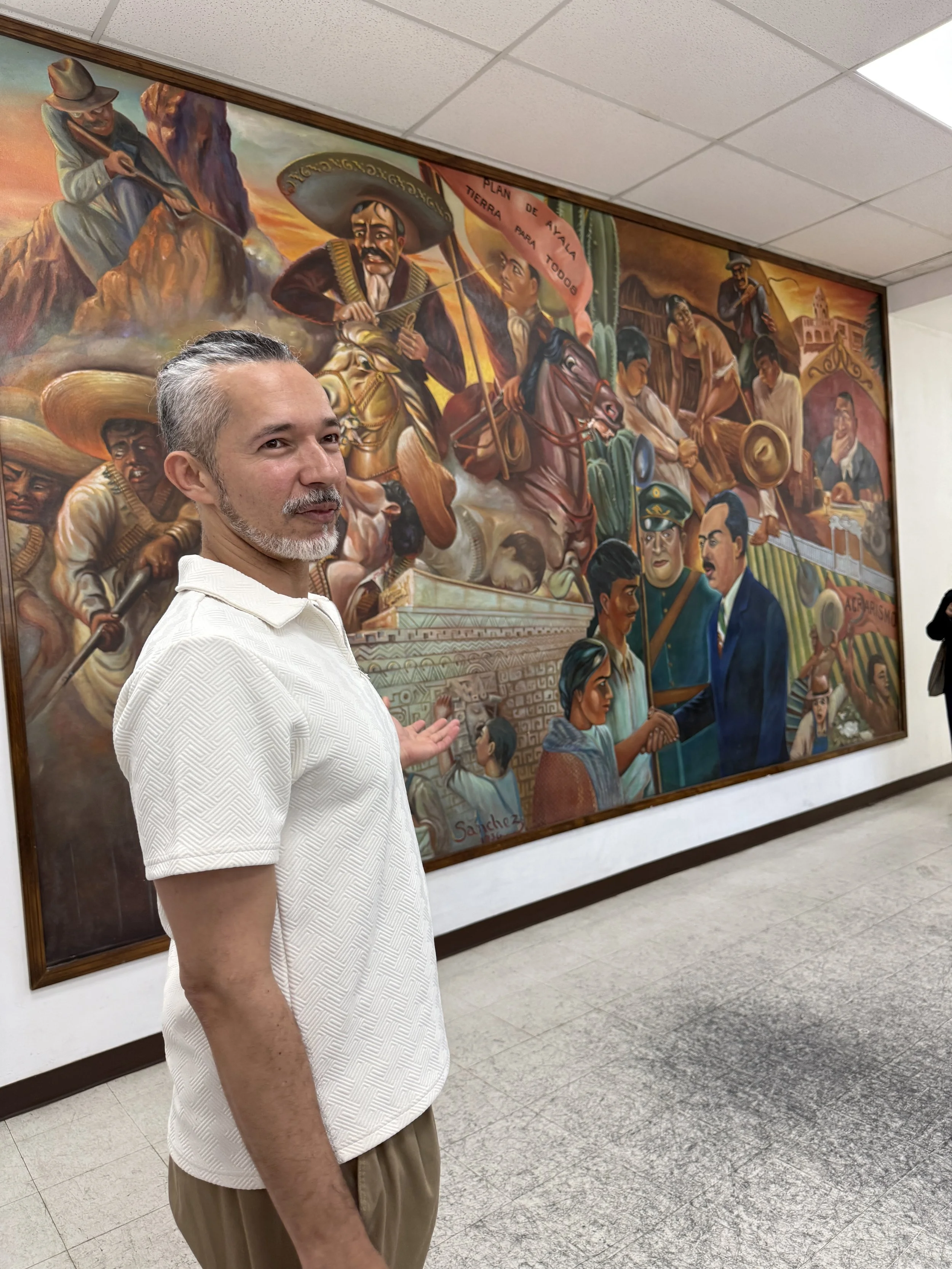
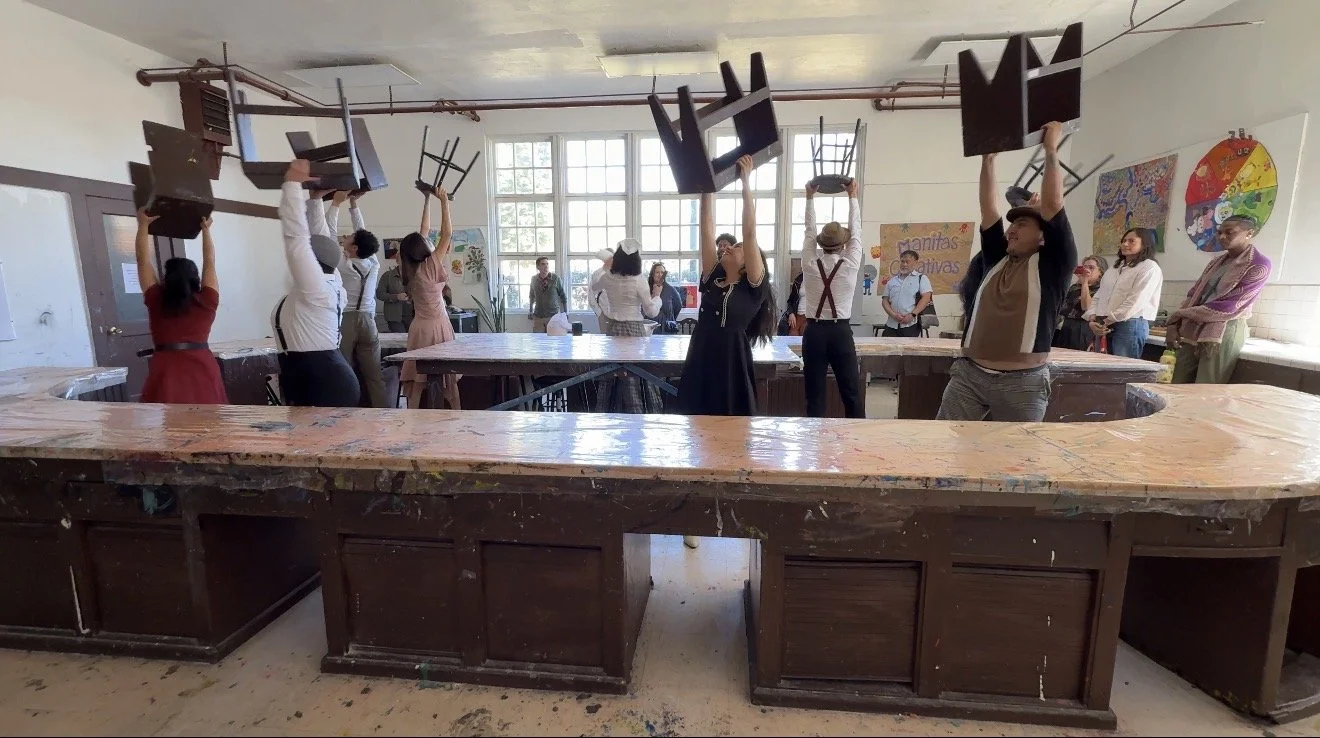
At Casa de la Cultura de Tijuana, we stepped into a space that quite literally holds the city’s layered history. Originally built in 1930 as a school, the building has since been occupied by the army, a university, and now serves as one of Tijuana’s most emblematic cultural institutions.
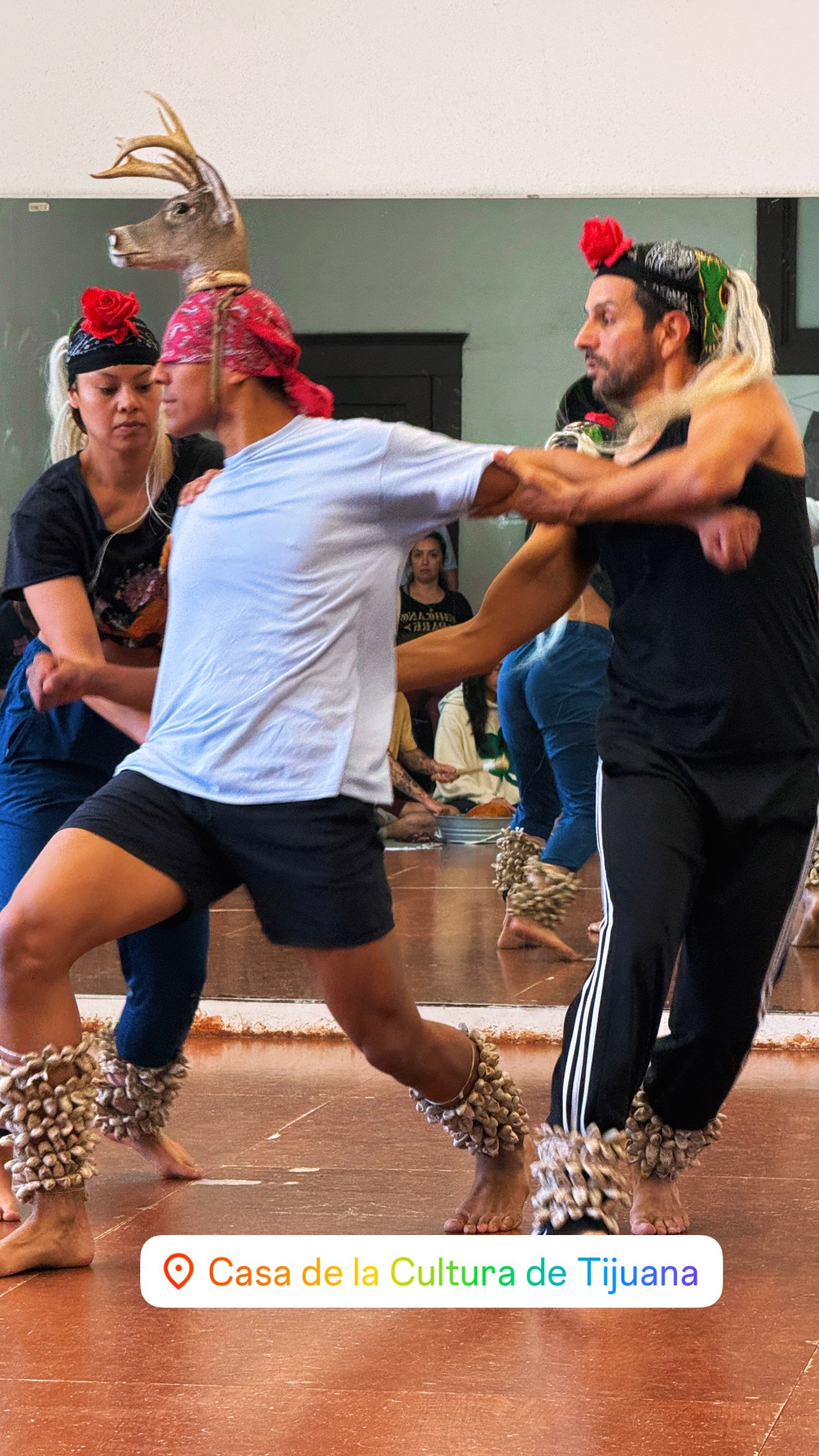
Today, it operates as a hub for artistic education and community connection—supporting visual arts, dance, music, and performance while continuing to adapt to the needs of the city.
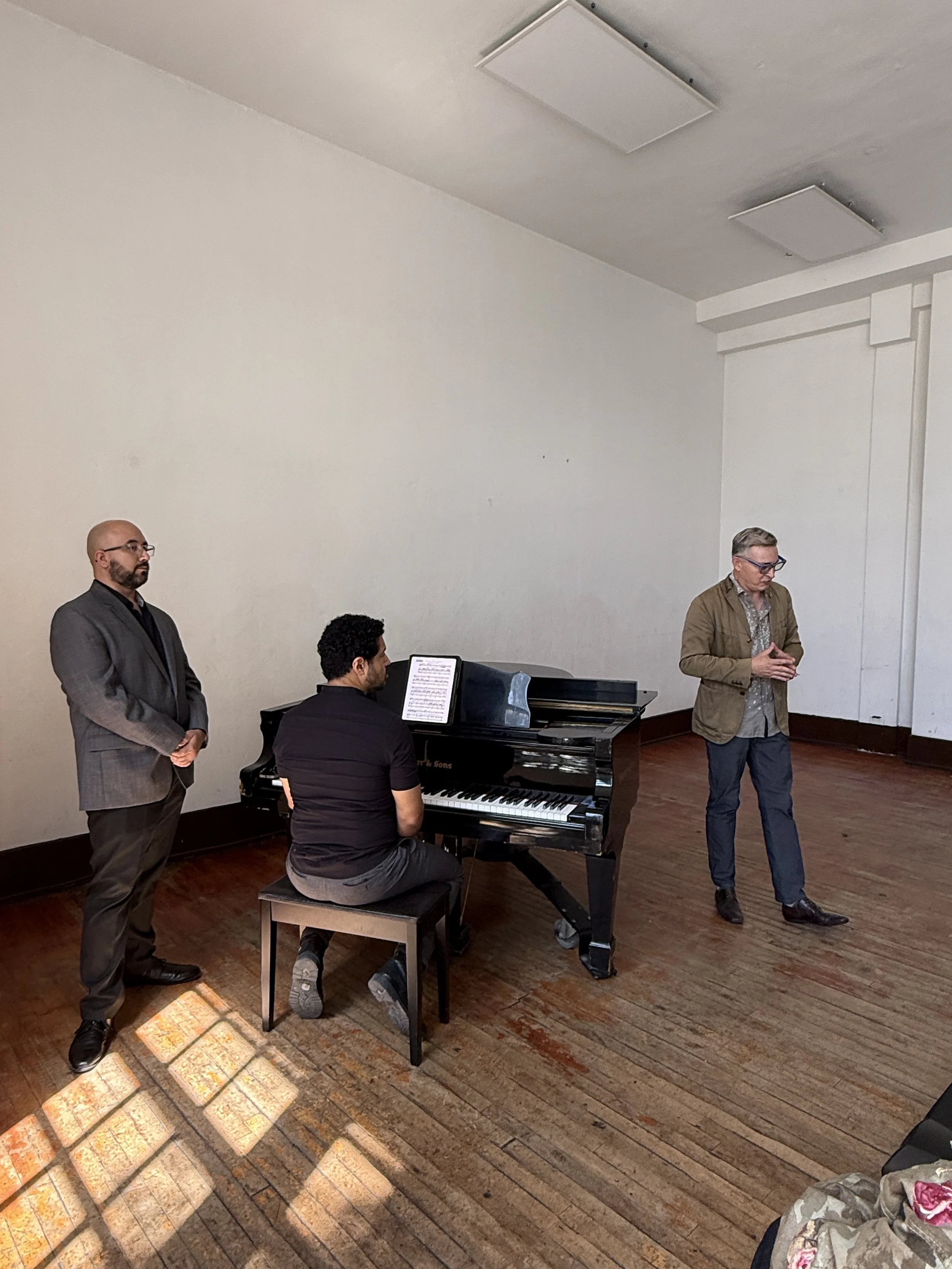
Our visit included immersive encounters with a range of artists and disciplines: from the exhibition Noctiluca: Iluminar la oscuridad by Lidice Figueroa Lewis, to Encantra2 Danza Contemporánea, to the work of Ópera Explícita, led by Mario Montenegro.
Montenegro’s approach to opera is rooted in accessibility which features breaking down form, narrative, and sound to invite broader audiences in. His work, including involvement in Ópera en la Calle, reimagines where opera belongs, bringing it out of traditional venues and into public space.
Even classical works like The Barber of Seville, an 1816 opera centered on love and pursuit, take on new resonance here, shaped by a region defined by movement, translation, and reinvention.
Culture as Everyday Experience
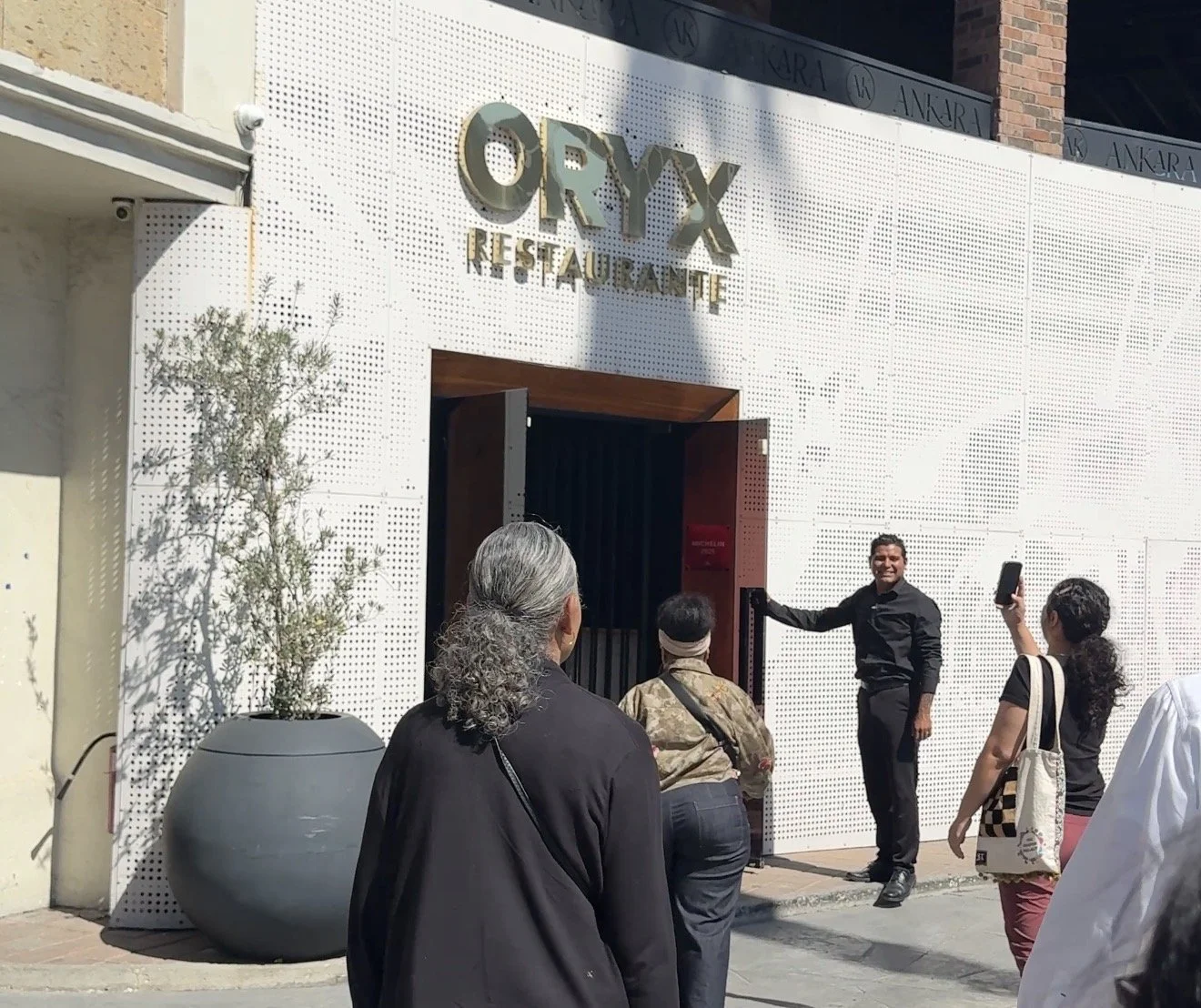
GIA team entering Oryx Restaurante in Tijuana.
Our time in Tijuana extended beyond formal cultural spaces. Over a shared meal at Oryx Restaurante, we experienced another dimension of the region’s creative identity—its food.
Led by Chef Ruffo Ibarra, Oryx reflects a “Cali-Baja” approach that blends local ingredients with global influence, mirroring the hybridity that defines the border region itself.
Like the arts, the culinary scene here is deeply shaped by migration and experimentation. Tijuana has long been a place of arrival—home to people from around the world—and that legacy shows up in its commitment to local talent, storytelling, and innovation across disciplines.
What We Carry Forward
Throughout the convening, we were in the company of bi-national leaders who are actively engaging questions of migration, resilience, and cultural continuity—not as abstract ideas, but as daily realities.
And like all GIA gatherings, this one wasn’t about arriving at easy answers. It was about being in relationship—with place, with people, and with the questions that emerge when we sit with complexity.
In San Diego and Tijuana, those questions feel especially urgent:
What does it look like to fund across borders?
How do we support artists whose lives and practices don’t fit neatly within one system?
And how can philanthropy move in ways that reflect the realities of the communities it seeks to serve?
If this region teaches us anything, it’s that culture doesn’t recognize borders in the same way systems do. It moves, adapts, and connects—often in spite of them.
The work ahead is to figure out how our structures can do the same.
ABOUT THE AUTHOR
Ericka Jones-Craven is the Communications and Publications Manager of Grantmakers in the Arts (photo credits).