Juan Angel Reynoso “nemuuly Bearr” and Myrian Solis Coronel
In honor of November’s Arts & Health Month, GIA brings together experts from across the field to explore how the arts contribute to healthier, more connected communities. Throughout the series, guests consider the arts’ role in well-being, environmental health, cultural organizing, and policy-making. Listen to the episodes for shared ideas and experiences on how creative work can support community life.
Episode 3 featuring Juan Angel Reynoso (the queer sol collective) and Prebys Foundation
What connects the health of our communities to the well-being of the places we call home? In this
episode, 2Spirit Ipai-Kumeyaay [ee-pie, coo-me-eye] and educator Juan Angel Reynoso (nemuuly "Bear") explores how storytelling, cultural connection, and the arts can nurture care for people and the environments around them. The conversation also considers community-based approaches to healing through arts, culture, and nature, including the work supported by Program Officer Myrian Solis Coronel of the Prebys Foundation’s Healing Through the Arts and Nature initiative.
Resources + Links
The Queer Sol Collective Website | Instagram: @thequeersol
Upcoming Event: Intergenerational 2SLGBTQIA+ Gathering | January 15–18 at Liberty Arising Sanctuary in Boulevard, CA. Details can be found on our website, and registration will open very soon.
Support Our Work: If the community would like to support our programs, operations, and mutual aid efforts, donations can be made to our Community Action Fund at https://givebutter.com/matayuum (https://givebutter.com/matayuum).
Jamie Sharp:
Hello, and welcome to the Grantmakers in the Arts podcast. My name is Jamie Sharp, and I am the senior program manager here at GIA. In honor of November's Arts and Health Month, GIA brings together experts from across the field to explore how the arts contribute to healthier, more connected communities. Throughout the series, guests consider the arts role in wellbeing, environmental health, cultural organizing, and policymaking. Listen to the episodes for shared ideas and experiences on how creative work can support community life.
What connects the health of our communities to the wellbeing of the places we call home? In this episode, two-spirit Ipai-Kumeyaay storyteller and educator Juan Angel Reynoso explores how storytelling, cultural connection, and the arts can nurture care for people and the environments around them. The conversation also considers community-based approaches to healing through arts, culture, and nature, including the work supported by program officer Myrian Solis Coronel of the Prebys Foundation's Healing Through the Arts and Nature Initiative.
I hope you enjoy.
Myrian Solis Coronel:
Thank you so much, Jamie. My name is Myrian Solis Coronel. I'm a program officer at the Prebys Foundation. And in my role, I have the opportunity to connect with organizations across San Diego County that are strengthening our region. One of the initiatives that I have the greatest joy in stewarding is our healing through arts and nature. And through this work, Prebys supports local organizations offering arts and nature-based programs as pathways for wellbeing. And together, what we're doing is we're learning how these programs can serve as either preventative and/or complimentary pathways for care. And just to give you a snippet of the evidence that we're trying to build, especially when it comes to data related to San Diego, is, one, how is it? How is it helping people in their wellbeing? Because we know that when people have access to arts and nature, when those experiences are positive in community and often, they often support long-term health and wellbeing. So those are the unlocks and the opportunities that we're really excited about to continue to learn from community organizations that are doing this work in town.
Juan Angel Reynoso:
[foreign language 00:02:23]. Hi everyone. My name is Juan Reynoso. I'm Ipai-Kumeyaay from the San Pascual Band of Kumeyaay Indians. We are located in beautiful sunny San Diego County, North County, San Diego to be specific. I have the privilege and honor of serving as the co-executive director and co-founder next to my beautiful sibling, Jovanny Perez of The Queer Sol Collective Incorporated. We are a arts-based community indigenous BIPOC org here in San Diego serving our communities through initiatives of arts and storytelling, predominantly looking at systems care, social services, social system care, but through the avenue of indigenous philosophy. So really looking at the understanding of community care and how does that bleed into our community as family and how do we see each other as extensions of ourselves. And what I love about this is the idea of really returning back to home and what defines home and specifically nature, and home being nature is everything including ourselves. So really excited about this conversation today.
Jamie Sharp:
Wonderful. Thank you both. So I'm curious, what connects the health of our communities to the wellbeing of places we call home?
Myrian Solis Coronel:
Yeah, I can share a little bit about just even San Diego alone. San Diego is a region. We're incredibly lucky and fortunate to live in a place where we have access to such diversity that we have, the beaches, we have canyons, we have parks, we have the mountains, we have the deserts. And this beauty is really an incredible asset for San Diego. And one of the greatest assets when we think about just our growing population of 3.3 million people in San Diego. So we think, or I think the idea is fairly simple, but yet incredibly powerful because when it comes to our connection to nature, it does provide that healing power. It has the vitamin D, the natural dosage of it, which even spending time outdoors, it can help reduce our cortisol level, our heart rate and blood pressure. So all of these are really pathways that if we're intentional about how we spend our time outdoors, it's reciprocal.
Juan spoke a little bit about it right now about our relationship to nature. We are nature and nature is us. So it is this reciprocal relationship that we have with the outdoors and with one. So we are interconnected. And it is about that recognition and letting ourselves be in the outdoors to really absorb all these incredible benefits.
Juan Angel Reynoso:
I love that. I'll jump in. What Myrian just said about this interconnectedness, everything that we do at The Queer Sol Collective is about reciprocity. It's about restorative community care, like I mentioned earlier. I think when you ask the question what is health and how do our communities essentially find these places and what do we call home, one of our visions is to really create the idea of sanctuary. And sanctuary being home. And that definition of home, what does that look like? What is it that people are yearning for and desiring and needing? And through this indigenous philosophy, indigenous ways of knowing, our people have been doing this since the beginning of time, since creation. And when we look at specifically medicine will philosophy or interconnected philosophy, we're looking at is our community finding peace in social, emotional, physical, and mental clarity? Is there balance within this kind of quadrant, these cycles of living?
And what's beautiful about nature is nature is, for us as Kumeyaay people, we have this word called mat. Mat is an extension of nature. When we identify ourselves, we say, [foreign language 00:06:31]. It means to be of it and it is of me. And for us, that's really beautiful about this, it's a reminder that when we're in nature, there is no biases in nature. And what I love about this is when it comes to system care or mental health, when someone goes out into nature, this new philosophy is "Go touch grass," this idea of if you were to go and sit for a moment by yourself and just really just touch the ground, sit with the oaks, sit by the water, there's nothing that is coming from that entity, from that being that's going to be biased or that's going to make you feel bad about yourself. I think what's beautiful, it's a silent holder and it's a way for us to be in the presence of something bigger than us without the fear of retribution, without the fear of conviction.
And so that's what I love about nature and the idea of nature is everything. Nature is within our us and within our outbringing and our community. And so first I think it's just defining home. What is it that I need from my community? What is it that nature provides? And oftentimes it's a place of solace, a place to just drop in without feeling the need to perform, the need to show up in a certain way. It's just be, just be it. So that's why I love it. It's just first defining what is home and what does that look like for different people.
Jamie Sharp:
Juan, I'm curious before I get into my next question, can you give an example of the type of programming that your organization does?
Juan Angel Reynoso:
Yeah, so thank you for that. So we operate off of a four pillar system. We look at community, education, home. And this idea of home being really this, what is regenerative work? What is regenerative concepts? Is it agricultural farming? Is it regenerative internal introspective work, this kind of shadow work?
So a lot of our programming is really about bringing people out into green and blue spaces, really just let's go out, let's do a day out in the oaks, let's go to the water, let's get you away from the mundane of your 9:00 to 5:00 behind a desk. A lot of our programming looks at providing access, really accessibility for a lot of marginalized communities. Specifically our communities serve BIPOC communities and greater allies, but we're predominantly an indigenous led BIPOC serving organization. And I think that's important to preface specifically even in the context of where we find ourselves in this administration with policy, with lack of access for spaces of our communities. Oftentimes we find ourselves in multi-generational families. Everyone is having to work, everyone has to do multiple things that we just forget to drop in.
And one of our things is really, we do two things. One of our initiative is called Something Beautiful, which is basically just a four to six hour day in the middle of San Diego anywhere. We could be at Balboa Park, we could be at an organization in an urban setting, but we're bringing arts and storytelling to that focus. So that might look like we are doing a poetry reading. We might be highlighting young TAY youth, this transitional age youth in terms of storytelling through graffiti art, through activism. A lot of what we're doing is igniting and instilling this sense of agency into our community, but through an intergenerational component.
Oftentimes what we're seeing and lacking is this ability to connect intergenerationally with 18 to 17-year-olds. How do we get people to understand civic discourse but by giving opportunity to be there? And really our beautiful flagship community event that we do, and it's really a closed container for intergenerational people, it's our Mata'yuum. It means to gather in Kumeyaay. We have one in January coming up on MLK weekend. It's a three to four day experience, immersive experience where we bring about 50 to 70 queer people, intergenerational, together. And we do everything from having really deep introspective conversations to having a dance party, to doing art, to doing social justice work. It really is a place for us to bring community together where they can, again, let go of the mask and really just be seen by one another and engage in some pretty challenging conversations in nature, in natural spaces. So those are kind of our flagship spaces that we do.
Jamie Sharp:
Marian, I'm curious. So Healing Through Arts in Nature was launched in 2025, so very recently. Can you give insight to the process of its development, especially for our folks listening who have not yet explored health as an intersection of the arts? And were there any challenges or learnings throughout that process that you'd like to share?
Myrian Solis Coronel:
Great question. Thank you. It has. It's a fairly young initiative, but a lot of this is really building on evidence that we started seeing across the nation about the benefits that art and nature have on individuals.
So in addition to supporting about 50 organizations that are providing programming across county, we're also supporting a pilot with San Isidro Health Center where they're prescribing either arts or nature experiences primarily to youth. And it's been an incredible experience because they're using it as complimentary or as preventative to primarily youth who are experiencing maybe some anxiety, some isolation. And that pilot, there's a couple of things that I love about it. One is we're partnering with other funders in San Diego who believe in this work. So I love that it's a collaborative effort with shared outcomes. We want to see our youth flourish in San Diego. So we're coming together as funders wanting on that change.
What San Isidro Health is seeing right now is yes, that impact, they're seeing it on their patients, they're coming back, they're happy, they're a little more cumulative, they're more engaged. But in addition to seeing that positive impact on the individual, they're seeing it on the family, which is fantastic. They're maybe having a little bit more dialogue, it's becoming a family experience. And that is having a ripple effect that was not anticipated, but it's such incredible news to see.
So we're coming on that pilot. It's a year-long pilot. It wraps up at the end of this year. So Q1, around the time that you all visit San Diego, we'll have a little bit more insights into what does it take to bridge that partnership between healthcare and organizations that are providing these experiences? How do we make it smooth for the patient? And then how do we also support patients and individuals in recognizing, yes, that might be one experience or multiple experiences that you had with that organization. Where else can you go to get more experiences like that? And maybe bring a friend, bring a family member so that it can be incorporated in the work that you're doing or just in life, day-to-day life.
So in general, the initiative has been really, really positive in that sense. For the organizations and the grantees, a lot of them have been doing this work for years. They've been seeing this impact in their participants day-to-day. When we were talking to them about measuring health-related outcomes, for some of them it was overwhelming. They're like, "Wait, what? Now we're measuring what? How do we do that? We've never done that." So we're partnering with a non-profit institute to bring capacity to organizations because we know that they were seeing it, they were telling us, they just didn't know how to track it and then how to talk about that impact. So together with them, we developed a tool to really track what are those health-related outcomes that you want to track as a community and then individually as an organization, and then what is that collective story that we want to share?
So capacity building of these organizations has been at the forefront of this work because we're not doing it alone, we're doing it together, and we want to make sure that they're prepared to really take this on just independently as organizations, sharing about the impact that they're having in community.
Juan Angel Reynoso:
If I could jump in, this is beautiful. And as grantees of the Prebys Foundation, we are coming up on year two. We're just so honored and so grateful and blessed to the Prebys Foundation, to Myrian, to Dr. Novi, everyone who has been part of championing us and our story and our communities.
One thing that's really beautiful is, and I talked about this a little bit earlier, is under the last couple years have been really, really challenging for our communities, not only being for indigenous communities, but also specifically for our queer community. Federal funding has been cut. State funding often aligns with federal guidelines, and everyone is trying to vet for a piece of the pie, right? And what we have felt so supported and loved on by Prebys is this really trust-based philanthropy, really the assessments and measurements that Myrian was talking about is it's how do you report data? How do you for your community? You know best, your community, how can we support you along that?
And so what has been helpful is really just leaning on us as the experts from our community and saying, "How can we meet you halfway?" So for instance, we serve about 500 intergenerational queer people just through our Something Beautiful events. And in the last two years, initially our first year we were getting about 30 to 40 people coming. Every quarter we would offer one, four to six times a year, and now we're getting upward of 70 people coming, and a lot of them are returns and news. So to see that measurement of, okay, our community has been with us now and they see the impact that these spaces are having on them, and then to see an uptick of, okay, 70 to 80% of our community are gender queer, 30% are first time and then they keep coming back. It's really expanding people's mind of the human experience.
And so what was really been powerful for us when we think about how this has helped us, I mean programmatically, if it wasn't for Prebys, we wouldn't be able to have this, to be honest. It has been really supportive of us to be able to have our two Mata'yuums. We were able to expand from one a year to two. So now we offer two intergenerationals multi-day experiences that I was explaining about earlier. We used to just have them in January. We've been doing that for about five years now, just in January. And the last two years with Prebys' support, we've been able to double that, one in June and one in January. So now we're doubling our capacity and really just giving that experience not only here in San Diego, but extending up to Northern California.
So what we do now is we take our constituency here in San Diego and we've created essentially a system network up to Northern California who are also doing similar work, and now we have a thread of system support. So this idea of binational, bi-regional, it's really expanding beyond the experience of our minds. I think that's been beautiful.
Just one thing I would love to highlight really about some of the art components. While we are a nature-based initiative, everything we do incorporates art. It incorporates storytelling, incorporates canvassing, our voice, our music, our dance, multiple experiences of modality in terms of healing, whatever that looks like.
One of our Something Beautiful is really beautiful. We were working about substance use disorder and polysubstance use disorder, and so we used art therapy as a way for a small group of our community to talk about some really deep things and what it's like to be in recovery through art. And so using things like portraiture, these tried and true evidence-based methods. We know as indigenous people that imagery and photos and symbolisms have been the way we communicate. And sometimes when we don't know what it feels like, it's best to just write it down or draw it or put an image. And so arts has really been this space for us to integrate art and nature overlapping one another. Imagine what it's like if you're just in nature, but now we incorporate another way for you to experience that in your body in a different way to let it come out of you.
So yeah, again, get off my soapbox, but we're really grateful and blessed for the opportunities and just to see the impact and the relevance of what it's like to come from our communities and to pour into initiatives like ours.
Jamie Sharp:
Thing you would offer to our audience or to other funders interested in exploring or supporting work at the intersection of arts and health?
Myrian Solis Coronel:
Great question. I have a two-part invitation. The first one is for you as a listener, find your path. What is it? What brings you joy? Is it being outside? Is it reconnection to culture, connection to art? And then what within those two areas calls you, right?
So one, you live it, experience it. That is the beginning to then start, join the conversation, learn about what people are doing. And then what is there an opportunity to bridge for that offering? Is it a partnership? Is it an introduction? Is it expansion of this conversation into those partners that we want to influence or for them to see that this work is effective? Is it healthcare providers? Is it your public health officer? It will take people across sectors to really adopt this approach to prevention and to wellbeing. So I think everybody has an opportunity and has a role to contribute to that change. So join the conversation, see where the conversation is going, and offer up an opportunity for that bridge and that collaboration.
Also, the other piece that I have is an invitation to amplify. If you see something is happening and you're inspired by it, you want others to find out, share about it, speak about it, illuminate the great work that they're doing because it is often that spark and that experience that will then make people realize like, "Oh yes, it does work. I was there. I saw it. Let's do more." So that would be my invitation for folks who want to join this movement.
Juan Angel Reynoso:
Myrian, I love that and I loved how you phrased the invitation. That's just so beautiful... Pretty much everything that you said, I echo all of those sentiments. And I think from a grantee, from a community worker, as a co-founder, co-executive director of a non-profit, I think for us, it's funders who are interested in doing similar work. Maybe there is this curiosity, like you said, Myrian, like, "Ooh, this is interesting. I like this."
Like I said earlier, it's like, lean into what's already being done. I know for us, oftentimes these, "Oh, people are doing arts initiatives and healing and nature," and then you start to see these bigger entities also doing something that's adjacent. And it's like, okay, for me as a grantee, as a community of this space, oftentimes it's like then we're being asked for multiple directions. It's like know the people you're asking to bring in because if you have multiple funders, multiple people in demand trying to do the same type of work and you're leaning into the same community to express that, there is sometimes a challenge of capacity like, "Oh, I want to show up for these people and I also want to show up here." So if we can move beyond the scarcity mindset, this idea of what does our community need as a region, as a whole? "You do this really beautifully, this is the missing point here. How can we combine our resources to then do similar work and expand?" Because it's not about it's The Queer Sol thing or it's the Prebys thing, it's an us thing.
And so I think moving into the understanding of people can do similar work, but it's more powerful when we do community work together. And I know there's a lot of bureaucracy to it, but I think for me it's just really trying to lean into the community that's already existing and expanding, expansive out of what's already there.
And like Myrian said, share our stories. If there's an inquiry, come with curiosity. I think for me, oftentimes people, sometimes they may be a little hesitant to ask the question, like, "Oh, about your indigeneity or your mixed race background or your background." And I know people don't want to... They're not trying to step on toes or say the wrong thing, but for me, Juan, my opinion is ask the question. That's how we learn. That's how we move out of that fear and that worry, is, ask me, and we can resolve it and we can work through it together. So that would be my invitation, is lean into what's already existing, expand, and ask the question.
Jamie Sharp:
The GIA conference, maybe you didn't know actually, but is in San Diego next year. And so I'm curious, what is something that you think our membership can gain or learn from the cultural work that's happening in your city right now?
Juan Angel Reynoso:
Ooh, so I love this question because I think the reality is first of all, you got to identify the communities that you're serving, right? First of all, it's like if I'm going to go and be a guest in this conference across the East Coast, I want to research and know who are the first people there. I want to know who are the communities that I'm a guest in their homelands. Any type of initiative work that we're doing, creativity, facilitation, I would urge those facilitators and those conference personnel to start engaging in those conversations with local tribal communities, local community serving grassroots, boots on the ground type of situation. Who are your constituents? Who is your community?Oftentimes I find that we want to come in and quickly resolve and mediate and fix, but when oftentimes it's just people just need to be heard. People just need to be able to say, "Hey, this has worked for us in the past. This is no longer working."
So I would say, yeah, do some research. Let's look up the local communities. One thing about San Diego, which is beautiful, is we are home to the most diverse per capita tribal communities in the nation. We have 18 individual tribal federal communities here that are individual tribal governments. And so 13 of them happen to be Kumeyaay, but that doesn't mean we're all the same. We're individual relationships. And so I always love to get people to think about like, "Whoa, how does it feel to be in a space so densely populated by indigenous ways of knowing?" And the ability and the opportunity to lean into those communities, what's doing well for them? Have them be part of the facilitation, have them be speakers and pay them for their time, for their expertise and their knowledge.
So I'll get off my soapbox, but I think it's really just get to know who is your community, spend time with them. And the only way to do it is really reach out.
Myrian Solis Coronel:
I think Juan captured it beautifully. There's incredible organizations in San Diego that are providing those opportunities. I think for those that are visiting San Diego coming in with this natural curiosity mindset, "Who's in San Diego? What is happening? What can I learn?" are always questions that even when I travel, I have those questions because I want to just learn from other people and connect with others. And who knows, you'll walk away maybe with a new friend.
San Diego is a very diverse or also a binational region. So I would encourage everybody just take a few minutes before coming, get familiar with their city, go on Instagram, look for organizations that are providing also experiences for people to pop in and just enjoy and have that adventure. It'll be super enriching and you'll walk away with a new perspective about our region.
Juan Angel Reynoso:
Ooh, can I add something? I love this. So this came up recently in this idea of binational relationships across the border. And when it comes to our tribal communities, really it's like a tri-national relationship. As Kumeyaay people, we have relatives who live all the way in Baja because our communities did not see borders that way. We've existed on these land regions forever. And when I think about who are the bees here, who are the bees pollinating beautiful programming here, and I love Marian said be open-minded this idea of curiosity. As children, I love the idea of children have this ability to just see the world through wonder, through possibility.
And when you come to San Diego, I mean it's San Diego, there's this kind of romanticized mission experience, things are in Spanish. And oftentimes if you're coming from a place in the East Coast or Midwest, you might be thinking, "Whoa, this is very telling of maybe the history here." And just being mindful of what that history is for the community here.
I would encourage you to go visit places like Chicano Park, Barrio Logan. If you have the time, really extend yourself and challenge yourself to see something different because the tapestry here is really incredible with the human experience.
Jamie Sharp:
Thank you so much for listening to this GIA podcast episode. To explore more episodes in this series, please visit giarts.reader.org. I hope to catch you next time.
Lovely. Well, thank you both so much for joining us and we hope to see you in San Diego.
Myrian Solis Coronel:
We'll be there.
Juan Angel Reynoso:
Thank you so much. This has been such a treat, really a privilege. Thank you so much.
Myrian Solis Coronel:
Thank you, Jamie. Thank you, Juan.
Juan Angel Reynoso:
Thank you.
ABOUT THE SPEAKERS
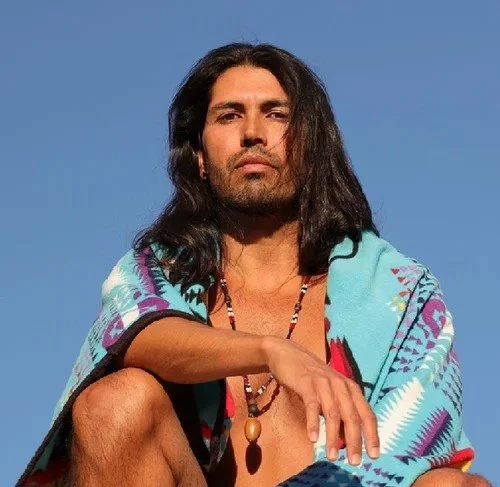
Juan Angel Reynoso; “nemuuly” (grizzly bear) is Ipai Kumeyaay from the San Pasqual Band of Kumeyaay Indians, one of the 13 tribal bands of the Kumeyaay Nation.
An Indigenous-Queer Storyteller, Teacher, and community advocate, his work centers the experiences of Indigenous/Queer Kin and their perspectives within Native country; past, present, and future.
He holds a M.A. degree in Teaching and Learning: Bilingual Education (ASL-English) from The University of California San Diego, a B.S. in American Sign Language and English Interpretation from William Woods University and is a California credentialed Education Specialist and Multiple-Subjects educator.
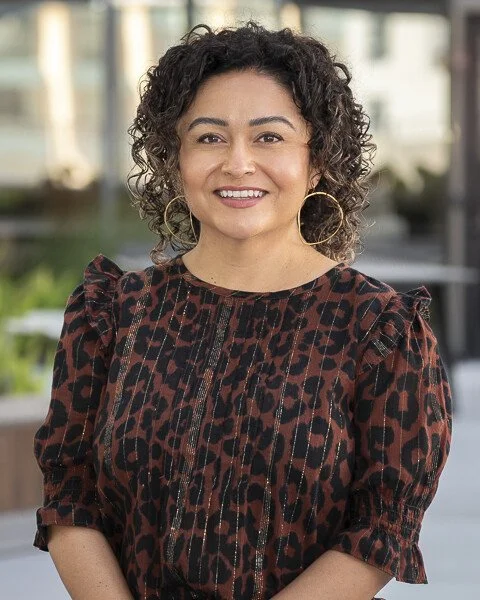
Myrian Solis Coronel is a Program Officer at Prebys Foundation, which is dedicated to creating an inclusive, equitable, and dynamic future for all San Diegans.
Before joining the foundation, she was Director of Programs at Parks California, leading statewide initiatives grounded in community engagement, storytelling, and partnerships. She also led REI Co-op’s Next Gen Marketing program, overseeing national partnerships, experiential marketing, and content collaborations focused on elevating the voices and visibility of younger and more diverse communities in the outdoors. Earlier in her career, Myrian worked at KPBS, managing special events and spearheading media and outreach campaigns.
Myrian has served on several boards, including I Love a Clean San Diego and MANA de San Diego. She is also a co-founder of the Latina Giving Circle of San Diego. In 2013, she was appointed to the California State Parks Commission, where she served until 2019, including two years as the Commission’s first Latina Chair.
Myrian earned her bachelor’s degree in communications from San Diego State University. Outside work, Myrian enjoys traveling the world with her husband and two children, discovering new restaurants, and diving into a great book or podcast. Her happy place is outdoors and chasing water.